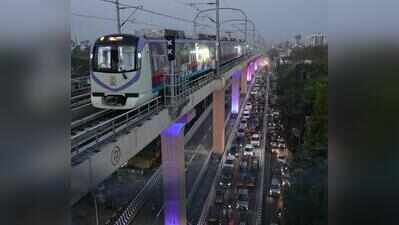
Pune: Transport experts have called on the state govt to expedite legislation for a statutory Unified Metropolitan Transport Authority (UMTA) as Pune’s Metro network expands and commuters continue to grapple with last-mile connectivity gaps. They said the existing coordination mechanism lacks the power to ensure agencies actually act on decisions.The proposed UMTA legislation is pending approval from the state govt and is expected to be taken up in the next legislative session, senior officials said. At present, the divisional commissioner convenes meetings of various agencies to discuss urban transport issues, but the mechanism is purely advisory and its recommendations are not binding.Officials said a statutory framework would strengthen coordination among agencies and help address issues such as last-mile connectivity, feeder bus services, parking, road access to Metro stations, and the integration of different modes of transport.Transport expert Nikhil Mijar said fragmented responsibilities among agencies often result in delays, with no single authority accountable for taking decisions to their logical conclusion.“Urban transport planning and execution in a city like Pune involves multiple agencies, departments, and authorities, each having its own jurisdiction and decision-making process. When a project or an issue requires approvals or action from several agencies, lack of a single empowered authority to coordinate and take decisions often results in delays, with no single agency being held accountable for taking the issue to its logical conclusion,” he said.“A statutory Unified Metropolitan Transport Authority (UMTA), with a dedicated and empowered executive officer, could address this gap. Instead of decisions being discussed across multiple forums and then requiring separate follow-ups with individual departments, the officer could take ownership of issues, coordinate with the concerned agencies, monitor progress, and ensure that decisions are implemented within a stipulated timeframe,” Mijar added.He said an empowered authority could help commuters by ensuring that Metro stations are adequately connected through feeder buses, roads, pedestrian infrastructure, and other transport facilities. It could also coordinate agencies involved in road works, utility shifting, land acquisition, and approvals to prevent infrastructure projects from getting delayed.Parisar programme director Ranjit Gadgil said Pune’s existing metropolitan transport authority lacks statutory powers, unlike those in Chennai and Hyderabad.“PUMTA needs to be constituted under a separate act, as is the case with Chennai and Hyderabad UMTAs. The Chennai UMTA Act of 2010, in particular, is a model act. The significant difference is that CUMTA has statutory powers to coordinate, oversee, regulate, and monitor the implementation of a comprehensive mobility plan (CMP), whereas PUMTA’s role is limited largely to coordination and recommendations. Without an Act and Rules, PUMTA has become toothless, leaving both PMC and PCMC free to decide whatever they want. PMC, for instance, has largely ignored CMP and continues to push projects that promote the use of private vehicles in an ad hoc manner,” he said.Experts said the expansion of the Pune Metro makes the need for an empowered authority even more pressing, as transport planning, feeder services, traffic management, and last-mile connectivity need to be addressed holistically rather than through fragmented agencies.