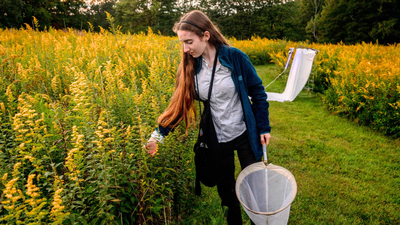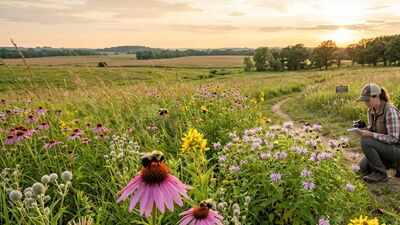
Fields once used for crops can become important wildlife habitat when restored to native prairie. Across Wisconsin, former farmland is being transformed with native grasses and wildflowers, creating a wider range of resources for pollinators. According to Restoring Lands, A Wisconsin Land Trust, bumblebee surveys have found greater diversity at restored sites, with some uncommon species appearing only where habitat conditions have improved. Among them is the rusty patched bumblebee, a federally endangered species that has disappeared from much of its former range. Its presence in southeast Wisconsin highlights how restored landscapes can provide food, nesting areas and shelter for bees throughout the year. The changes also offer clues about what pollinators need to survive.
How restored prairie is creating better habitat for bumblebees
Across Wisconsin, parts of the landscape that once supported agriculture have been restored to native prairie. The work can involve removing invasive plants, establishing native grasses and wildflowers and allowing a more varied plant community to develop over time.That change matters to bumblebees because a field dominated by a small number of crops does not provide the same range of resources as a mature prairie. Native prairie can contain plants that flower at different points through spring, summer and autumn, giving bees access to nectar and pollen over a much longer period.The difference is also tied to what happens beneath the vegetation. Bumblebees need suitable places to nest and overwinter, while queens emerging in early spring need food before colonies become established. Fallen leaves, areas of undisturbed vegetation, dead grass and brush can all form part of that habitat.
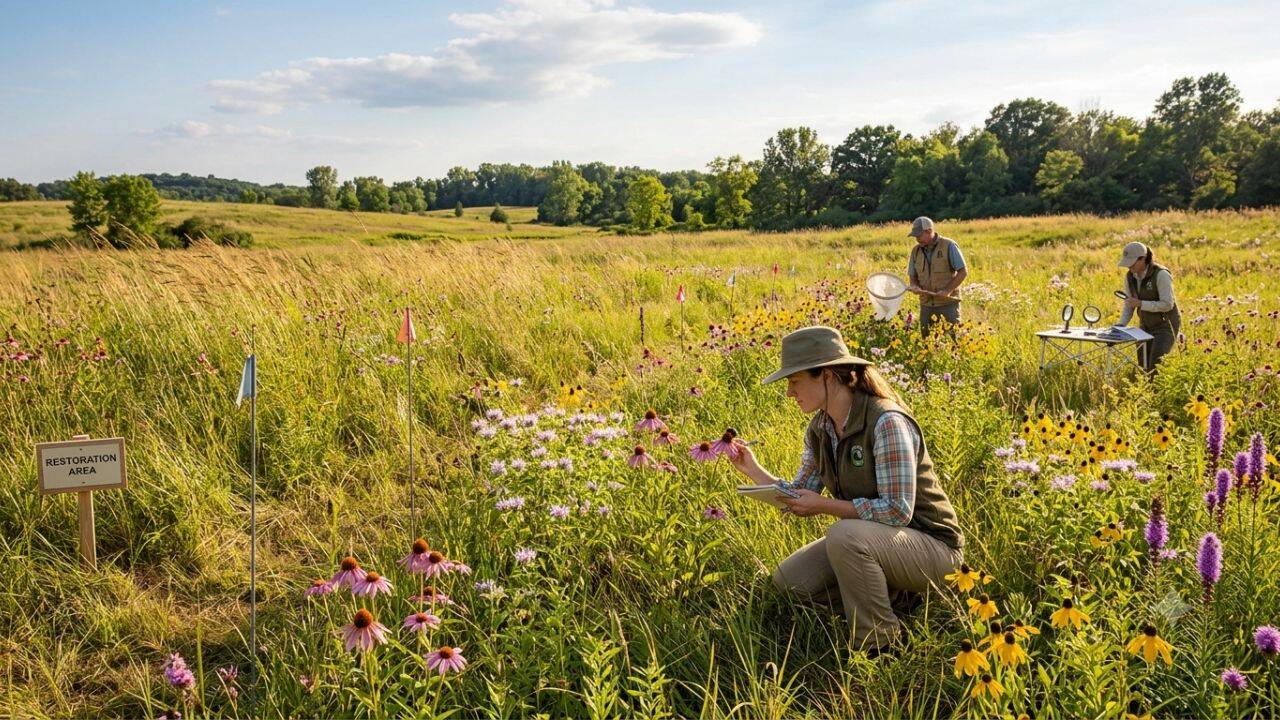
Rare bumblebees are turning up at Wisconsin’s restored prairie sites
Pollinator surveys in restored areas have found a greater variety of bumblebees than in less suitable parts of the landscape, with some of the rarer species appearing only where habitat conditions have improved.A restored prairie may look successful from a distance, but the presence of different bee species gives another indication of whether the habitat is functioning as intended. The rusty patched bumblebee makes the comparison particularly significant. Once widespread across the eastern United States and upper Midwest, its population has fallen sharply. The species is now federally endangered and has become uncommon across much of its former range.Southeast Wisconsin remains one of the areas where the bee can still be found. Surveys carried out on local preserves have recorded rusty patched bumblebees at several sites, showing that restored and protected landscapes can still support a species that has suffered major losses elsewhere.
How the rusty patched bumblebee differs from other bees
The rusty patched bumblebee is not necessarily obvious at first glance. It looks much like other bumblebees, but the reddish-brown or orange marking on its abdomen provides a useful clue.In females and males, the rusty-coloured patch occurs on the second abdominal segment. Yellow hairs surround the patch, separating it from the darker hairs farther along the abdomen. That combination helps distinguish it from some other bumblebees with reddish or brown colouring. A dark marking on the upper part of the thorax can resemble a small thumbtack. It is not unique to the species, so it works best alongside the abdominal pattern rather than as a stand-alone identification.Queens can make things harder. Some female rusty patched bumblebee queens do not have the familiar rusty marking and instead show yellow colouring across the first two abdominal segments. In those cases, the thorax marking becomes more useful.
Why restoring flowers can make such a difference
A prairie is not just a collection of attractive flowering plants. Its value to pollinators comes partly from the sequence of resources it provides.Early in the year, newly emerged queens have to find enough food while searching for suitable nesting sites. Species such as hepatica can provide an early source of nectar and pollen, before many of the summer flowers have appeared. Later, plants including wild bergamot, milkweed, prairie clovers, mountain mint and asters can keep providing food as the season progresses.That seasonal spread is important for a colony that develops over several months. A landscape with flowers for only a short period may leave bees with a gap in their food supply, even if it looks productive at one particular point in the year.Native trees and spring flowers can therefore be just as relevant as the plants that dominate a prairie in midsummer. For an emerging queen, the first few weeks can determine whether she manages to establish a colony at all.
Habitat loss, disease and pesticides are putting pressure on bumblebees
There are many species of bumblebee, and they do not all use the landscape in exactly the same way. Different bees may visit different flowers, forage at different times or respond differently to changes in habitat.Losing one species therefore means losing more than another insect from a list. It removes a particular part of the pollination network. The rusty patched bumblebee was once widespread across the eastern US and upper Midwest, but its population has declined by 87% over the past two decades. With numbers falling so sharply, encountering one in the wild has become an increasingly uncommon sight.Its recovery is consequently being watched alongside efforts to understand why other pollinators are declining. A rare species can provide an early indication that something has changed in the places where it once lived.