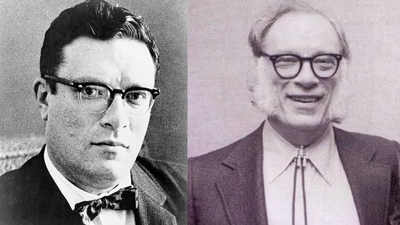
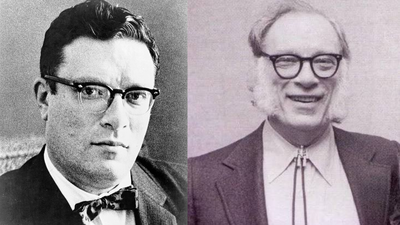
Humanity has never had access to information on the scale available today. With a few taps, we can find scientific discoveries, historical records, news and opinions from almost anywhere in the world. Yet having more information does not necessarily mean becoming wiser about how to use it. Isaac Asimov captured this tension in the words, “The saddest aspect of life right now is that knowledge gathers faster than society gathers wisdom.” The quote points to a gap that becomes more noticeable as technology advances: our ability to discover and accumulate knowledge can move much faster than our ability to understand its consequences. We may learn how to create something long before we have decided whether we should, or understand what a technology can do without fully considering what it might do to society.Isaac Asimov (1920-1992) was a Russian-born American writer, biochemist and one of the most influential science-fiction authors of the 20th century. Through his fiction and essays, he frequently explored the relationship between scientific progress, human behaviour, ethics and the future.
Quote of the day by Isaac Asimov
“The saddest aspect of life right now is that knowledge gathers faster than society gathers wisdom.”
What does this quote mean?
Asimov made a comparison between knowledge and wisdom. Knowledge is the information about how something works whereas wisdom is about understanding how to use knowledge. A society can have outstanding scientific development but be faced with problems of responsibility, ethics, and consequences. This means that one should think whether technological progress is followed by moral and social ones.
Knowledge tells us what we can do
Science and technologies have brought a lot of possibilities to people. Humans can modify their genome, exchange messages immediately despite the distance, leave Earth and build robots able to complete more and more complex tasks. This shows how powerful the acquired knowledge can be. But just because we know that something is possible doesn’t mean that we should make it happen.
Wisdom asks what should happen next
Wisdom entails much more than gathering additional information. Instead, it is all about placing the acquired knowledge into perspective, while taking into account its impact on other people and on posterity. The technology capable of solving a certain issue might be harmful for others. An invention can be very profitable but at the same time socially disrupting. Wisdom means thinking about something more than just about its immediate consequence.
The information age makes Asimov’s warning even more relevant
Asimov’s observations about the difference between knowledge and wisdom were made decades ago. At that time the information age was not as developed as it is now. But today billions of people gain access to an incredible amount of information almost instantly. However, the information can be distributed without proper context and analysis. Having more data available doesn’t mean that it will be interpreted wisely. Sometimes, quite the contrary, it becomes more difficult to distinguish facts from misinformation.
Technology can move faster than society
A perennial problem in the development of new technologies is that innovations may come before regulations, conventions, and other systems are ready for them. Artificial intelligence is a case in point. The capabilities of artificial intelligence are growing at a rapid pace, and questions remain on the issue of privacy, employment, misinformation, safety and accountability. The quote demonstrates a trend that is common enough; human creativity is much quicker than wisdom.
Progress needs reflection, not just acceleration
It is natural for us to equate speed with progress. However, in order to make progress, it is crucial not only to move fast but to know one’s direction and to know what may happen along the way. It looks like a long process of thinking, studying possible consequences and listening to others’ opinions makes the use of knowledge irresponsible.
Wisdom grows through experience and responsibility
Knowledge differs from wisdom in that while the former can be transferred, the latter cannot. Wisdom is based on experience, reflection, mistakes and knowledge of consequences. Wisdom appears gradually, as society passes through generations of people who learn what works well, what is harmful and what values need to be preserved.
Why this quote still matters today
The words of Asimov resonate all the more today in a world where there are technological possibilities which seem beyond imagination due to their sheer speed. The fact of the matter is that we can explore more, think more and create more than ever before, but these opportunities entail dilemmas which have to be faced. The lesson which comes out of the quote is that it is through knowledge that man gets empowered while wisdom ensures how he uses his powers.