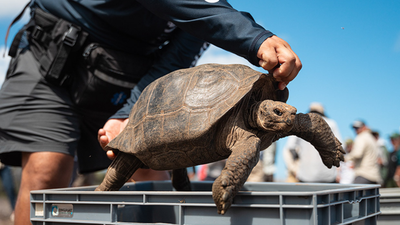
The story of the Galápagos giant tortoise is one of exploitation, extinction and an extraordinary conservation comeback. Pirates, whalers and other sailors once collected the slow-moving animals from the islands as a reliable source of fresh meat, taking advantage of their ability to survive for months without food or water. On Floreana Island, relentless hunting, along with the arrival of invasive animals and changes to the island’s vegetation, eventually wiped out its native giant tortoise population in the 1850s. Yet part of the lineage survived elsewhere. Genetic research later found tortoises on Isabela Island carrying ancestry from the extinct Floreana population. Following more than two decades of breeding and conservation efforts, 158 young Floreana-lineage tortoises were released on Floreana on February 20, 2026, returning the animals to their ancestral home after more than 180 years.
How pirates and whalers drove the tortoises towards extinction
Pirates, whalers and other sailors once collected Galápagos giant tortoises for fresh meat during long voyages. The animals could survive for months with little food or water, making them valuable provisions aboard ships. Heavy hunting drastically reduced several island populations. On Floreana, the pressure was compounded by introduced animals that competed for vegetation or preyed on tortoise eggs and young.
Floreana’s giant tortoise disappeared in the 1850s
The Floreana giant tortoise eventually disappeared from the island around the 1850s. Hunting was not the only factor. Goats, cattle, donkeys and other introduced animals altered the island’s vegetation, while rats, pigs and dogs posed threats to eggs and young tortoises. A 2023 Scientific Reports study examined historical tortoise remains using stable-isotope analysis and radiocarbon dating, finding evidence of major dietary and environmental changes before the population disappeared.
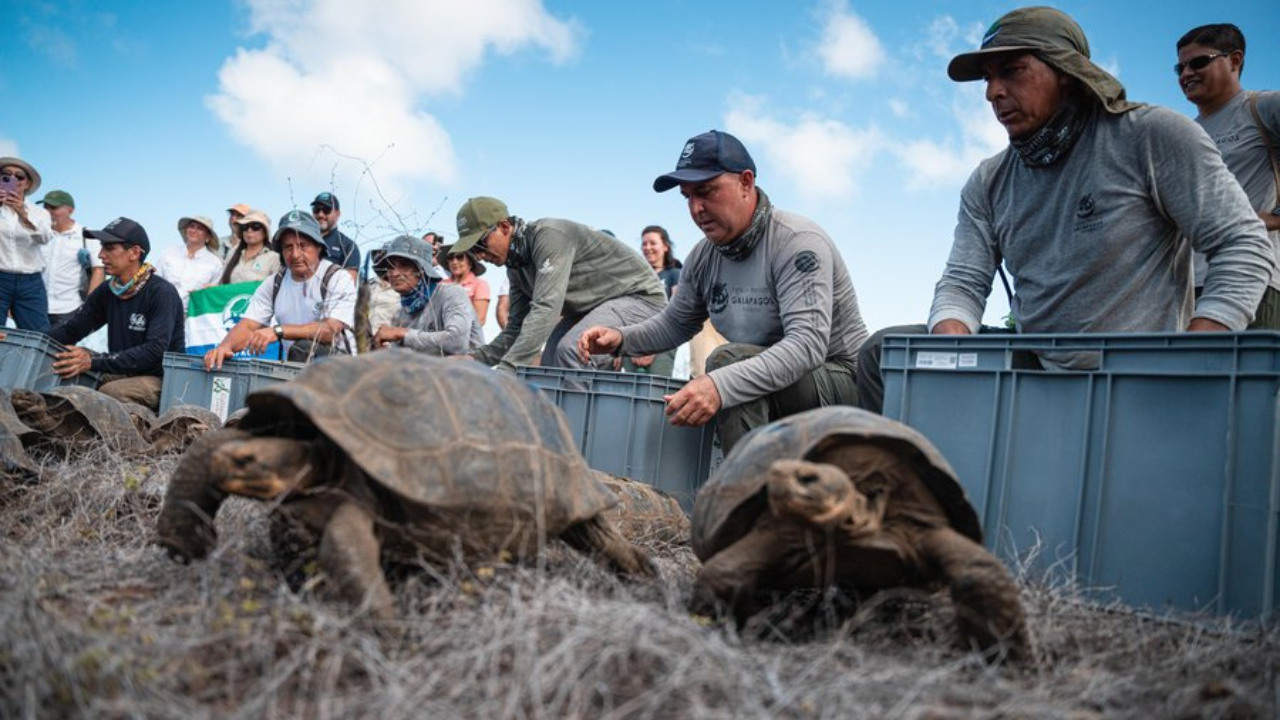
Image: Charles Darwin foundation
Scientists found the lost lineage on Isabela
The breakthrough came on Isabela Island. Researchers discovered tortoises around Wolf Volcano carrying genetic ancestry from the extinct Floreana population. A 2017 Scientific Reports study examined 150 tortoises and identified 65 with Floreana ancestry. Scientists selected some of these animals for a breeding programme, creating a way to recover part of the lost lineage without cloning an extinct species.
More than two decades of breeding prepared the return
Conservationists spent more than 20 years breeding tortoises carrying Floreana ancestry. The young tortoises were raised in controlled conditions until they were large enough to survive in the wild. The work forms part of the wider Floreana Ecological Restoration Project, which also targets invasive species and aims to restore other native animals that disappeared from the island.On February 20, 2026, 158 young Floreana-lineage tortoises were released on Floreana Island, marking the return of giant tortoises after more than 180 years. The animals are being monitored as they adapt to the island. Their return is significant because giant tortoises disperse seeds, graze vegetation and reshape habitats, meaning their presence can help restore ecological processes that disappeared with them. Further releases are planned as the restoration programme continues.