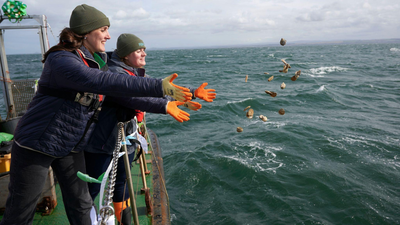
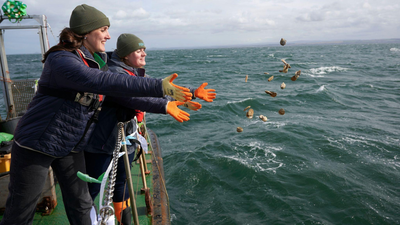
A Scottish restoration project has returned 60,000 native oysters to the Firth of Forth, reviving a species that once formed vast oyster beds across an area roughly comparable to the size of Edinburgh. The Restoration Forth partnership originally aimed to return 30,000 European flat oysters to the estuary, but the target was later doubled after encouraging early results. The latest milestone marks a major step in an effort to rebuild a marine ecosystem that was once highly productive but disappeared after decades of overfishing, pollution and other pressures. The project is not simply counting oysters released into the water. Scientists and volunteers are monitoring their survival, growth and wider ecological effects, hoping the returning oysters can eventually reproduce and help establish self-sustaining reefs in the Forth.
Scottish river once had oyster beds the size of Edinburgh
The Firth of Forth once supported an enormous native oyster population, with oyster beds covering about 129 square kilometres, an area often compared with the size of Edinburgh. Historical records show the scale of the fishery was extraordinary. Between 1834 and 1836, around 59 million oysters were landed from the Forth. The native European flat oyster, Ostrea edulis, was an important part of the estuary’s marine environment, creating beds that provided habitat for other organisms while filtering seawater. That abundance eventually collapsed under sustained pressure. Overfishing was a major factor, while pollution, disease, pests and industrial development also contributed to the decline. NatureScot records that the Forth’s oyster beds had become extinct by 1957, leaving the restoration project with the task of bringing back a species that had once been deeply embedded in the estuary’s ecosystem.
Scientists and volunteers began rebuilding what was lost
Restoration Forth brought together Heriot-Watt University, WWF, the Marine Conservation Society and several other organisations to test whether native oysters could once again survive in the Forth. The first oysters were reintroduced in 2023, marking the return of the species after decades of absence. Rather than treating the release as a one-off conservation exercise, researchers established monitoring programmes to understand how the oysters responded to their new environment. Mature oysters have been sourced from Loch Ryan, home to Scotland’s remaining active oyster fishery, before being prepared and moved into restoration sites. Biosecurity is an important part of the process, with oysters cleaned before transfer to reduce the risk of introducing diseases or unwanted organisms. Hundreds of volunteers have also helped with the preparation and monitoring work, turning the project into a wider community effort as well as a scientific experiment.
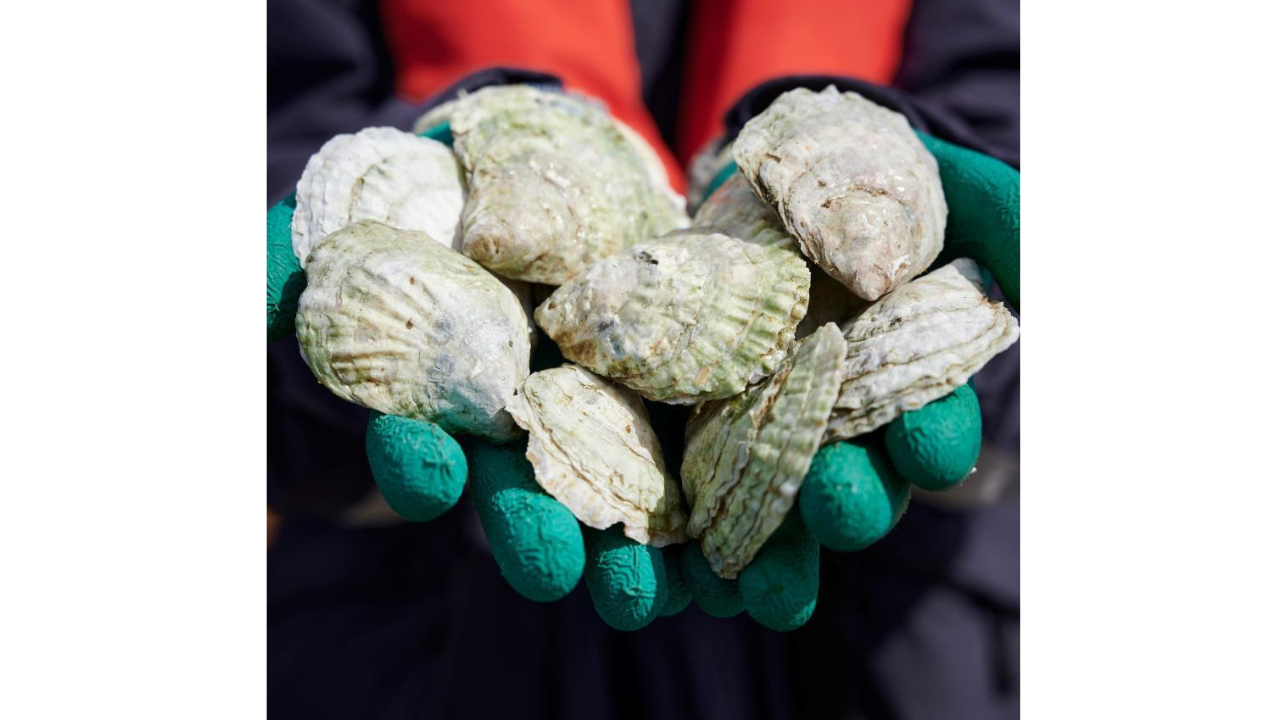
60,000 oysters have now been returned
The project initially planned to introduce 30,000 oysters, but the target was subsequently doubled to 60,000. In March 2026, Heriot-Watt University announced that the project had reached that expanded target after another 14,080 oysters were introduced. The number represents a significant milestone for the restoration programme, but it is still only a fraction of the millions of oysters that once occupied the Forth. The aim is therefore not simply to recreate the historical population immediately, but to establish the foundations for its long-term recovery. Researchers want the oysters to survive, mature and eventually reproduce, allowing young oysters to settle naturally and gradually expand the restored population. Reaching 60,000 therefore represents an important stage in the process rather than the completion of the restoration. The project’s longer-term success will depend on whether the oysters can form stable populations without continued human intervention.
Early monitoring has shown encouraging signs
The first monitoring results have given researchers reasons for optimism. Heriot-Watt reported an average survival rate of about 88% in its monitored oysters in late 2025, while one monitored oyster grew by 2.1 centimetres over a year, more than the roughly 1 centimetre annual growth expected under favourable conditions. Researchers are continuing to track survival and growth because the ability of the oysters to remain healthy in the Forth is central to the project’s future. Native oysters are also known as ecosystem engineers because groups of oysters can create complex three-dimensional structures on the seabed. Their shells provide surfaces and shelter for other marine organisms, potentially increasing biodiversity around restored beds. Individual oysters can also filter substantial quantities of seawater. These benefits mean that restoring oysters is intended to have effects beyond the species itself, potentially helping rebuild parts of the wider marine ecosystem that disappeared with the historic oyster beds.
The goal is a self-sustaining reef ecosystem
The 60,000-oyster milestone is part of a much broader attempt to restore the Forth’s coastal environment. Restoration Forth is also working on seagrass recovery, with the wider programme aiming to restore around four hectares of seagrass habitat. Scientists hope that restoring different habitats together will create stronger ecological benefits than working on individual species in isolation. The biggest test for the oyster programme will now be whether the reintroduced animals can reproduce successfully and create new generations that survive naturally. NatureScot notes that recovery of native oyster populations can take years and depends on factors including suitable habitat, successful recruitment and sufficient breeding adults. The Forth’s historic oyster beds will therefore not return overnight. But with 60,000 native oysters now back in the estuary, researchers have created a substantial foundation for testing whether a lost ecosystem can once again establish itself.