The rapid expansion of artificial satellite constellations is changing the appearance and accessibility of the night sky, creating a new challenge to the field of astronomy. For decades, the primary concern for astronomers was light pollution present on earth, but the introduction of large-scale telecommunication networks, such as SpaceX’s Starlink, has introduced a new form of orbital traffic. Two research papers published by the European Southern Observatory (ESO) provide a quantitative analysis of the impacts of satellite constellations. The first study, published in 2020, examined the initial plans for 26,000 satellites, while the updated 2026 study evaluated the threat of over 1.7 million planned objects. These findings suggest that without strict international regulations on satellite brightness and numbers, the ability of observatories and the general public to view a clean, dark sky may be compromised forever.
Why is there a massive amount of satellites present in the earth’s orbit
The astronomical community is deeply alarmed by the sheer volume of planned satellite launches. The 2020 research paper titled ‘Impact of satellite constellations on astronomical observations with ESO telescopes in the visible and infrared domains,’ initially evaluated 18 sub-constellations comprising roughly 26,750 satellites. By the time the 2026 follow-up paper titled ‘Large or bright satellite constellations,’ was released, the number of planned satellites had soared to over 1.7 million. This massive increase is dominated by projects like SpaceX’s Orbital Data Centres, which alone could include one million satellites, and also by the increased deployments from companies like E-Space and various national agencies. These mega-constellations are designed for global broadband and data services, requiring a vast network of hardware in Low-Earth Orbit.
How much visible are these satellites to the human eye
A major concern for the public is whether these satellites will hide the natural stars. The 2020 study estimated that immediately after sunset, about 1,600 satellites would be above an observatory’s horizon, with approximately 260 being bright enough to get noticed with the naked eye. Astronomers use a ‘magnitude’ scale where higher numbers depicts fainter objects and the international recommendation is that satellites should be fainter than magnitude 7 to remain invisible to the naked eye. However, if a constellation of one million satellites were launched and only slightly breached this magnitude limit, thousands of artificial objects could become visible. This would fundamentally change the night sky’s appearance, making it difficult for anyone to view the cosmos.
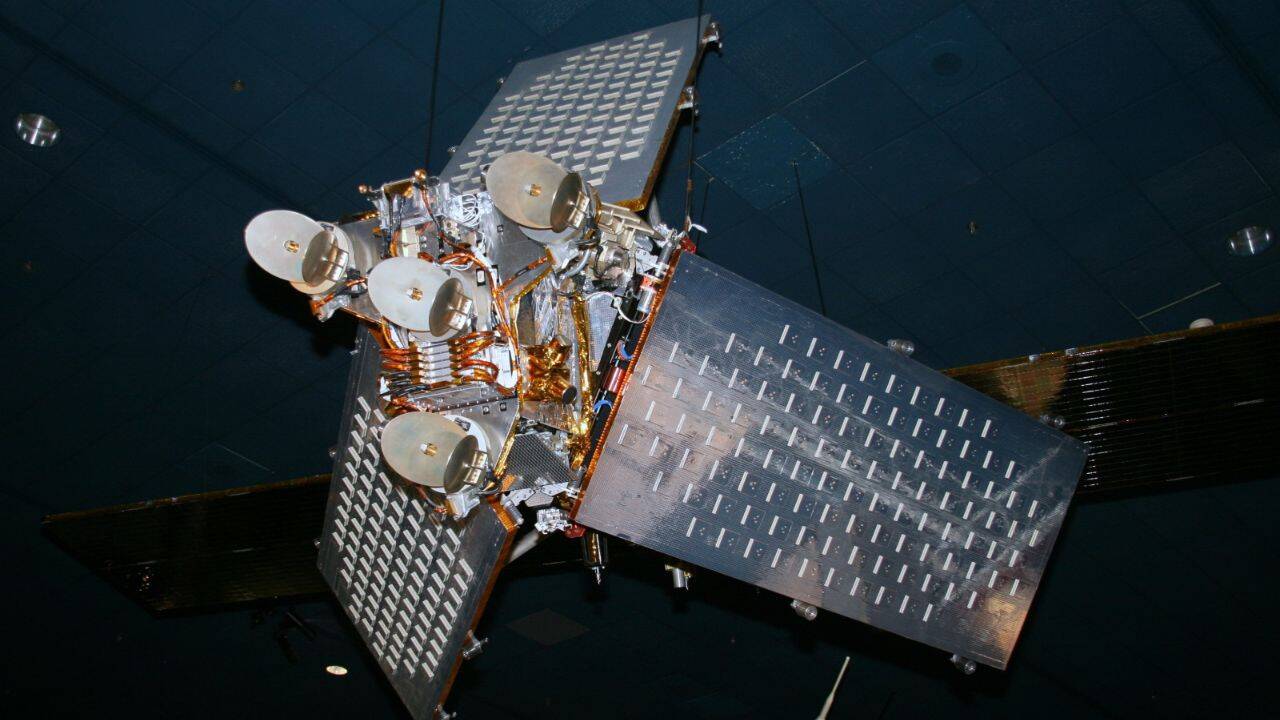
Image Credit: By Cliff – originally posted to Flickr as Iridium Satellite
What kind of danger does it creates for professional telescopes
For professional scientists, the issue is not just visibility but the physical ‘photo-bombing’ of scientific data. When a satellite crosses the field of view(the area a telescope is currently observing), it leaves a bright line of path behind. The 2020 ESO study found that while traditional telescopes might only lose about 1% of their exposures, modern, wide-field telescopes are in serious danger. For example, Vera C. Rubin Observatory, which uses a massive camera to scan the entire sky, could get 30-50% of its observations ruined by these bright lines. These lines can saturate the camera lenses, creating ‘ghost’ images and leave the entire frame useless for research.
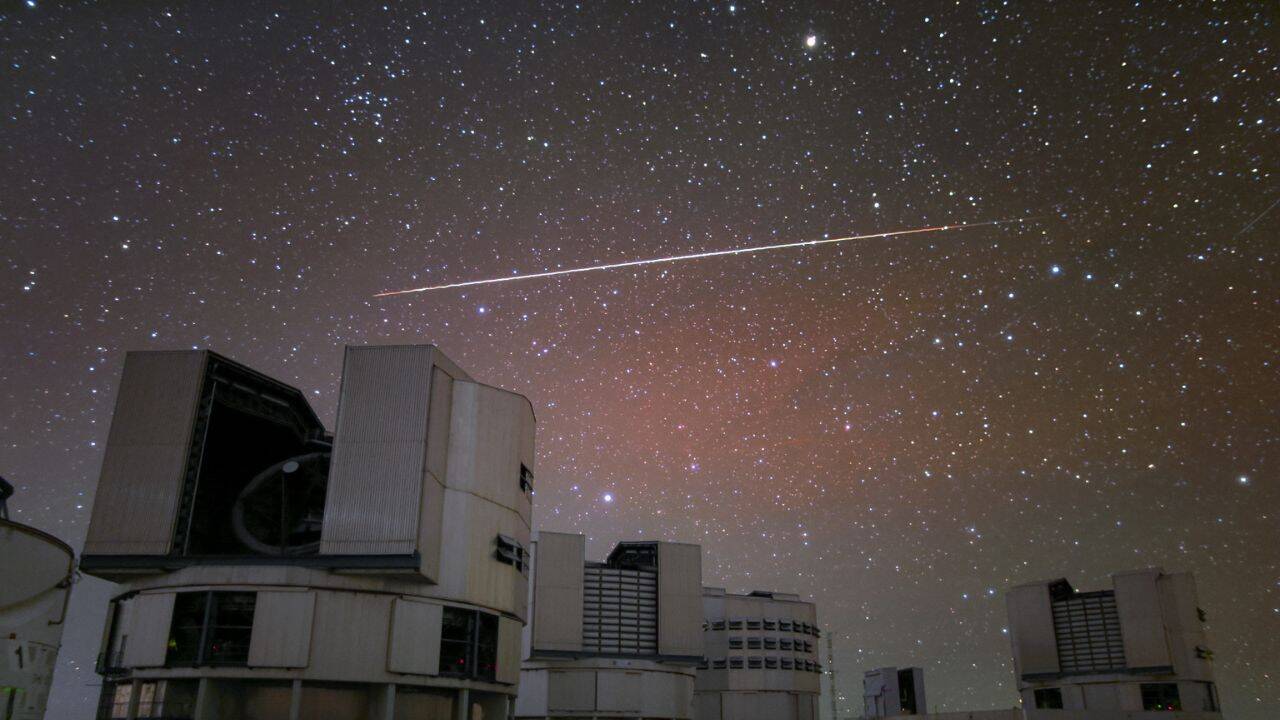
Image Credit: R. Wesson/ESO
Can these satellite-constellations brighten the whole atmosphere
One of the most surprising findings in the 2026 paper is that satellites can pollute the sky even when they are not directly in the path of a telescope. Just like the Moon makes the entire sky look brighter, millions of satellites can reflect sunlight that scatters off molecules and dust in the Earth’s atmosphere. The study warns that if mirror-based satellite constellations are deployed at a scale of 50,000, they could increase the sky’s background brightness by 200-300%. Such a change would make it impossible to observe the faintest galaxies in the universe.
Are some satellites brighter than natural planets
Newer generations of satellites are becoming large and reflective. The 2026 paper highlights ‘direct-to-cell’ satellites, which contain massive antennas that can be 36 times brighter than current astronomical recommendations. Even more dangerous are the proposed ‘Reflect Orbital’ mirror satellites, which are estimated to reach a brightness close to that of the planet Venus.
How can the future of astronomy be protected
Despite these challenges, researchers have proposed several ways to coexist with these constellations. The 2020 study suggests that scheduling the observations could avoid the first and last hours of the night when satellites are at their brightest. Another method involves precision tracking of satellites so one can briefly close a telescope’s shutter as a satellite passes. However, the 2026 paper says that these moderations are for a limited time. In order to truly save the night sky, the total number of satellites in orbit should ideally remain below 100,000. Achieving this requires urgent coordination between the scientific community, satellite operators, and government regulators to ensure that outer space does not become a closed door for those trying to study it from the ground.