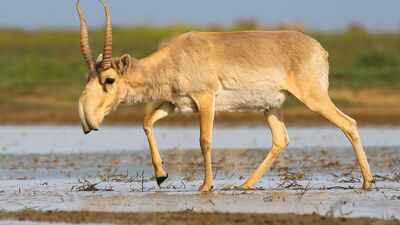
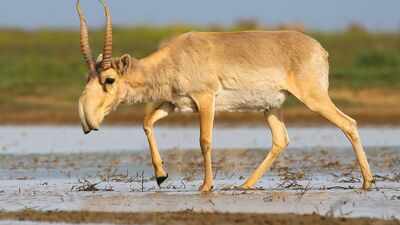
In 2015, Kazakhstan’s vast grasslands became the scene of one of the most devastating wildlife losses in recent history. Around 200,000 saiga antelopes died within weeks, leaving a population already weakened by poaching and earlier declines facing another impossible setback. The disaster wiped out more than two thirds of the world’s saigas at the time and nearly destroyed this Betpak-Dala population in central Kazakhstan. Yet a decade later, the story has taken an extraordinary turn. A nationwide spring census in 2026 found that Kazakhstan’s saiga population had surpassed 4.6 million animals, according to The Astana Times. The recovery has transformed the antelope from a species on the brink into one whose growing numbers now bring new challenges for farmers and wildlife managers. Behind that rebound lies a story of disease, protection, persistence and the unpredictable consequences of conservation success.
How did Kazakhstan lost 200,000 saigas in just under a year
The mass die-off began around 10 May 2015, during the saigas’ calving season and spread across several groups in central Kazakhstan. Within three weeks, approximately 200,000 animals were dead. According to a study published by the US Centers for Disease Control and Prevention(CDC), the deaths represented more than 2/3rd of the global saiga population at the time. The outbreak wiped out an estimated 88% of the Betpak-Dala population and appeared to have an almost complete fatality rate among affected animals.The research identified haemorrhagic septicaemia caused by the bacterium ‘Pasteurella multocida serotype B’ as the primary cause of death. Scientists examined samples from dead saigas using several advanced testing methods but found no additional pathogen that could explain the catastrophe. The disaster was particularly alarming because saigas had already endured decades of instability. As the CDC study noted, the population in Kazakhstan had fallen from roughly 2 million animals in the 1970s to about 50,000 in the early 21st century because of poaching and repeated mass die-offs.
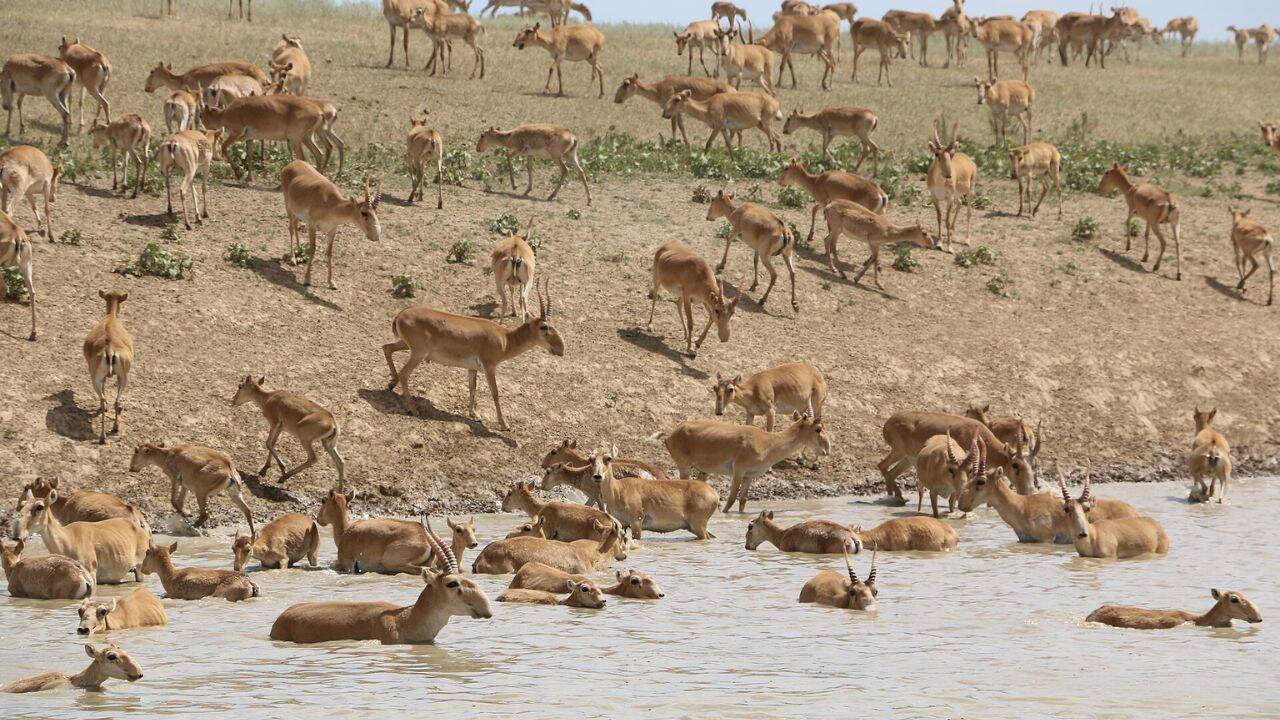
Herd of saiga antelope gathered at the water’s edge in western Kazakhstan. Image Credit: Yakov Fedorov/Wikipedia
Scientists linked the 2015 saiga catastrophe to environmental conditions
Another study titled ‘Saigas on the brink,’ offered a deeper explanation for why the 2015 event unfolded so rapidly. Along with the haemorrhagic septicaemia, what made the event particularly troubling was the ‘environment.’ The researchers found unusually high temperature and humidity in the days before the mass mortality event. Similar weather patterns had also been recorded during two earlier die-offs in the same region. The study suggested that these conditions may have helped trigger the normally harmless bacteria carried by the animals, allowing them to multiply and become deadly. The findings also raised concerns about the vulnerability of saigas to future environmental and climate-related pressures. The 2015 event therefore became more than a single wildlife disaster. It showed how quickly an already vulnerable population could be overwhelmed when disease and environmental conditions came together.
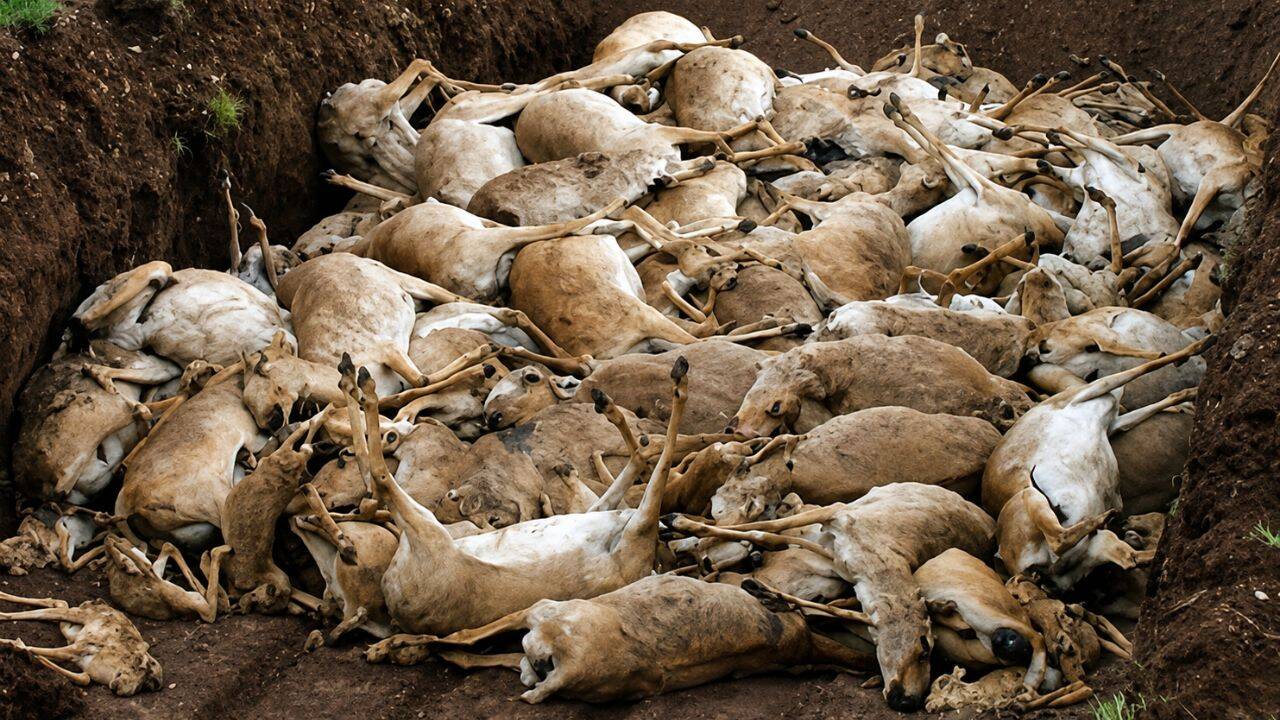
Saiga carcasses were counted and then buried. Image Credit: S. Zuther
Protection and monitoring helped the saigas return
Despite the scale of the loss, Kazakhstan’s saiga population began a dramatic recovery. According to Global Voices, the country intensified its conservation efforts over many years by creating protected areas, tackling poaching and strengthening legal penalties. The scale of the earlier poaching crisis had been severe. Global Voices reported that between 1991 and 2006, Kazakhstan’s saiga population declined by an estimated 94–97%, reaching only about 21,000 animals by 2003. Demand for the males’ distinctive horns had been a major driver of illegal hunting.The recovery that followed was the result of long-term protection rather than a quick fix. Protected areas gave the animals greater security, while stronger action against poachers helped reduce one of the species’ most persistent threats. Global Voices described the recovery as the ‘Kazakh miracle.’ By 2023, the saiga population had reportedly grown from about 21,000 to 1.9 million in roughly two decades, turning the animal into one of the country’s most striking conservation success stories.
The saiga population has now grown beyond anyone’s expectations
The recovery has continued at an astonishing pace. According to The Astana Times, Kazakhstan’s nationwide spring census in 2026 recorded more than 4.6 million saigas. The survey, carried out by the Association for the Conservation of Biodiversity of Kazakhstan, found approximately 2.7 million Ural saigas, around 119,000 Ustyurt saigas and about 1.87 million Betpak-Dala saigas. The numbers are especially striking given what happened in 2015. The Betpak-Dala population, which was devastated during the mass die-off, has now grown to well over a million animals. But the story does not end with celebration. A conservation victory on this scale has created an unexpected problem that ‘how should a rapidly expanding wildlife population coexist with the people who share the same landscape.’
Can Kazakhstan balance saiga conservation success with the needs of farmers
By 2025, the rapid growth of saiga numbers had become a source of tension in some parts of Kazakhstan. According to Global Voices, farmers complained that large herds were competing with livestock for pasture and water and damaging crops and hayfields. Only a few decades earlier, the greatest fear was that the antelope might disappear altogether. Global Voices also pointed out that human activity has spread into areas traditionally used by saigas, while climate change and reduced access to pasture and water have also increased the tensions.At the same time, saigas remain an important part of the steppe ecosystem. Their movement across the grasslands and their feeding habits help shape the environment in ways that differ from domestic livestock. The journey from the mass death in 2015 to more than 4 million saigas in 2026 is an extraordinary reversal. Yet it is also a reminder that conservation does not end when a population recovers. For Kazakhstan, saving the saiga was only the first challenge. The next one may be finding a way to ensure that millions of these animals can continue to roam the steppe while the people living alongside them are not left behind.