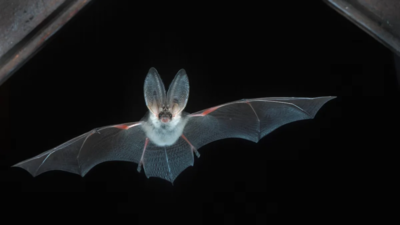
Sheep grazing can change the conditions that bats encounter when hunting for insects, with some species becoming more active while livestock are on the land and for a short time after they leave. A survey of 49 sheep-grazed pastures in southern Burgenland, Austria, recorded 20 of the region’s 24 bat species during the summer of 2019. The response was not the same across all groups. Small bats that catch insects while flying through open air were recorded more frequently during and after grazing than before it began. Yet the findings did not point to a general increase in bat numbers or activity across every pasture.
US Midterm Election Results 2026
Researchers record 20 bat species across 49 sheep-grazed pastures in Austria
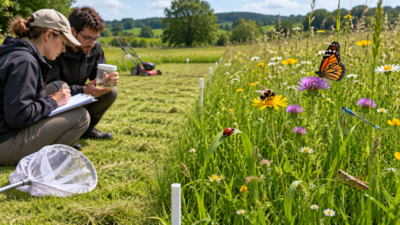
According to the study published in Plos One, titled ‘Do sheep-grazed pastures support insectivorous bat activity and bat species richness?’, the research took place in southern Burgenland, a region in eastern Austria, where scientists monitored bat activity across 49 pastures used by sheep. Acoustic equipment was used to record the animals during the summer of 2019. Rather than treating each pasture as a single grazing environment, the team divided observations into three periods: before sheep arrived, while grazing was taking place and after the animals had left.The recordings identified 20 of the 24 bat species known to occur in Burgenland. The most frequently detected was the Pipistrellus pygmaeus, a small species that feeds on flying insects. The range of species recorded provided an opportunity to examine whether sheep grazing affected different types of bats in the same way.There was no clear indication that pastures attracted a greater variety of bat species simply because sheep had grazed there. Species richness, which measures how many different species were present, remained similar across all three stages.
Researchers find higher bat activity in grazed and recently grazed fields
The clearest change involved small aerial insectivores, a group of bats that catch insects while flying through open spaces. Their recorded activity was significantly higher in pastures where sheep were grazing and in those where grazing had recently finished than in areas that had not yet been grazed.The difference between the grazed and post-grazed periods was not statistically significant. This suggests that the higher activity did not disappear immediately after sheep left the pasture. Some of the smaller bats continued to use these areas during the short period following grazing.When the researchers looked at species that appeared frequently across the sampled sites, they found a slightly different pattern. These bats were more active during grazing than before it began, but their activity levels before and after grazing were similar. The findings therefore point to responses that varied according to the group of bats being examined, rather than a single pattern shared by all species.
Noctule bats showed a different response after sheep had left
At the individual species level, the common noctule (Nyctalus noctula) showed significantly greater activity in post-grazed pastures than in areas that had not yet been grazed. This was a distinct result from the pattern recorded among small aerial insectivores as a group.The noctule is a relatively large bat that hunts flying insects in open air, often at considerable heights. Its increased activity after grazing suggests that the timing of livestock movement may be relevant when examining how different bat species use agricultural land.However, the researchers did not find that every species responded in the same way. Activity among less frequently detected bats showed no significant differences between the three grazing periods. Measurements of total bat activity also remained broadly unchanged, despite the higher recordings for certain groups.
Short-term food availability may explain changes in bat activity after grazing
The study focused on relatively short-term changes, capturing bat activity during grazing and in the days immediately afterwards. The researchers suggested that these brief periods could involve temporary increases in food availability, sometimes described as resource pulses. Such changes may influence where insect-eating bats hunt, although the survey did not establish a single mechanism responsible for the observed patterns.The researchers also cautioned against treating findings from cattle-grazed land as directly comparable with those from sheep pastures. Much of the earlier research into livestock grazing and bats has examined cattle, often across larger pastures and over periods lasting several weeks or months.Those differences can affect the conditions available to bats. Pasture size, the number of animals grazing, the amount of livestock biomass and the processes associated with animal dung may all influence insect availability and feeding opportunities. Sheep and cattle also differ in their grazing patterns, making it difficult to assume that results from one type of livestock will apply to the other.