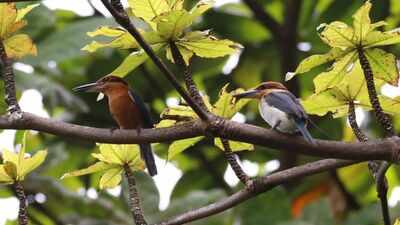
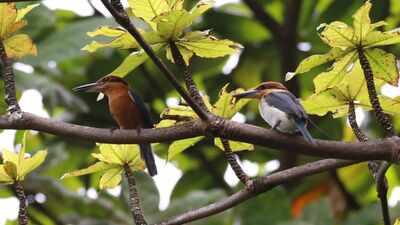
Guam kingfishers, also known as Sihek, have laid eggs on a Pacific island after the species disappeared from the wild on Guam. The birds were released at The Nature Conservancy’s Palmyra Atoll Preserve in September 2024 as part of an international conservation programme. The nine birds, four females and five males, were hand-reared by zookeepers before their release. Since arriving on the atoll, four pairs have established territories, built nests and laid eggs. The birds quickly adapted, learning to forage and hunt prey in the tropical forest around their new home. According to the Zoological Society of London (2025), the eggs marked the first wild eggs for the species in almost 40 years.
Guam kingfishers laid their first wild eggs in nearly 40 years
The nine Sihek were released at The Nature Conservancy’s Palmyra Atoll Preserve in September 2024. The group comprised four females and five males, all raised by zookeepers before being returned to a natural environment. After their arrival, the birds explored the island and learned to find food in its tropical forest. They caught prey including geckos and spiders while adapting to their new surroundings. Four pairs went on to establish territories and build nests. The eggs were laid less than a year after the release. Their appearance marked the first time Sihek had laid eggs in the wild since the species disappeared from Guam in the 1980s.
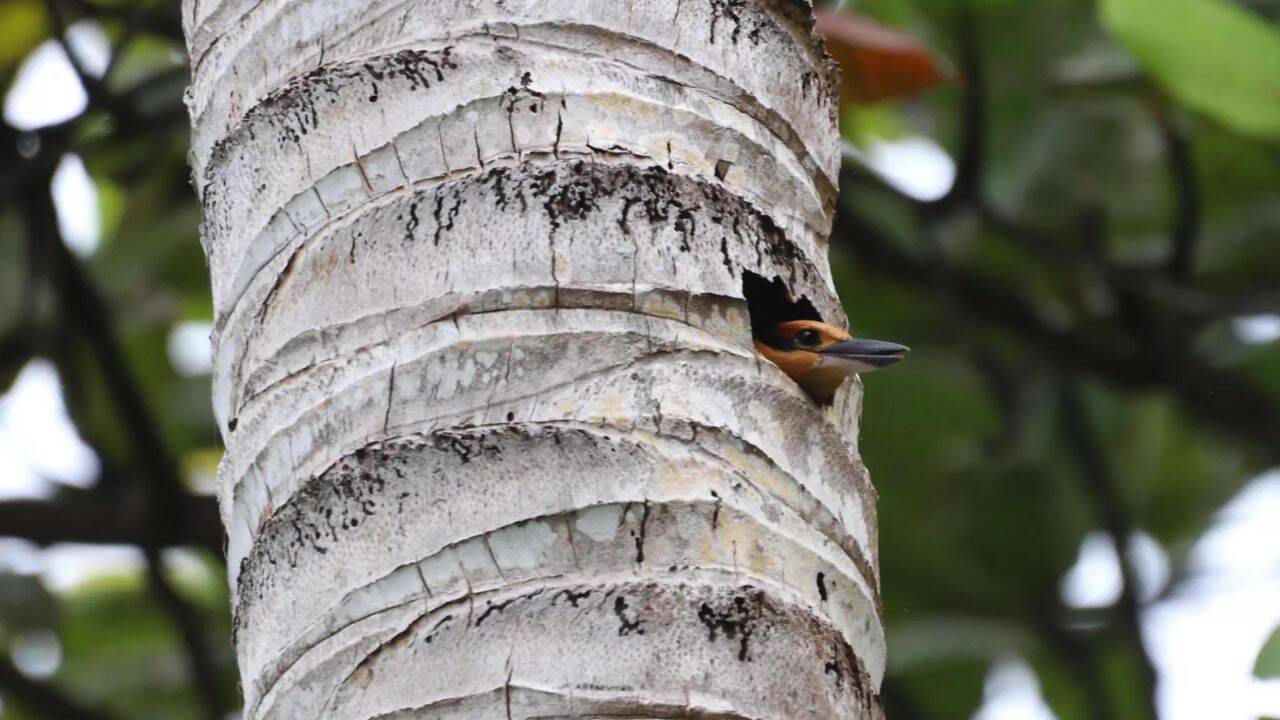
PC: Zoological Society of London
How did conservationists save Guam kingfishers from extinction
Sihek, the name used by the Indigenous CHamoru people of Guam, was once native to the island, also known as Guåhan. Their numbers fell after the brown tree snake was accidentally introduced to Guam in the 1940s. The last wild Sihek was seen in 1988. As the population declined, Guam biologists brought 29 birds into human care, beginning a conservation breeding programme in Association of Zoos and Aquariums-accredited zoos across the United States.The birds were then cared for by participating institutions, with zookeepers helping raise young Sihek for the reintroduction effort. The species is classified as extinct in the wild, making the return to Palmyra an important step towards restoring a wild population as part of a coordinated recovery programme.
Why was Palmyra Atoll chosen as the new home for Guam kingfishers
Palmyra Atoll was selected as the new home for the first Sihek released into the wild in almost 40 years because it is predator-free and fully protected. The Nature Conservancy’s Palmyra Preserve is within the US Fish and Wildlife Service’s Palmyra Atoll National Wildlife Refuge, which extends 12 nautical miles. The area is also covered by the Pacific Islands Heritage Marine National Monument, extending 50 nautical miles.The monument protects a large area of ocean and islands. The atoll lies about 1,000 miles south of Honolulu, Hawaii. Its protected environment offered a place where the birds could explore, forage, hunt and establish territories as conservationists worked to rebuild the species in the wild as part of the wider conservation partnership.
Conservationists planned further releases to help Guam kingfishers return home
The conservation programme aims to establish 10 breeding pairs on Palmyra Atoll. Plans were underway for more young Sihek to be released there in the summer of 2025. Egg-laying season was also underway at participating Association of Zoos and Aquariums-accredited institutions across the United States. As the chicks grow and reach maturity, they are expected to make the journey to Palmyra and join the developing population. The wild birds on the atoll are intended to provide the foundation for a larger, self-sustaining population. The longer-term goal is to help the species return to Guam.