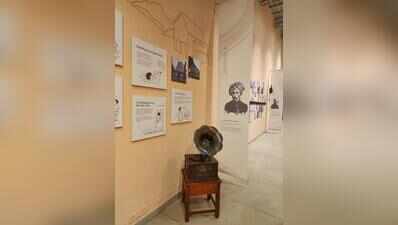
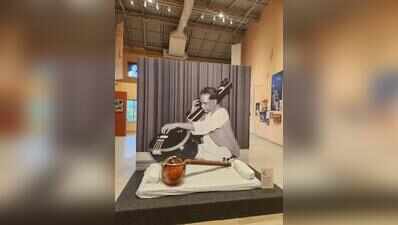
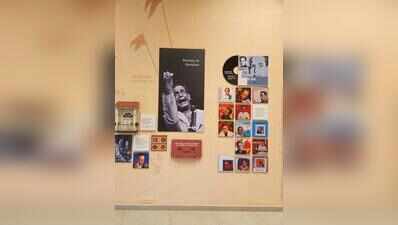
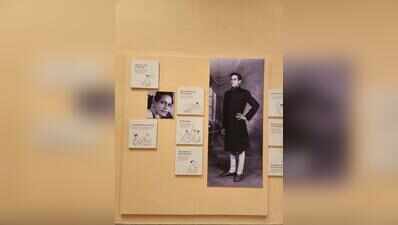
Pune: A young boy left home, travelling by train from town to town, driven by an insatiable ambition to learn music. By age 10, Bhimsen Joshi knew his life’s purpose. Three years later, his meeting with vocalist pandit Sawai Gandharva would give his musical journey a defining direction. This early determination, years of rigorous training and the making of one of Hindustani classical music’s most celebrated voices form the narrative of a new exhibition in Pune.Titled ‘Bhimsen – The Man and His Music’, the audio-visual and photographic exhibition opened at Zapurza Museum of Art and Culture on Nov 23. Joshi, who received the Bharat Ratna in 2009, is remembered through over 200 rare photographs, archival recordings and personal belongings. The exhibition will remain open to visitors for a year.Conceptualised by Ajit Gadgil, the exhibition is structured around the eight praharas (phases) of the day, with each section representing a phase of Joshi’s life. “The exhibition traces Pandit Joshi’s journey from his childhood and early fascination with music to his search for a guru, rigorous musical training and eventual rise to eminence. It goes beyond commemorating the memory of a legendary vocalist. Its larger objective is to preserve his musical legacy, inspire younger generations through his life journey and strengthen their connection with India’s rich tradition of classical music,” Gadgil said.The sections begin with his birth and childhood before moving through his search for his guru, intense musical practice and initial successes. The later sections explore his recorded musical works and artistic legacy, culminating in an experience designed to recreate the atmosphere of attending one of his concerts.The photographic collection includes pictures taken by Joshi himself, along with illustrations depicting significant incidents from his childhood. Photographs by Raghu Rai, Satish Paknikar, OP Sharma, Jitendra Arya, Mohan Wagh, Saaz Agarwal, Jayant Joshi and Anil Deshpande, among others, are accompanied by descriptions and contextual information.His personal tanpura, awards and mementos are also part of the display. Visitors can also watch excerpts from Joshi’s interviews, listen to his musical recordings and view a 1968 documentary by filmmaker Vikas Desai, restored by the Film and Television Institute of India.Joshi’s son, renowned visual artist Jayant, said the exhibition aims to offer younger audiences an example of sustained commitment at a time when digital technology occupies much of their attention. “My father’s life demonstrates the importance of identifying one’s goal at an early age and pursuing it with unwavering determination, hard work, sacrifice and dedication,” he said.The exhibition was developed with contributions from Jayant Joshi, his daughter Yashoda Joshi, Parag Natekar and Ashwin Chikerur. The purpose? To preserve his musical legacy and encourage younger generations to engage with India’s tradition of classical music.