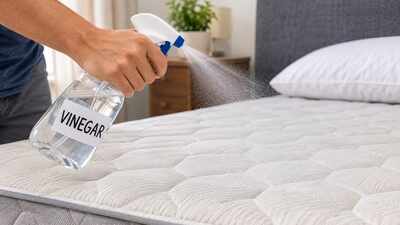
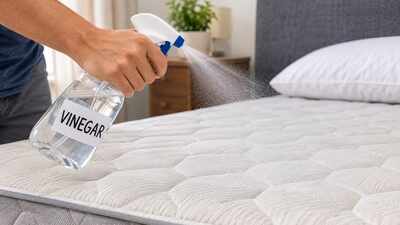
Your mattress is the one thing in the bedroom that rarely gets a proper clean. You wash the sheets every week, but the mattress underneath quietly soaks up sweat, body oils, dust and the odd spilled cup of chai. After a while, it can start to smell a little stale, and a new mattress is an expensive fix. That is why a spray bottle of white vinegar has become such a popular home trick. It is cheap, it is already in your kitchen and it can freshen things up when used with care. Here is what it does, how to use it properly and what to avoid.
What vinegar actually does
White vinegar is a mild acid. Distilled white vinegar contains about 5 per cent acetic acid, which can help inhibit the growth of odour-causing bacteria. That is why it is often used as a general odour neutraliser. It works best on mild, everyday smells such as mustiness and stale sweat. It is not a miracle cure, though. It will not repair old, set-in stains or rescue a mattress that has been badly soaked, and it should not be treated as a way to get rid of pests.
Check the label first
Before you reach for the bottle, look at your mattress care label or the maker’s website. Different mattresses behave differently, and the cleaning guide reminds readers that it is always best to check with the manufacturer about which cleaning solutions the material can tolerate. Memory foam needs extra care in particular. Experts note that memory foam is more prone to trapping moisture than other types, so the lighter your touch, the better. When in doubt, test a small, hidden corner first and wait until it dries.
How to mix and apply it
The usual recipe is simple. Mix equal parts white vinegar and water in a spray bottle. Some foam mattress guides suggest a weaker mix of about a quarter cup of vinegar to three quarters of a cup of water, which is gentler. Strip the bed, vacuum the surface and then spray a light, fine mist. The point is to cover the surface or the smelly spot without making the mattress wet. Do not pour and do not scrub hard, especially on foam, which can be damaged by rubbing.Drying is the most important step, so do not rush it. A guide on memory foam care stresses that giving the mattress time to air-dry is essential, because trapped moisture can lead to mould and mildew. Open the windows, switch on a fan and, if you can, stand the mattress up or leave it in a well-aired room for a few hours. Wait until it is completely dry before putting sheets back on. On a humid or rainy day, give it extra time.
Deal with the vinegar smell
Do not worry if you smell vinegar at first. It fades as it dries, though a strong whiff can hang around if you used too much. If it lingers, sprinkle a thin layer of baking soda over the mattress, leave it for a few hours and vacuum it off. One guide to removing vinegar smell notes that good airflow carries odour molecules away as they evaporate, so keep the room ventilated. Baking soda and fresh air together usually leave the mattress smelling clean and neutral.
How often should you do it?
Treat this as an occasional refresh, not a weekly habit. For a small, mild smell, a quick spot spray when you notice it is enough. For a fuller refresh, many care guides suggest cleaning the mattress around every six months, and foam mattresses, which take longer to dry, are best deep-cleaned only every six to twelve months, or when they actually start to smell. Over-spraying adds moisture, which can cause more trouble than the odour you started with.
Mistakes to avoid
Do not soak the mattress, and do not use heat to speed things up. Guides on foam care warn against steam cleaning unless the maker says it is fine, because the heat and moisture can damage the foam. Avoid mixing vinegar with bleach or other cleaners, as the combination can release harmful fumes. Do not scrub hard on stains. And if there is a strong odour from urine, mould or a spill that has soaked deep, vinegar alone may not be enough, and you may need a specialist product or professional cleaning.
Keep it fresh for longer
A few habits will keep your mattress smelling good between cleans. Use a washable mattress protector, because as a care guide puts it, it helps protect the mattress from dust and sweat, so you will not have to clean it as often. Wash your sheets weekly, let the bed air for a few minutes each morning and avoid eating or drinking on it. Rotate the mattress if the maker recommends it. These small steps do more over the year than any single cleaning trick.
Disclaimer:
This article is for general informational purposes only and does not constitute professional cleaning or product advice. Mattress materials, warranties and manufacturer instructions vary, so always check your mattress care label before using vinegar or any other cleaning solution, and test a small hidden area first. Vinegar can irritate eyes, skin and airways, so use it in a well-ventilated room, and never mix it with bleach or other cleaning chemicals. Vinegar is not a substitute for professional pest control or mould treatment.