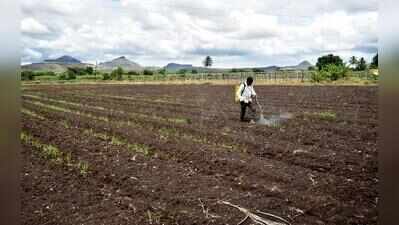
Pune: Soybean productivity in Pune district has declined by 20-22% during the ongoing kharif season, while maize production has dropped by around 15%, with erratic rainfall and prolonged dry spells affecting crop growth across several agricultural pockets in 13 tehsils.The area under soybean crop is close to 44,000 hectares in the district, while paddy is at the top with about 60,000 hectares. The state govt has already declared drought in 11 tehsils of Pune district. The district agriculture office has recorded damage to crops, including kharif crops, over 3 lakh hectares in the kharif season.The decline has been established through crop-cutting experiments carried out in the last few weeks. The affected farmers are entitled to get compensation under the crop insurance scheme, subject to the final yield assessment.The impact of the unfavourable weather conditions has extended to several other crops. Moong (green and black gram) and urad have also recorded lower-than-expected productivity. Against an expected average moong yield of around 7.5 quintals, the actual productivity recorded through crop-cutting experiments has been lower, as revealed by the district agriculture assessment.Crop-cutting experiments for paddy are currently under way, and officials anticipate a significant decline in its productivity as well. Tur and onion crops are also likely to have suffered losses during the season, the officials said. “The decline in soybean productivity is particularly significant given the crop’s importance to farmers’ seasonal income. Irregular rainfall and prolonged dry spells during critical stages of crop growth have affected productivity, leaving farmers with lower output despite expenditure on seeds, fertilisers, pesticides and other agricultural operations,” district agriculture officer Vaibhav Tambe said.Prashant Kute, a soybean grower from Khed, said, “The rainfall has been inconsistent during the critical stage of the crop and therefore we have got almost 50% less yield than last year. Other Kharif crops were also suffered in the similar fashion. The crop insurance and govt aid will help us in overcoming the financial stress so that we can cultivate rabi crops.”Another farmer, Sandeh Jadhav from Junnar, said, “Because of the lack of rainfall, the crops were also affected by several diseases. This has also costed significantly as we did not get yield as well as incurred extra capital on pesticides and fertilisers.”Officials said crop-cutting experiments are crucial for determining crop productivity and calculating insurance compensation. The yield estimates are compared with the prescribed threshold productivity to establish the eligibility of farmers for compensation.Tambe said barring bajra, farmers cultivating several other kharif crops are likely to receive insurance compensation based on the assessed productivity levels. The final compensation will depend on the outcome of the prescribed assessment process.Farmers paid Rs 71 lakh premium, received Rs 14.2 croreDistrict agriculture officials said the previous kharif season demonstrated the benefits of crop insurance. Farmers had collectively paid around Rs 71 lakh as insurance premiums, against which they received approximately Rs 14.20 crore in compensation.With several farmers facing reduced output this season, the department has also appealed to them to enrol for crop insurance during the ongoing rabi season.Wheat is cultivated across nearly 40,000 hectares in the district, while maize and gram account for approximately 25,000 hectares each. Onion and summer moong are other important rabi crops.“The insurance premium is relatively low, with farmers required to pay approximately Rs 60-70 per hectare for crops such as jowar, wheat, gram and onion. This provides farmers with an affordable means of financial protection against potential crop losses in this season. In several areas, farmers undertake sowing using residual soil moisture, while others depend on wells or canal irrigation. However, water availability during subsequent stages of crop growth is uncertain. Farmers have therefore been advised to obtain insurance coverage at the beginning of the season,” a senior official from the agriculture department said.Additional protection against hailstorm damageThe agriculture department has also urged fruit growers to opt for additional insurance protection against hailstorm damage while enrolling under the fruit crop insurance scheme.Under the scheme, compensation is calculated based on weather parameters such as temperature, wind speed and humidity, recorded through automatic weather stations installed at the revenue circle level. However, hailstorm damage requires separate additional insurance protection through an add-on cover. Farmers must specifically opt for this facility.“In the event of a hailstorm, farmers should immediately inform the taluka agriculture officer’s office, agriculture assistant or insurance company. Individual inspections are conducted by agriculture department personnel and insurance company representatives to assess the extent of damage and determine eligible compensation,” said Tambe.For the current year, a private insurance company has been appointed to implement the Pradhan Mantri Fasal Bima Yojana, while the Agriculture Insurance Company of India (AIC) will handle the fruit crop insurance scheme.Both companies have district-level offices and representatives at the taluka level. Tambe has directed taluka agriculture officers to regularly monitor whether these representatives provide accurate information, assist farmers with insurance registration and undertake effective awareness campaigns.He said the agriculture department, banks and insurance companies must coordinate to ensure that the benefits of both crop and fruit crop insurance schemes reach the maximum number of eligible farmers.