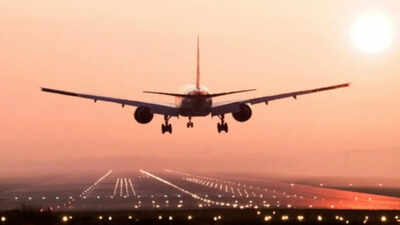
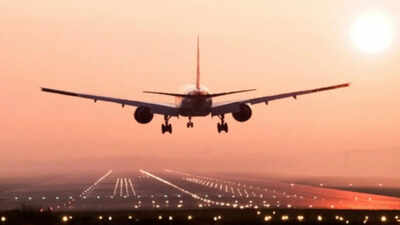
As climate change intensifies turbulence and India’s first-time flyer population grows, the gap between a routine jolt and a serious injury may come down to one simple habit: keeping the seat belt fastened, writesAn Air India flight from Phuket to Delhi dropped nearly 300 feet over Odisha this week, injuring four cabin crew members and more than a dozen passengers. It is the kind of incident that makes headlines for a day and then fades. Except it shouldn’t.Most passengers will go their entire flying lives without experiencing an accident during take-off or landing. Turbulence is different. Nearly everyone who flies often enough will encounter it, and once in a while, it can turn into something close to a nightmare.The Phuket-Delhi flight fits a pattern that recurs with almost clockwork regularity in India between April and mid-July. But it is also part of a wider, worsening global toll.
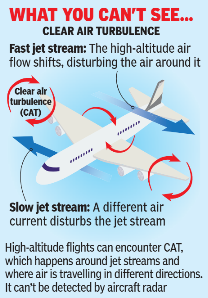
High-altitude flights can encounter CAT
In May 2024, a Singapore Airlines Boeing 777 flying from London to Singapore hit severe turbulence over Myanmar. The impact was so violent that one passenger, who had a heart condition, suffered heart failure and died. Nearly 80 others were injured, making it the deadliest confirmed turbulence event involving a major international carrier in years.In July 2025, a Delta Air Lines flight from Salt Lake City encountered turbulence at 37,000 feet that sent service carts and food flying through the cabin and left passengers hospitalised. In the US, the world’s largest aviation market, turbulence caused more than 200 serious injuries between 2009 and 2024. The annual count has been rising, not flattening.Understanding these weather-related accidents and serious incidents requires distinguishing between two very different kinds of turbulence that aircraft routinely encounter, particularly in India.
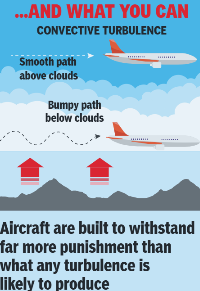
Aircraft are built to withstand far more than what any turbulence can produce
Two Types of TurbulenceThe first is the kind pilots can see coming.As the Indian subcontinent heats up through April, May and mid-June, moisture-laden air is pushed upwards into cooler layers. This creates towering cumulonimbus clouds, or Cb clouds, which can stretch from a few thousand feet to more than 50,000 feet — well above the ceiling of any passenger jet.Inside these clouds are violent updrafts and downdrafts, lightning and hail. Sometimes, the clouds form a chain of cells known to pilots as a squall line.Over the Chota Nagpur Plateau, spanning Jharkhand, Chhattisgarh, Bihar, Bengal and Odisha, these systems have names of their own: Nor’westers or Kal Baisakhi. They typically erupt with startling speed in the afternoon or early evening.
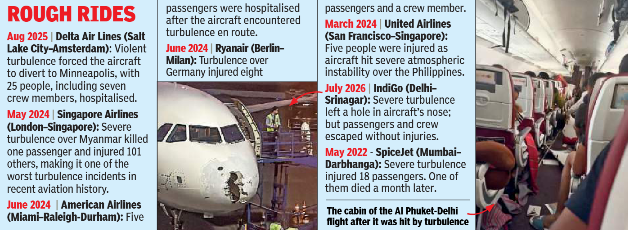
Previous rough rides
This is convective turbulence. Airborne weather radar usually displays it clearly, often in magenta on the cockpit screen, giving crews time to change course.The second kind is more dangerous precisely because it cannot be seen.Clear-air turbulence, or CAT, is generated by jet streams — fast, narrow rivers of high-altitude wind. Sharp differences in speed and direction between adjacent layers create violent wind shear.CAT occurs above 15,000 feet. It is invisible both to the naked eye and to the aircraft’s onboard weather radar. There is no cloud to avoid and no signature on the cockpit screen.The primary warning comes through SIGMETs, or Significant Meteorological Information bulletins. Meteorologists issue them to identify areas where jet-stream turbulence is likely, based on forecast wind shear rather than anything onboard radar can detect in real time.
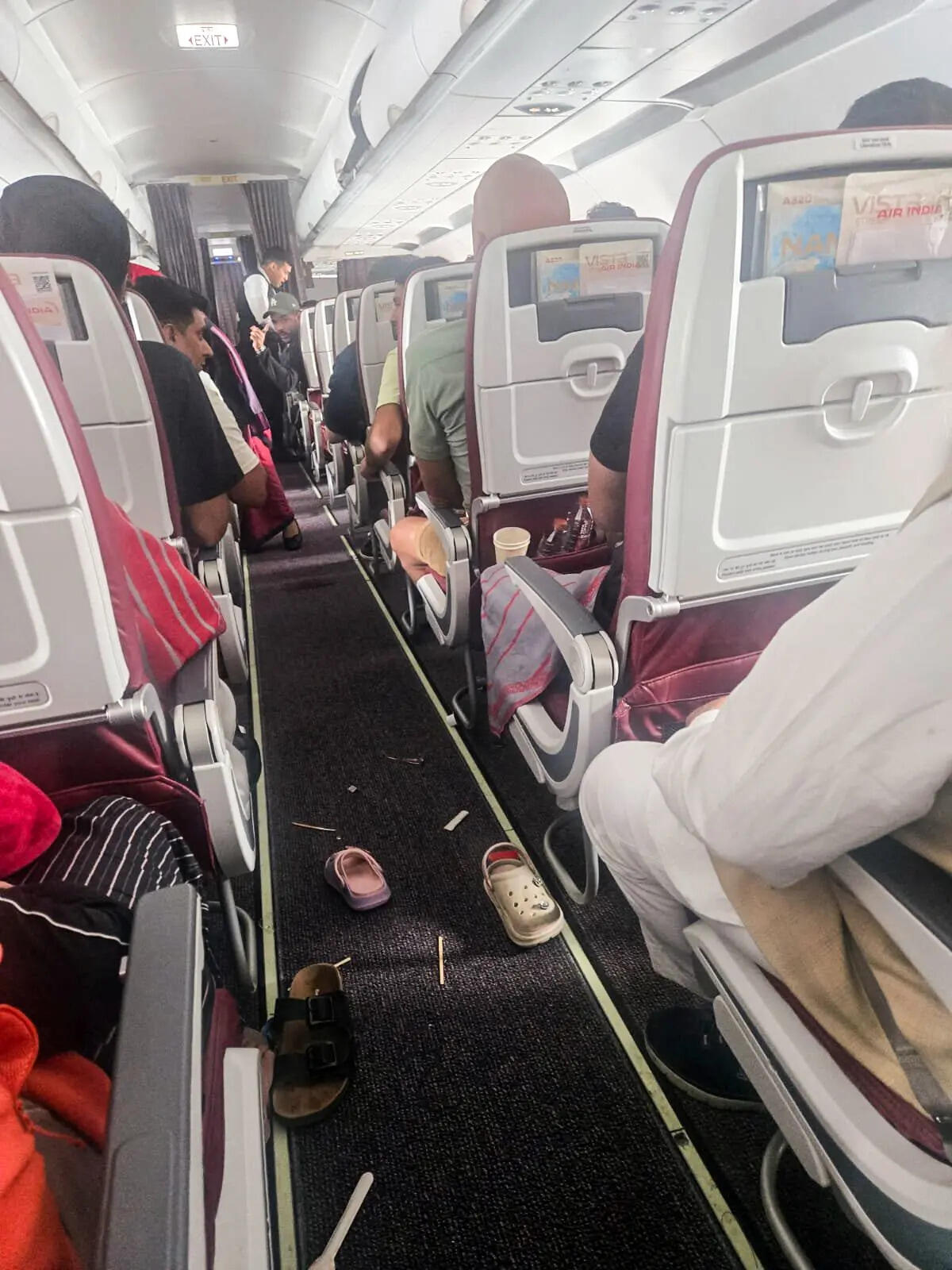
An inside view of the Air India flight from Phuket to Delhi after it hit turbulence, injuring a number of passengers, in New Delhi on Tuesday.
True jet-stream CAT, however, is largely a mid-latitude phenomenon. This means northern India, which lies closer to the jet stream, faces the greater risk. Over peninsular and southern India, much of what is recorded as CAT is more likely to be convective turbulence caused by small, fast-growing cells that have not yet accumulated enough moisture to appear on radar. Meteorologists say this is particularly likely at night or when an aircraft is flying in and out of clouds.But India Flies DifferentlyUnlike most other countries, India has a particular reason to quarrel with the weather gods.The country’s domestic passenger base has expanded rapidly in recent years, with much of that growth coming from first-time flyers. Many do not fully understand what the seat belt sign means. When it lights up, it is an instruction to fasten the belt — not a suggestion or a formality associated only with take-off and landing.That gap in basic air-travel awareness is becoming more dangerous as climate change increases the frequency and intensity of turbulence. The aviation system cannot continue leaving passenger safety to chance.India needs clearer and more frequent passenger messaging, not merely a single line in the safety briefing. Regulators must also begin treating rising turbulence exposure as a foreseeable operational risk, rather than a run of bad luck.Impact Of Global WarmingThe science behind the rising risk is well established.Research from the University of Reading’s Department of Meteorology in the UK has identified a measurable strengthening of jet-stream wind shear over the North Atlantic. It is now more than 10% stronger than when satellite records began in the late 1970s.Climate models based on that trend project significant increases in clear-air turbulence over the Indian subcontinent in the coming decades. The sharpest increases are expected over northern India, particularly during the periods Indian carriers already dread: the pre-monsoon months from March to May and the monsoon months through July.Because cockpit weather radar cannot detect CAT, the safest habit for passengers is to keep seat belts loosely fastened throughout the flight, including during cruise — not only when the sign is illuminated.Aircraft Are Built SturdyEven the most anxious passenger can take comfort in one fact: aircraft are built to withstand far more punishment than what any turbulence is likely to produce. This is not a matter of chance or fortunate design.Aircraft are tested to their structural limits before carrying paying passengers. During certification, manufacturers subject wings to loads far greater than those produced by severe turbulence. The wings are bent by several feet to prove that the structure has ample safety margins. Passengers who see a wing flexing in rough air are watching the airframe do exactly what it was engineered — and proven — to do.An aircraft that encountered hail and suffered nose damage while flying from Delhi to Srinagar in 2025 landed safely and remained structurally sound despite the visible damage.In turbulence, the greatest risk is almost never structural failure. It is injury to unsecured people from being thrown around the cabin or struck by loose objects. That is the one variable passengers can control. India’s accident record makes the distinction stark.Fasten Your Seat BeltsOn May 1, 2022, SpiceJet flight SG945 encountered severe turbulence while descending from Mumbai towards Durgapur. The pilots had issued two seat belt warnings before the aircraft was hit.Passengers who had not buckled up were thrown against the ceiling. One fell into the aisle, and a ceiling panel came loose. Fourteen passengers and three crew members were injured. Two required intensive care. One of them, reportedly a first-time flyer, died nearly five months later from complications related to a spinal injury sustained during the incident.Contrast that with the IndiGo Delhi-Srinagar flight of May 2025. By all accounts, it encountered turbulence at least as severe. The aircraft’s nose was damaged badly enough to require inspection, yet no passenger was hurt. The working assumption is simple: everyone on board was strapped in when the aircraft encountered turbulence.Strip away the details of any single flight, and a clear pattern emerges — one that India’s aviation ecosystem, including airlines, regulators and passengers, has been slow to confront.Turbulence is now the leading cause of in-flight injury worldwide, and the likelihood of encountering it is rising. Some of the airspace most frequently crossed by Indian carriers — including the Bay of Bengal and the pre-monsoon skies over the central and northern plains — lies directly in the path of that trend. India, which arguably has the world’s largest population of first-time flyers, needs to educate its passengers more aggressively.The US Federal Aviation Administration’s advice comes down to a few basic habits: keep your seat belt fastened whenever instructed, listen to the crew and follow carry-on restrictions so that loose baggage does not become a projectile.India’s experience over the past four summer and monsoon seasons underlines the narrow but crucial difference between the SpiceJet and IndiGo cases. Both flights encountered severe turbulence, but the outcome was markedly better on the IndiGo flight.The message is clear: keep your seat belt fastened even when the sign is off.Cumulonimbus turbulence appears in the cockpit as a magenta warning on the screen. Clear-air turbulence appears nowhere — until it strikes.As on the road, a fastened seat belt can make all the difference.