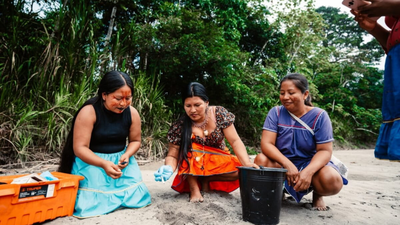
Meet the ‘Turtle Women’ of Amazon: 7 Indigenous women are bringing vulnerable river turtles back from the brink after releasing 208 baby turtles into the wild |

Seven Indigenous Siekopai women in Ecuador’s Amazon are using ancestral knowledge, modern technology and community-led conservation to give vulnerable river turtles a better chance of survival. Known as the Tari Nomiowa’i, or “Turtle Women”, the group patrols the banks of the Aguarico River in search of charapa turtle nests, carefully collects eggs threatened by flooding,…

Read More

Your AI may soon be able to pay for things through UPI without asking every single time: Here is how India plans to control it

India’s digital payment journey has evolved from passwords, PINs and OTPs to fingerprints and facial authentication, making transactions faster and more seamless. Now, with AI, the next step could be completely hands-free payments, where systems recognise users, assess transactions and authenticate payments almost invisibly.The country may allow AI agents to make small UPI payments without…

Read More

In 1967, the US detonated a 29-kiloton nuclear device 4,227 feet below New Mexico to unlock natural gas; 5 tests produced 213 million cubic feet, but the gas had measurable radioactivity

The site was decommissioned. However, contamination remains underground. In 1967, the United States tried an unusual method to increase natural gas production. It detonated a 29-kiloton device and had an explosoion 4,227 feet below the ground in north-western New Mexico to stimulate the flow of natural gas.According to the US Department of Energy (DOE), the…

Read More

Quote of the day by Neil Armstrong: “We’re required to do these things just as salmon swim upstream” |

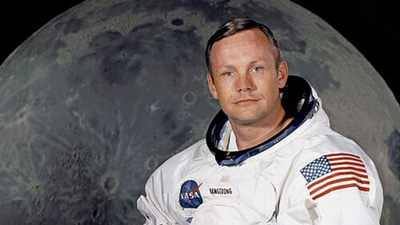
Human beings have always been drawn towards challenges that appear difficult, uncertain or even impossible. From exploring unfamiliar places to developing new technologies and solving scientific problems, progress often begins with the decision to attempt something that has never been done before. Astronaut Neil Armstrong, the first person to walk on the Moon, once offered…

Read More

Older than dinosaurs and Himalayas: Why Bengaluru’s 3-billion-year-old Lalbagh Rock is in the news; history of city’s ancient landmark and why citizens are fighting to protect it

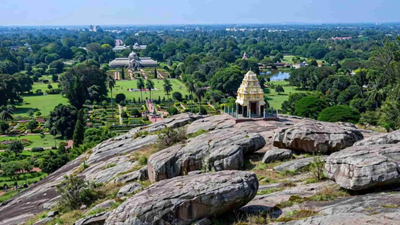
On August 30, thousands of Bengalureans gathered at Lalbagh and marched towards the iconic rock. It has been standing in what is now Bengaluru for billions of years, long before humans, cities or even the Himalayas existed. Now, one of Bengaluru’s most significant geological landmarks has found itself at the centre of a modern infrastructure…

Read More

A fungus turns beetles into zombies and makes them die on flowers; scientists say the timing helps infect the next generation |

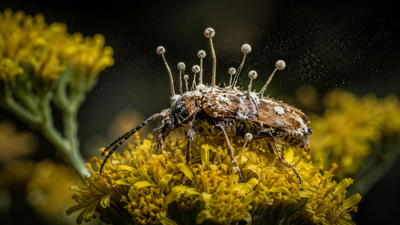
A fungus infecting goldenrod soldier beetles can alter their behaviour before death and cause changes to their bodies afterwards. Researchers investigating Eryniopsis lampyridarum found infected Chauliognathus pensylvanicus beetles clamped their mandibles tightly onto flower heads shortly before dying. Between 15 and 22 hours after death, the fungus caused the beetles to raise their hardened forewings…

Read More

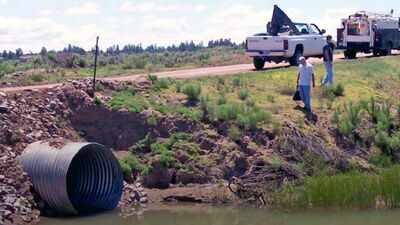
In 2019, US researchers added fluorescent dye to a Pennsylvania mine-water wetland and flew 12 drone missions; a system designed for 29-hour retention held water for only 4.65 hours

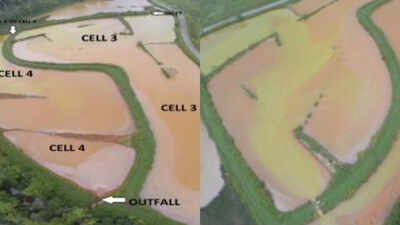
Visual observations indicated a retention time of about 61 minutes in Cell 3 and 66 minutes in Cell 4. Monastery Run Wetland 1, near Latrobe, Pennsylvania, was built in 1997-1998 as a passive treatment system for several discharges from an abandoned underground mine. Adequate retention time for iron removal from mine water before discharge to…

Read More

In 1816, a Barbados-born doctor used dogs and cats to test blood transfusion; his forgotten experiments showed why animal blood could not replace human blood |

Human blood was used in an attempt to revive exsanguinated dogs. Image Credit: National Library of Medicine In 1816, a young doctor from Barbados carried out blood transfusion experiments that challenged a dangerous medical assumption and helped point the field towards a safer future. ‘John Henry Leacock’ used dogs and cats to investigate whether blood…

Read More

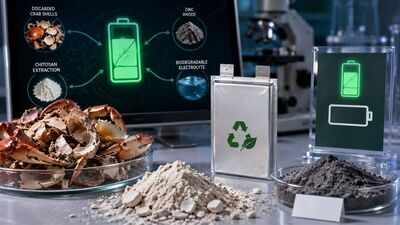
Scientists turned discarded crab shells into a biodegradable zinc battery that stayed 99.7% efficient after 1,000 charging cycles |

A crab shell left behind after a meal might seem destined for the bin, but scientists have found a very different use for it. Engineers at the University of Maryland have turned material derived from discarded crustacean shells into part of a zinc battery, using chitosan to make its electrolyte. The unusual ingredient is tied…

Read More

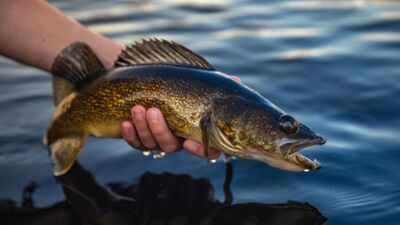
In 2018, scientists began removing about 285,000 fish from Wisconsin’s McDermott Lake; 4 years later yellow perch were up 788%, but walleye recruitment was still zero

Both McDermott Lake and Sandy Beach Lake had previously supported natural walleye recruitment. Scientists removed about 285,000 warm-water fish from a Wisconsin lake over four years in an attempt to help its declining walleye population recover. The large-scale experiment reduced several fish species and was followed by a sharp rise in yellow perch. However, it…

Read More