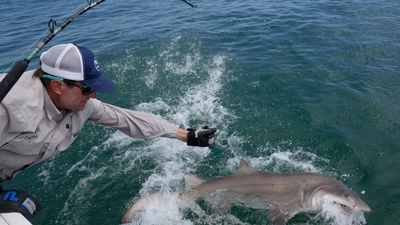
Jaws’ territory is now a great white nursery: 18 young sharks found off New York’s Hamptons as scientists investigate why they keep returning

The waters off New York’s Hamptons, once immortalised as shark-infested territory in Jaws, are revealing a very different story. Researchers have confirmed a summer nursery for young great white sharks in the New York Bight, with studies showing juvenile whites repeatedly using the region’s coastal waters during their early years. NOAA lists Long Island among…

Read More

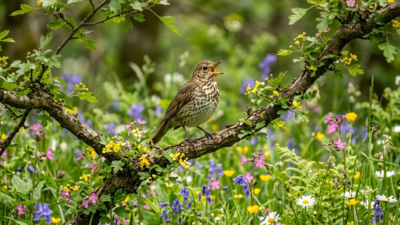
Birdsong Pleasantness: Why do some birdsongs sound better than others? A study of 123 songs in Germany links pleasantness to pitch, bandwidth, and complexity

For centuries, poets have been fixated on birdsong. They called it nature’s closest approximation to music. John Keats was obsessed with the nightingale’s ‘full-throated ease’, while Percy Bysshe Shelley imagined the skylark pouring forth an ‘unpremeditated art’ of ‘shrill delight’ from the heavens. William Wordsworth heard more than a call in the cuckoo; it was…

Read More

Quote of the day by Stephen Hawking: “I believe the simplest explanation is, there is no God. No one created the universe and…” – a profound reflection on life, death and the universe |

Quote of the day by Stephen Hawking Few questions have occupied the human mind for quite as long as why the universe exists, and whether human life actually has any real purpose. For centuries, people have approached these questions through religion, philosophy and science, often arriving at genuinely very different conclusions. Stephen Hawking, one of…

Read More

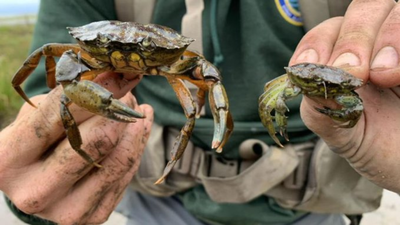
New England has battled invasive green crabs for more than 200 years; now people are eating the destructive species in a bid to protect shellfish, wetlands and coastal ecosystems

Since time immemorial, humans have been consuming food derived from the land, air and water. From vegetables and birds to even crabs, there is not much we have not used to survive on. But currently, people in New England are feasting on green crabs not to survive themselves but to help the native species subsist….

Read More

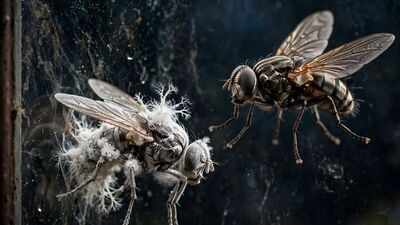
Scientists found a fungus that turns female flies into zombies, then uses their dead bodies to spread spores to healthy flies |

A fungus that infects house flies has evolved a remarkable way to send spores towards new hosts. Entomophthora muscae grows inside an infected fly and, after the insect dies, it produces microscopic stalks that emerge from its body. Each stalk forms a single spore at its tip. Instead of simply dropping away, the spore is…

Read More

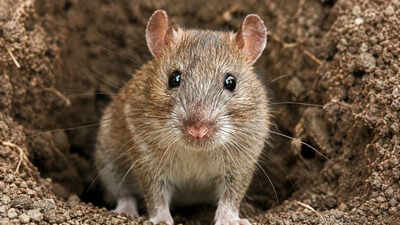
In 2011, up to 30,000 rats were eradicated from Palmyra Atoll; five years later native tree seedlings jumped from fewer than 150 to more than 7,700

In 2011, conservation teams set out on one of the biggest rat eradications ever on a tropical atoll, targeting an estimated 30,000 invasive rodents on Palmyra Atoll in the central Pacific. The goal was not just to remove a pest, but to restore an entire ecosystem that had been suppressed for more than a century….

Read More

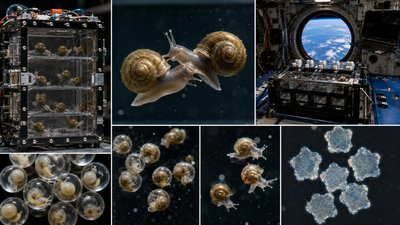
In 2003, Nasa researchers found freshwater snails mated and reproduced in space, with gravity-sensing statoconia 50% larger by volume than ground controls |

In 2003, Nasa researchers reported that freshwater snails carried into orbit aboard the Space Shuttle had mated and reproduced during their mission, allowing their gravity-sensing organs to develop entirely under microgravity. According to the study published in PubMed, tittled ‘Otoliths developed in microgravity‘ formed part of the results of the STS-90 Neurolab Spacelab mission, a…

Read More

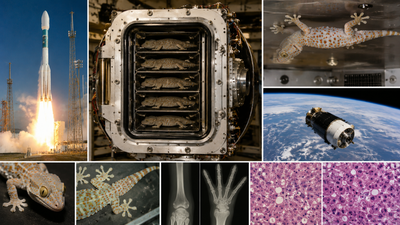
In 2005, NASA sent five geckos into space for 16 days without food or water, with later tests revealing changes in their bones and liver cells |

In 2005, five thick-toed geckos left Earth aboard the unmanned Russian spacecraft Foton-M2, embarking on a 16-day orbital flight with no access to food or water. The mission, a joint undertaking between Nasa and the Russian Academy of Sciences, was designed to test whether a reptile species could serve as a viable model for studying…

Read More

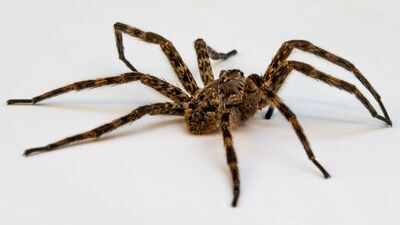
Scientists tested spiders as living DNA traps; their stomach contents can reveal which insects and other animals are living around them |

Wolf spider on white background. Image Credit: Philip N. Cohen/Wikipedia A study published in ‘Experimental and Applied Entomology’ has explored how spiders could tell what animals are living around them by examining traces of prey DNA left inside their bodies. The research tested how ‘reliable prey DNA’ could be found in wolf spiders after feeding…

Read More

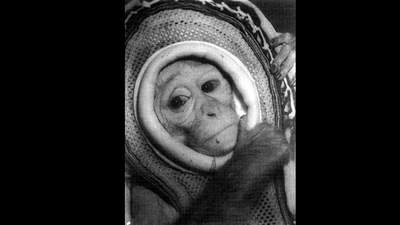
In 1960, Nasa launched rhesus monkey Miss Sam on a Mercury escape test, reaching 1,800 mph before she landed safely in the Atlantic |

In January 1960, Nasa launched the rhesus monkey Miss Sam aboard a Little Joe rocket from Wallops Island, Virginia, to test the launch escape system built for Project Mercury. The flight was designed to confirm that the escape tower could pull the capsule clear of its booster during an abort, a safeguard critical to any…

Read More