In 1921, a young Canadian doctor experimented with starving dogs; one dog’s dramatic reaction helped lead to the discovery of insulin |

Representative Image of Frederick Banting and Charles Best conducting early diabetes research in a laboratory with dogs (AI-generated image) In May 1921, Frederick Banting arrived at the University of Toronto with an idea about diabetes and little laboratory experience. Professor John J.R. Macleod gave him space in the physiology department, several dogs and Charles Best,…
Read More

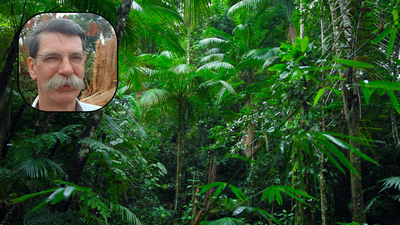
He began studying the Amazon in the 1970s; 50 years later, Philip Fearnside’s research has calculated the costs of losing the Amazon on account of deforestation, dams and highways

Philip Fearnside’s research has calculated the costs of losing the Amazon on account of deforestation, dams and highways The Amazon rainforest has been described in terms of its enormous size, biodiversity and importance to the global climate. But for Philip Fearnside, understanding the forest has also meant asking a more practical question: what does it…

Read More

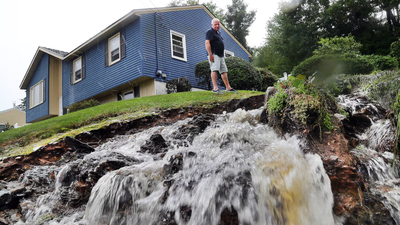
In 1999, scientists dropped 45 tons of wollastonite over a 29-acre New Hampshire watershed to replace calcium lost to acid rain; by 2013, it was exporting 30 times more inorganic nitrogen than nearby watersheds

In 1999, scientists dropped 45 tons of wollastonite over a 29-acre New Hampshire watershed A large-scale effort to restore an American forest damaged by acid rain had an unexpected environmental effect when added nutrients caused a huge increase in nitrogen flowing into nearby streams. In October and November 1999, researchers spread about 45 short tons…

Read More

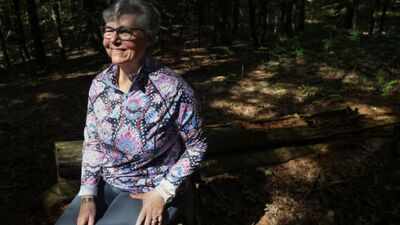
A retired Kodak finance worker picked moss from a New York log and found an animal no one had seen before; a year later, scientists confirmed it as a new tardigrade species

Judy Dobles collected moss near Cumming Nature Center that led to the discovery of a new tardigrade species. (Photo: Finger Lakes Public Radio) Judy Dobles, a retired worker from Kodak’s finance department, was walking a trail at the Rochester Museum & Science Center’s Cumming Nature Center in Naples, New York, when she made a discovery…

Read More

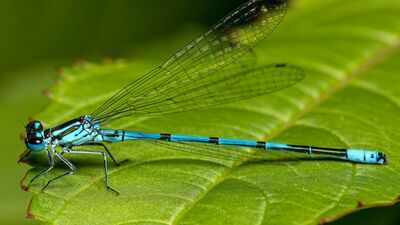
Nearly 70 years after Tucson’s Santa Cruz River ran dry, 2.8 million gallons of reclaimed water began flowing daily; within 4 months, 37 dragonfly and damselfly species were recorded

damselflyRepresenative image from Canva For much of the 20th century, the Santa Cruz River that winds through Tucson, Arizona, existed more as a memory than a living waterway. Groundwater pumping, drought and urban growth drained the riverbed, leaving long stretches of dry sand and scattered pools. Then, in a quiet but transformative experiment, treated wastewater,…

Read More

24×7 eye on China, Pakistan borders: Why EOS-05 launch on ‘Naughty Boy’ is key to India’s security

In this image posted on Sept. 1, 2026, The Geosynchronous Satellite Launch Vehicle (GSLV-F17) stands integrated on the Second Launch Pad at the Satish Dhawan Space Centre (SDSC-SHAR), in Sriharikota, Andhra Pradesh. Scheduled for liftoff on September 4, the 19th GSLV flight will place the Earth Observation Satellite EOS-05 into a Sub-Geosynchronous Transfer Orbit. (Image…

Read More

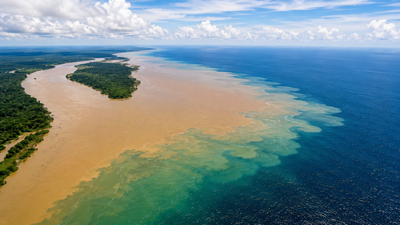
The Amazon River pours 28 billion gallons of freshwater into the Atlantic Ocean every minute, making seawater less salty more than 100 miles offshore |

The Amazon River is one of the world’s largest and most powerful river systems, carrying an extraordinary volume of freshwater across South America before emptying into the Atlantic Ocean. Its immense flow is closely connected to the vast Amazon basin, which receives water from rainfall, tributaries and sources in the Andes. The river carries approximately…

Read More

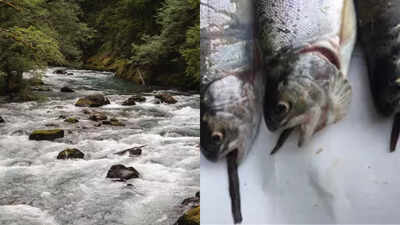
From 1915 to 1972, Mount Rainier stocked more than 9 million fish into naturally fishless waters; today 35 mountain lakes still hold breeding non-native populations that displace amphibians and alter ecosystems

View of the Ohanapecosh River and predated Northwestern Salamanders (Ambrystoma gracile) eaten by introduced trout. Mount Rainier’s glaciers and snowfields feed a magnificent system of icy streams and mountain lakes. On the surface, these waters look pristine, scattered pools in one of America’s most iconic landscapes. But beneath the surface, scientists are looking at a…

Read More

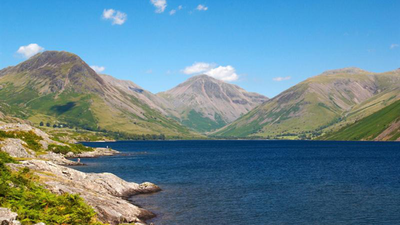
In 2016, conservationists put the bends back into a Lake District river straightened 200 years earlier; within months, Atlantic salmon were spawning there for the first time in centuries

Centuries after people forced a Cumbrian river into a straight, artificial channel, nature has reclaimed its original course in the Lake District, bringing endangered wild fish back to historic spawning grounds almost immediately. In the summer of 2016, conservationists restored a 1.1-kilometre stretch of Swindale Beck near Haweswater by putting its natural bends back into…

Read More

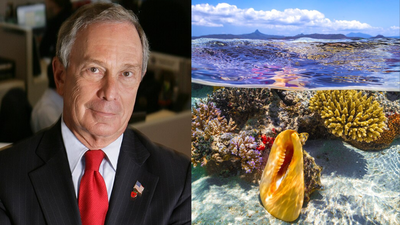
Michael Bloomberg committed $260 million to protect the world’s oceans; his initiative has already strengthened protections across 11 million sq miles |

Image: Left/Wikipedia/Right/Gaby Barathiue, Ocean Image Bank The world’s oceans cover most of the planet, yet vast areas remain difficult to protect, monitor and manage. In June 2026, Michael Bloomberg’s philanthropic organisation announced a fresh $260 million commitment to expand the Bloomberg Ocean Initiative, bringing its total support for ocean conservation to $635 million. The investment…

Read More