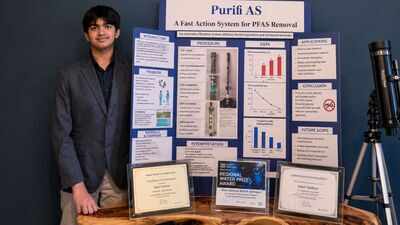
Meet Aadit Krishna, the 15-year-old North Carolina student who built a floating device to remove ‘forever chemicals’ from water |

PC: LinkedIn Profile of Aadit Krishna A Union County teenager has developed a floating water-purification system designed to tackle PFAS (Per- and polyfluoroalkyl substances), a class of persistent chemicals called ‘forever chemicals’. Aadit P. Krishna, whose research focuses on decentralised water purification, developed HelioPure as a solar-powered platform that can operate on surface water. The…

Read More

In 1896, William Hadaway patented an electric stove, helping transform cooking from wood, coal and gas to modern electric appliances |

In 1896, American electrical engineer William Hadaway received the first patent for an electric stove, marking an important step in the development of electric cooking. His patent came just four years after Canadian executive Thomas Ahearn put together the first electric range in 1892, as cooking technology was moving beyond wood, coal and gas. According…

Read More

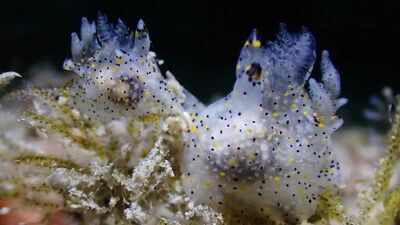
Meet Ho-Yeung Chan, the student who accidentally discovered a new sea slug smaller than a grain of rice |

Thecacera sesama. Image Credit: Ho-Yeung Chan An accidental encounter by a student during a recreational dive has led to the formal description of a ‘tiny new sea slug’ from the waters of north-eastern Taiwan. ‘Ho-Yeung Chan’ first noticed the animal while diving and later helped establish that it belonged to a species previously unknown to…

Read More

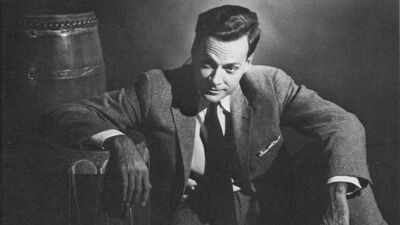
Quote of the day by Richard Feynman: “I don’t feel frightened by not knowing things…” |

Quote of the day by Richard Feynman (Image: Wikipedia) Not knowing the answer to a question can often feel like a weakness. In school, at work and even in everyday conversations, people may feel pressure to appear knowledgeable and confident, even when they are uncertain. American physicist Richard Feynman viewed uncertainty very differently. Known for…

Read More

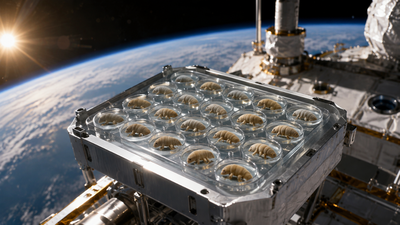
In 2007, ESA exposed 3,000 tardigrades to space vacuum and solar UV radiation in low Earth orbit; 68% revived when the microscopic animals were rehydrated |

In September 2007, the European Space Agency launched roughly 3,000 tardigrades into low Earth orbit aboard the Biopan-6 platform on the FOTON-M3 mission. Known as water bears, these microscopic animals were dried into a dormant state before being exposed directly to the vacuum of space, alongside doses of solar and cosmic radiation, for ten days…

Read More

Meet Kaia Minn, the 13-year-old Massachusetts inventor who turned discarded orange peels into biodegradable seed pods for reforestation |

Kaia Minn at the National Academy of Inventors conference. Image Credit: kaiaminn.com A discarded citrus peel is not the sort of thing most people would associate with restoring forests. But for 13-year-old Massachusetts inventor ‘Kaia Minn,’ it became the starting point for a simple idea with potentially far-reaching environmental uses. Minn has developed a ‘biodegradable…

Read More

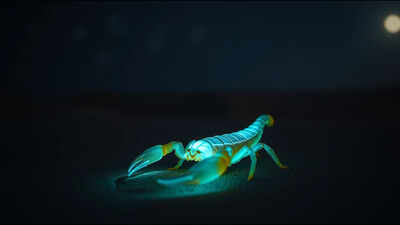
In 1945, an Arizona professor started hunting glowing scorpions at night; decades later his laboratory had become a major centre for venom research |

​Representative Image of fluorescent scorpions glowing across a desert landscape after dark (AI-generated image) In 1945, an Arizona State University professor began wandering the desert at night, hunting scorpions that glowed under his black light, and few people around him understood why. That professor, Herbert L Stahnke, was already the nation’s leading authority on scorpions…

Read More

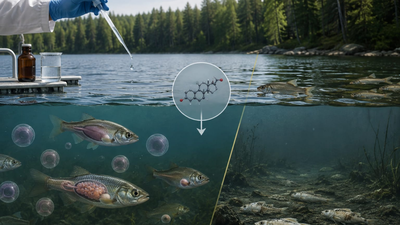
In 2001, scientists began adding 5 to 6 nanograms per litre of synthetic estrogen to an Ontario lake; after 2 seasons its minnow population collapsed

Representative Image (AI-generated) A tiny concentration of a synthetic hormone was enough to trigger a dramatic ecological change in a remote Ontario lake. In 2001, scientists began adding the synthetic estrogen 17α-ethynylestradiol (EE2) to Lake 260 in northwestern Ontario, maintaining concentrations of about 5 to 6 nanograms per litre. The experiment continued for seven years,…

Read More

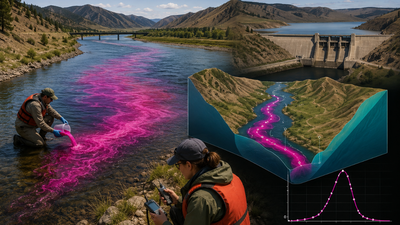
In 2010, US scientists released dye into Montana’s Missouri River and tracked it across 41.2 miles; one reservoir held the plume for 8.2 hours, helping predict chemical-spill timing

Representative Image (AI-generated) A river can carry a contaminant far beyond the point where it enters the water, but predicting exactly how quickly that material will travel is not always straightforward. In 2010, scientists with the U.S. Geological Survey (USGS), working with the Montana Department of Environmental Quality, conducted a dye-tracing experiment on a 41.2-mile…

Read More

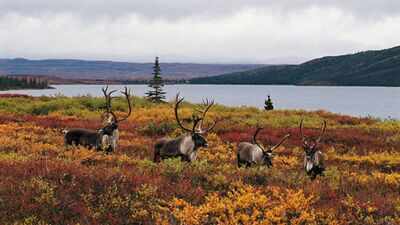
2,800+ wolves killed, nearly $10 million spent and 15 caribou herds still at risk: Why scientists say British Columbia is targeting the wrong problem

Since 2015, British Columbia has killed 200-300 wolves annually to help endangered caribou populations recover. Recently, the provincial government has proposed extending its decade-long wolf cull program by five more years in areas that are home to 15 declining woodland caribou herds. But according to scientists, the deforestation, not the wolves, is the main driver…

Read More