A personal struggle with iron deficiency led a young food technologist to rethink an everyday grain. Today, her innovation is helping take millet-based nutrition to schoolchildren across rural India, earning her a place on TIME100 Next India 2026.When Vidhya Parshuramkar struggled with iron deficiency, she did not imagine that the experience would eventually lead her to work on a solution for thousands of children. But the health challenge made her question something bigger: if she, despite having access to education and information, could struggle with proper nutrition, how many children in rural India were facing the same problem without even knowing it? The answer became the starting point of her journey.A farmer’s daughter from Maharashtra, Vidhya chose to look at a grain that had long been part of India’s food culture but was gradually losing space in modern diets: pearl millet, or bajra. What followed was a food-processing innovation, a rural nutrition initiative and a growing effort to make nutritious food accessible to children. Her work has now earned her a place on the TIME100 Next India 2026 list, recognising emerging changemakers whose work is shaping the country’s future.
When a personal health struggle became a purpose
Vidhya’s interest in nutrition was rooted in her own experience of anaemia. While pursuing her master’s degree in food technology at IIT Kharagpur, she began exploring the nutritional value of millets, particularly pearl millet, which is naturally rich in iron. But she soon realised that knowing which food was nutritious was only part of the problem. Making it accessible, affordable, easy to store and suitable for large-scale distribution was another challenge altogether.Bajra has long been consumed in Indian households, especially in rural communities. However, once ground into flour, it tends to spoil quickly. Its short shelf life makes it difficult for manufacturers to store it for long periods, transport it across locations and turn it into products that can reach more people. Vidhya decided to tackle this problem through food science rather than leave the grain’s nutritional potential untapped. Her journey eventually took her from working as an intern at Agrozee Organics to becoming a co-founder, where she began developing solutions that could connect nutrition, technology and rural livelihoods.
The breakthrough that made bajra last six months
The biggest hurdle was the grain’s shelf life. Bajra flour typically stays fresh for only about 10 to 15 days before its quality begins to deteriorate. This happens because of lipase, an enzyme that contributes to rancidity after milling. Vidhya developed a food-processing innovation known as Hydro-NIR technology, which deactivates the enzyme responsible for the deterioration. The process extends the shelf life of pearl millet flour from around 10 days to six months, without preservatives or compromising its iron content.The breakthrough made it easier to store, process and distribute millet-based food products over longer periods. It also opened the door to creating convenient nutrition products that could reach children in schools and communities where access to diverse food options remains a challenge.Instead of keeping the innovation confined to research, Vidhya helped translate it into products people could actually consume. Her work became the foundation of Agrozee Organics’ millet-focused initiative, Millets Now, which aims to bring traditional grains back into everyday diets through practical food solutions.
From a small initiative to 4 lakh children
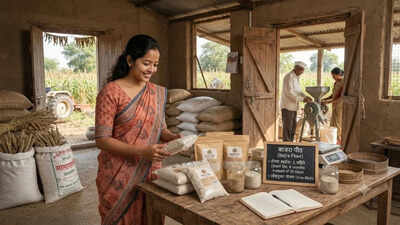
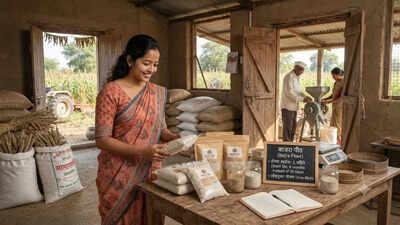
One of the most meaningful parts of Vidhya’s work is Nutri Dabba, a programme designed to improve children’s access to millet-based nutrition. Through the initiative, schoolchildren receive millet-based food products such as cookies, laddoos, bars and other nutritious snacks. The idea is to make nutrition easier to incorporate into children’s daily routines, rather than relying only on awareness about healthy eating.What began on a smaller scale has reportedly grown to reach more than 4 lakh schoolchildren, particularly in rural communities. The programme also aims to address iron deficiency and encourage children to develop healthier eating habits from an early age.The initiative works with rural women through self-help groups, creating opportunities for them to participate in making and distributing the products. This means the effort is not only about putting nutritious food into children’s hands but also about creating livelihoods within the communities it serves. The model also connects the work to farmers. Agrozee Organics works with thousands of smallholder farmers, helping build demand for traditional crops such as pearl millet and creating a market for their produce.
Recognition for a mission rooted in rural India
Before her TIME recognition, Vidhya received the Rohini Nayyar Prize 2025, becoming its youngest recipient at the age of 24 and the first woman to receive the award. The honour recognised her contribution to rural development through nutrition, food innovation and women’s empowerment. Her work is also creating opportunities beyond food distribution. Through Agrozee Organics, she has been associated with thousands of farmers and rural women, helping build a model that connects agriculture, food processing and community livelihoods.For Vidhya, the journey is deeply personal. She grew up in a farming family, experienced nutritional deficiency herself, and went on to use her education to find a solution rooted in an ingredient familiar to millions of Indian households. Her story is a reminder that sometimes, meaningful change does not begin with inventing something entirely new. It begins with looking at what already exists, understanding why it is not reaching people, and finding a way to make it work better.By giving bajra flour a longer shelf life and taking millet-based nutrition to children, Vidhya is turning a traditional grain into an opportunity for healthier communities. Her recognition on TIME100 Next India is not just about a food technology breakthrough but about an idea that could make nutrition, livelihoods and rural innovation grow together.