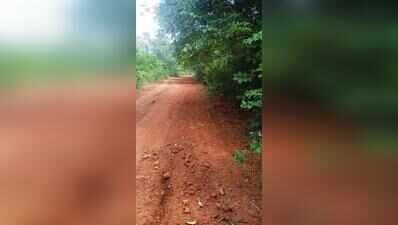
Panaji: A 2-km stretch of the centuries-old Rajbid — a historic, stone-paved, “royal road” linking the former capitals of Old Goa and Gopakpattan (Agasaim) — is feared to be on the verge of destruction after being heavily dug up and levelled at Batim.Heritage lovers say the damage is part of a steady erosion of the roughly 8-km trade route from Agasaim, three sections of which have already been tarred. They warn that a rare cultural landmark that survived the post-Kadamba period and Portuguese rule could now be lost for good.Heavy machinery was allegedly used to clear vegetation and flatten the mud-covered 2-km portion; part of the stretch had also been vandalised a few months ago. On Monday, cars and trucks were seen moving along the 65-feet-wide road, once used for horse trade and the movement of goods during the heyday of the Gopakpattan port.“It is pitiable and very appalling that an important feature of the infrastructure created during the Kadamba era is being lost,” said history researcher Prajal Sakhardande.Local activist Ramrao Wagh warned that any further roadwork could permanently erase the trail. “If macadam is poured over this stretch next by vested interests, this would be the end of Goa’s important cultural landmark in this historic region,” he said.For heritage supporters, the Rajbid is more than a road: It is an iconic link between two former capitals and a living marker of key phases of Goa’s history. The Goa Heritage Action Group (GHAG), along with others, has been urging govt to declare the Rajbid and related linkages a unique heritage trail. “It is surprising that while some turn emotional about preserving Hat Katro Khambo, no interest is shown in this important piece of history,” Wagh added.Less than a millennium ago, the sheltered Zuari bay at Gopakpattan port in the Agasaim–Goa Velha region was a major maritime trade hub on India’s west coast. During this period, Kadamba king Jayakeshi I shifted his capital from Chandor in the 11th century. The historic trade route passed through Goalim-Moula, Gancim, Batim and Goa Velha.Despite opposition from heritage lovers, a 2-km section from Old Goa was tarred about 15 years ago. Another stretch at Pilar–Batim has been carrying traffic for decades.Wagh and others have sought govt intervention to protect what remains of the route.The latest activity follows a gram sabha of the Batim panchayat, where a demand was raised to tar this stretch. Sarpanch Krishnanath Naik said he had refused the request because the road forms part of the Rajbid. “No permission has been given or sought,” Naik told reporters at the site.