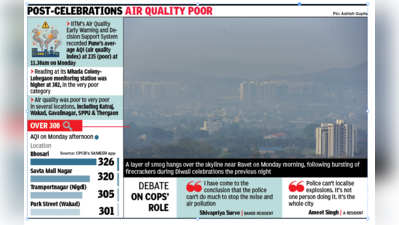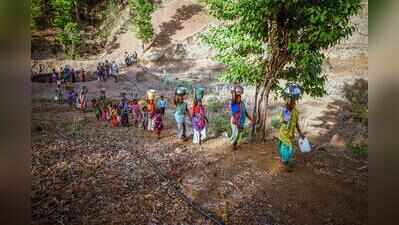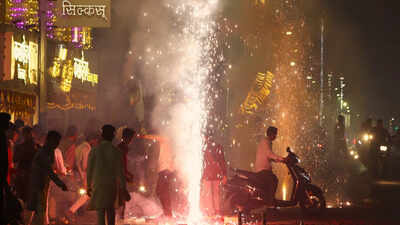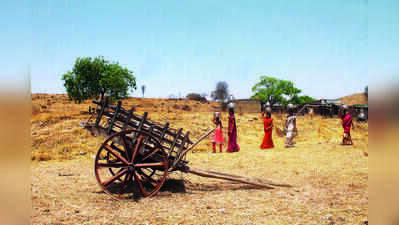
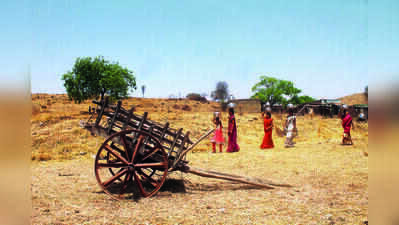
Pune: While Pune and Mumbai witnessed elaborate Diwali celebrations, with housing societies and markets illuminated and firecrackers lighting up the skies, the festival brought little cheer to several drought-affected villages across Marathwada.For thousands of farming households in Beed, Dharashiv, other districts of Marathwada as well as some districts like Ahilyanagar and Solapur in the Western Maharashtra region, bordering Marathwada, the festival was marked by financial distress, mounting debt and compromises on even the simplest celebrations.The contrast was stark.While noise pollution and excessive firecracker use remained major concerns in urban centres, where residents celebrated with lights, fireworks and festivities, farmers in drought-hit villages struggled to afford new clothes for their children or buy groceries to prepare traditional Diwali delicacies (faral).For Bandu Sugade, a farmer from drought-affected Madhalmoi village in Georai tehsil of Beed district, this Diwali was among the worst he could remember. Heavy losses in cotton cultivation left him unable to buy new clothes for his children or buy enough provisions for festive sweets. “I barely got a yield of two quintals from my two acres of cotton farm. I could repay some amount to fertiliser sellers. There was no celebration at all because the situation is worse this season,” he said.The distress was equally severe in Dharashiv district, where farmers are struggling with the cumulative impact of successive agricultural losses. Bhaurao Mane from Mahatrewadi village saw his 2.5-acre farm suffer extensive damage when a local stream flooded last year. This year, inadequate rainfall caused his soybean and other kharif crops to wither.“I had to borrow Rs 5,000 from a relative to buy clothes and ration so that my children could have a good time at home. There is nothing in the village. I am planning to work at a hotel in Ahilyanagar so that I can run my family for the next few months. I will return to my village once we get rainfall,” he said.In Barshi tehsil of Solapur district, Santosh Jadhav had to defer his children’s festive wishes. Unable to arrange even Rs 5,000 for Diwali celebrations, he promised to buy them new clothes during the annual village fair (yaatra).“I have promised my children that they will get new clothes during the annual fair (yaatra) of the village. What else can I do now? I am planning to at least buy some sweets so that my children can have some fun during their Diwali vacation,” he said.Activist Uddhav Ghodke from Beed said the economic disparity between Marathwada’s drought-affected villages and urban centres such as Pune and Mumbai had become increasingly visible during the festival.“Some households have received ration kits from political parties and social organisations, but these are far from sufficient considering the population. This year, the situation is extremely bad. Farmers are only thinking about survival. The govt has disbursed Rs 5,000 as financial assistance to farmers, but this is inadequate as they have several expenses to meet,” he said.The impact of the agrarian crisis was also reflected in the firecracker market. Traders reported a decline in sales, particularly in rural areas, where households curtailed discretionary spending amid crop losses and uncertainty over the next agricultural season.Santosh Bora, president of Pune Firecrackers Association, said sales within Pune city limits had declined by around 12-15% compared with previous years. The fall was considerably sharper in rural markets. “Local vendors in rural areas have reported a drop of around 35% to 40% in sales as villagers have refrained from buying firecrackers, mainly due to inadequate rainfall and drought conditions,” Bora said.The contrasting celebrations highlight the widening economic divide between Maharashtra’s urban centres and its agrarian hinterland. While urban administrations grappled with complaints about noise pollution, air quality and violations of firecracker regulations, several farming families in Marathwada were forced to scale down or abandon celebrations altogether.“For these households, Diwali was less about lights, sweets and fireworks and more about arranging food, repaying outstanding loans and finding alternative sources of income until the next rainfall offers some hope,” said agri activist Jayaji Suryawanshi from Chhatrapati Sambhajinagar.