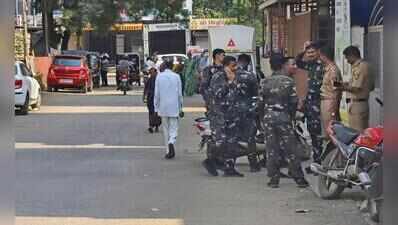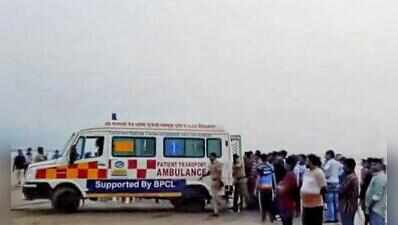
Pune: The drowning of eight students of Alandi’s private coaching institute at Diveagar beach in Raigad district on Thursday exposed serious gaps in safety arrangements at Maharashtra’s tourist beaches, besides reinforcing the significance of swimming skills while venturing into the sea.Raigad superintendent of police (SP) Anchal Dalal said, “The fellow students and teachers of the private coaching institute told us that the victims did not know how to swim but entered the seawater up to chest height.”A day after the Diveagar tragedy, beach-safety experts questioned if any lessons were learnt from the 2016 Murud-Janjira catastrophe. As many as 14 students had drowned then. The Bombay high court had subsequently directed Maharashtra govt to take safety measures, including lifeguards, watchtowers, warning systems, lifeboats and life jackets, at popular beaches.Ten years on, trained lifeguards, clearly demarcated swimming and no-entry zones, rescue equipment, communication systems, and continuous monitoring of tides and currents remained elusive in Diveagar when eight students drowned on Thursday. Forty-two students, accompanied by six teachers from Winners Academy and Study Centre in Alandi, had visited Diveagar, about 160km from Pune, on Thursday.Police identified the deceased as Rajveer Vahile, Soham Bhandwalkar, Kaustubh Daund, Yash Wankhede, Kaiwalya Vasankar, Tanmay Vahile, Sumit Ahire and Pranav Bansode from Alandi and neighbouring villages. All were 16 years old and students of Std XI. An accidental death report was registered in this connection.Vitthal Bhandwalkar, the uncle of victim Soham, said, “Having adequate safety at the beach is the most essential thing in the state. How can state govt not have strict guidelines? Had these students were in life jackets, they would not have drowned. Govt is also partially responsible for this tragedy.”Chief minister Devendra Fadnavis did not respond to TOI’s text message seeking his views on the matter. Raigad district collector Kishan Jawale also did not respond to phone calls and text messages.Raigad SP Dalal said, “We need to have a village-level strong network at beach sites like what we see in Goa to enhance beach safety. This will certainly make a difference on the ground. The responsibility should be given to respective gram panchayats.”Beach-safety expert Bhushan Deshpande, founder-director of Astitva Life-Saving Foundation and a national institute of watersports instructor, had stressed after the Murud tragedy clearly marked safe and unsafe zones, and regular assessment of sea conditions. “The rip currents can make seemingly calm waters extremely dangerous and designated swimming areas should change according to sea conditions,” he said.Prathamesh Chogale, the owner of Darya Water Sports at Diveagar beach, told TOI, “There are no lifeguards and safety jackets for the visitors. Watch towers like in Goa are also missing. We have been pursuing this matter with the district administration for the past few years but in vain.”A lifeguard system, experts stressed, should go beyond the presence of a person on the shore. “Trained personnel should have rescue boards, flotation devices, binoculars, communication equipment and first-aid/CPR skills. Then only they will be able to operate quickly and provide necessary aid to the victims at the beach site. This is what we see in foreign countries,” a senior Navy officer told TOI.Diveagar is considered among the safer and popular beaches along Raigad’s 122km coastline. According to police records, Kashid beach has reported the highest number of drownings in the district.“We have not recorded an incident of this kind at Diveagar in at least the last 10 years. There is no peculiar or dangerous topography at the site. Whether accompanying teachers had taken safety concerns into account or not would be investigated,” Dalal said.Police claimed that a beach patrolling team was deployed in the area and had coordinated with local groups after Thursday’s accident. Dalal said some police personnel tried to revive the victims at the spot, but in vain. “The team immediately coordinated with other authorities, shifted the traumatised students to a safe place and ensured that they were safely sent back to Alandi overnight,” she said.Another police officer said, “Tourists, particularly students from outside, may not understand the local conditions and venture deep into the sea. This can result in drowning. There should be caution boards at such sites to educate tourists. Dangerous zones should be clearly marked with flags or other visible indicators.”The National Centre for Sustainable Coastal Management (NCSCM) in Chennai, under the Union environment ministry, identifies drowning, sudden changes in depth, rock formations, waves and rip currents as key beach hazards. Its beach safety assessments involve mapping safe bathing and risk zones.Experts said this kind of scientific risk assessment should become routine at Maharashtra’s tourist beaches. “Safety cannot depend merely on warning boards or the assumption that visitors will understand sea conditions,” one of them said.For student excursions, experts recommended a mandatory safety protocol such as advance identification of safe beaches, verification of tide and weather conditions, designated bathing zones, adequate teacher-to-student supervision, trained lifeguards and an emergency response plan.“All these safety factors and awareness are lacking in our system. Therefore, we regularly report drowning incidents at various beaches in the state,” another senior officer of Raigad police said.