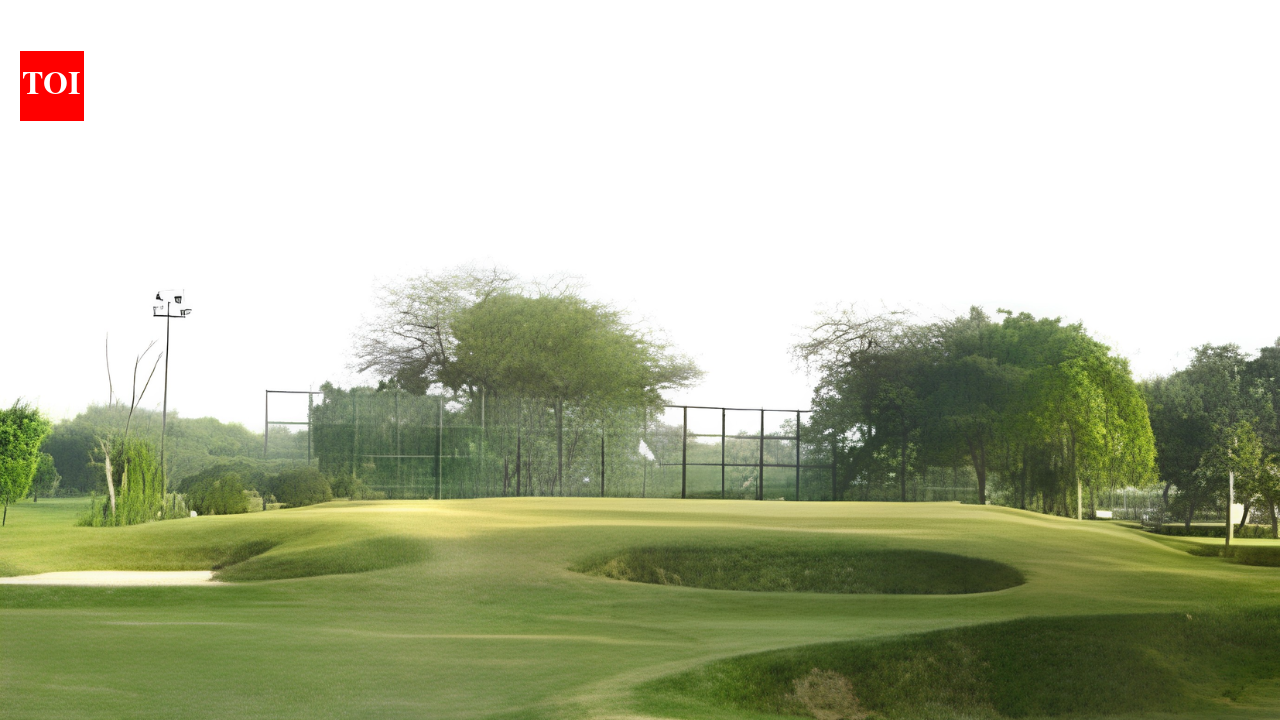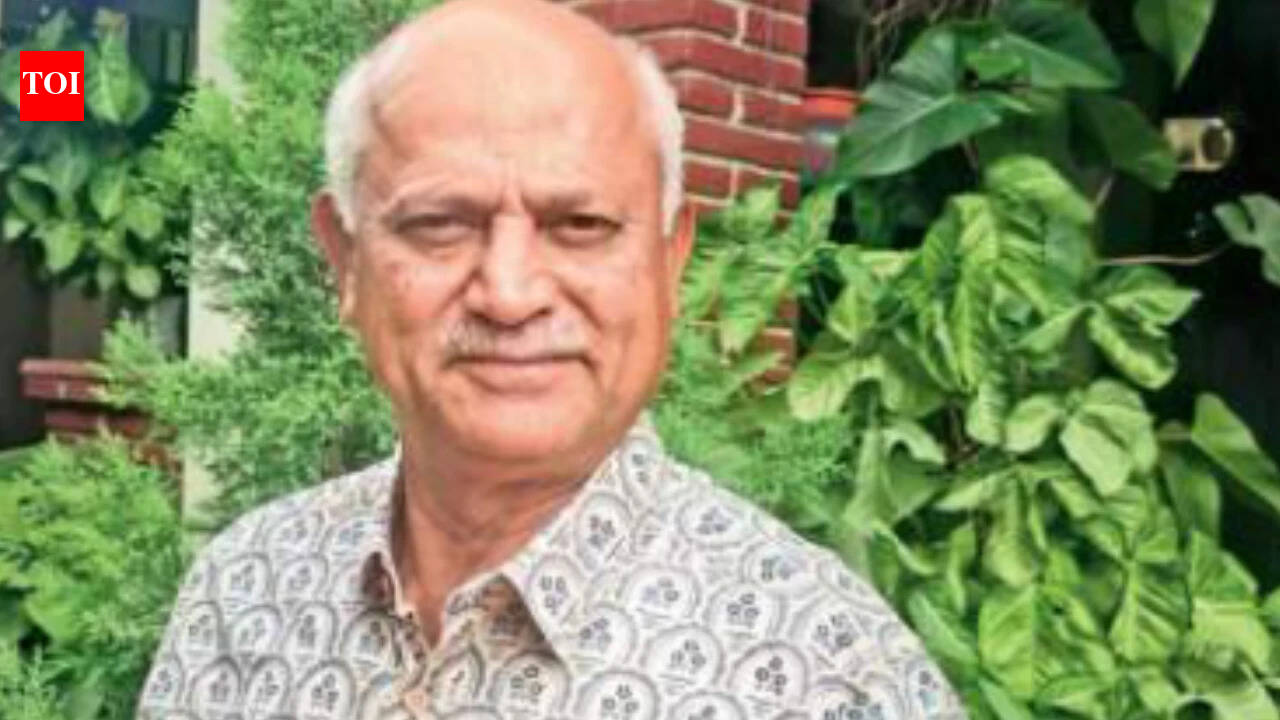
NEW DELHI: At 70, Zafar Iqbal is still playing to win. Once he finished a floodlight game past midnight and started again at 7am the next day. The septuagenarian’s game is, however, no longer hockey.The Olympic gold medal winner is now devoted to golf. Zafar’s handicap runs in double digits, but he is winning pro-am events with abandon. “I have shot hole-in-ones on three occasions,” he says with glee and relish.But “golf”, he adds, “is a tough game. You have to fight against yourself.”Zafar, though, has fought tougher battles on the hockey field in a long, storied career. For instance, the desperate, dying minutes against Spain in the 1980 Moscow gold medal game, which he still remembers like it happened yesterday. As against Pakistan last Thursday in the Asian Games, India led 3-0 early in that game.But with five minutes left, the gap narrowed to an agonising 4-3, with Juan Amat, the tall and lethal penalty corner specialist, firing a hat-trick for Spain, also the 1974 European champions.“We won, but if the game had continued for a few minutes, anything could have happened. ‘Hamaari hawa kharab ho gayi thhi’ (We were all at sea, completely overrun),” recalls Zafar.Interestingly, even the 2026 Asian Games semi-final against Pakistan finished with the same scoreline.If Moscow produced the most cherished moment of his career, New Delhi offered the saddest, when India were routed 7-1 by Pakistan in the 1982 Asian Games final. Zafar scored India’s lone goal off a penalty stroke.“The defence had collapsed. After losing the match, we didn’t leave the dressing room till 9pm. At the Games village, we didn’t even dare to go to the dining room. Some wrestlers and hospitality people brought food to our rooms. In the space of an hour, we had become zeroes from heroes,” he says.Zafar belongs to the generation that played on grass at home and battled astro-turf abroad. The first astro-turf in India was laid out only in 1982, six years after it appeared in the 1976 Montreal Olympics.He talks about an instance of ‘jugaad’ in Patiala in the when, to provide the artificial feel of astro-turf, the ground was stripped of grass and then plastered with cow dung cake mixed in water. “This was supposed to create a fast-paced pitch and give players a feel of astro-turf,” he says.Zafar was born in village Harganwa near the communally sensitive town of Bihar Sharif, but bred in Aligarh Muslim University, where his father, a PhD from Manchester, taught organic chemistry.He grew up in an academic environment in the campus, where family conversations typically focused on which neighbour’s child had passed medical or engineering entrance exams.But the university also had a strong sports culture. Zafar loved both studies and sports. He was the captain of his school football team. “But a ‘dada’ (toughie) in school wanted someone else to be the captain,” he recalls.At this point, two gentlemen were critical in shaping his career. One was Zillur Rehman Khan, who taught physics but was passionate about hockey. Impressed by the way Zafar flicked the ball from the top of the D, Zillur not only made Zafar the school’s hockey team captain, but also called him to practise with the college players.“When my flicks turned out to be better than theirs, he started laughing at them,” Zafar remembers.If Zillur was his mentor, Jagan Nath, manager of the 1936 Berlin Olympics team, was his first serious coach. A disciplinarian, he didn’t like players wearing sunglasses.“He would tell us, ‘God gave you eyes to see. Why do you need sunglasses?’ But he was also a good coach, who gave you confidence,” recalls Zafar.Striking a fine balance between higher studies and hockey was tough. Zafar would wake up when the streetlights were still alive, dribble all the way to the ground, eat gud-chana, then considered a ‘special’ diet for sportspersons, have a bath, eat breakfast, and leave for civil engineering classes by 7.40am.He would return home for lunch, before leaving for the ground again at 3pm. “I would reach an hour before others to work on fitness and improve the accuracy of my shots,” Zafar says. He would come back only at 6pm and sit down to study. “It was a tough schedule,” he says.But Zafar dribbled between both. He not only was selected for the combined universities and made his international debut as a ‘left-in’ against Holland, but also earned his civil engineering degree.When he was selected for the national team, coach Kishan Lal, who captained India in the 1948 London Olympics, called him and said, “Can you play ‘left-out’? Another player has to play ‘left-in’.”“I said, ‘Yes sir, I will’. But it wasn’t easy. We grew up playing positional hockey. I had to rework my style of play. But I learnt. And I played as a ‘left-out’ for the rest of my life.”In time, Zafar would lead the national team, become coach and selector, and work for Indian Airlines. “After my initial years as a sports officer, I would look after construction and maintenance,” he says. He would also receive the Arjuna Award and the Padma Shri.In their second innings, sportspersons often take to golf. Cricketers Kapil Dev and Roger Binny belong to that group. Zafar adds two former hockey internationals – goalie Romeo James and defender MP Singh – to that list.He follows hockey but also watched the Asian Games medal-winning women’s golf team on TV. He even cracks jokes on the game’s addictive nature. At 70, Zafar Iqbal is clearly savouring life, one putt at a time, on the fairways and greens.