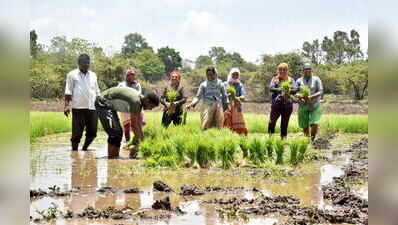
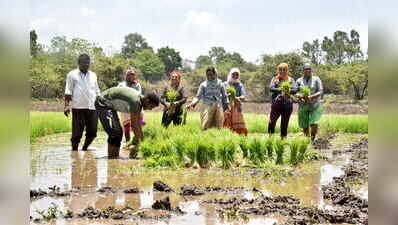
Pune: Persistent July rains have brought major relief to paddy growers in Pune district, reviving the kharif season after a rain-deficient June. Agriculture officials said nearly 48,000 hectares — over 80% of the normal 60,000-hectare paddy area — had already been transplanted, with the remaining acreage expected to be covered within a week.Inadequate June rainfall had affected nurseries and even threatened the narrow transplantation window. But sustained July rainfall across key paddy-growing tehsils, including Bhor, Velhe, Mulshi, Maval, Khed, Ambegaon and Junnar, dramatically improved the situation. “In June, we were unsure whether the nurseries would survive and whether there would be enough water for transplantation. The July rain, however, changed the entire situation,” Bhor farmer Ankush Jadhav said.Agriculture officials said breaks between heavy rain spells were equally beneficial, allowing farmers like Vijay Lembe from Malin village in Ambegaon to puddle fields, prepare land and transplant seedlings. Continuous rainfall often hampers field operations and machinery use. “Paddy is highly dependent on water availability during nursery establishment and transplantation. What matters is not merely the total seasonal rainfall but its distribution,” farm activist Shantaram Sarvade from Khed said.The recovery is significant for Pune’s western belt, where thousands of families depend on paddy cultivation and allied activities. The popularity of the Indrayani rice variety has further strengthened farm economics, allowing farmers to earn between Rs 30,000 and Rs 50,000 per acre depending on yield and market rate. “Indrayani has become more than a food crop. There is strong market demand and consumers are willing to pay a premium for quality rice,” Ambegaon farmer Suresh Zambre said.District agriculture officer Sanjay Kachole said the variety had also fostered a local processing ecosystem, with several farmers establishing their own rice mills and supplying directly to urban markets. “For many paddy-growing villages, it has effectively become a cash crop,” he said.Mechanisation is gaining momentum as farm worker shortages continue during the brief transplantation window. In Maval, the agriculture department has promoted paddy transplanters on an experimental basis for the third year. “The biggest advantage is speed. Farmers can complete transplantation quickly and make the best use of the available window,” an official said.Farmers are increasingly adopting the technology. “Earlier, we depended entirely on workers and often had to wait for them. Machines help us finish transplantation much faster,” said Maval farmer Suresh Navale.Although mechanised transplantation is still at an early stage, the officials expect adoption to rise as labour shortages persist. With more than four-fifths of the normal paddy area already transplanted and rains continuing across the Sahyadri foothills, the officials are optimistic that Pune’s paddy belt will recover fully after a difficult start to the season.