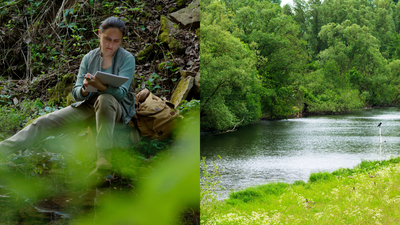
Florida has allocated $3 million to acquire a 642-acre property along the Suwannee River; officials say ending its current land use could save 159,000 gallons of water daily and reduce nutrient inputs

Representative images for water conservation (images- Canva) We all love to take a walk across the riverfronts in the evening. Both socially and ecologically, they hold great significance. Rivers are among the most important natural resources for everyday use, but protecting them is not always just about cleaning the water or removing waste that has…

Read Full News

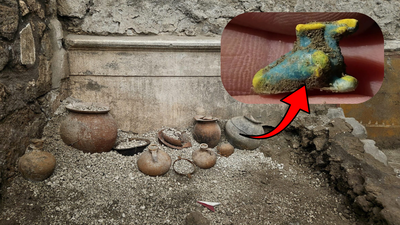
A cupboard buried when Mount Vesuvius destroyed Pompeii in AD 79 has yielded 38 bronze coins and at least 24 tiny childhood charms; archaeologists say the objects reveal glimpses of a family’s lost everyday life

Objects found in a wardrobe in a 2000-year-old house in Pompeii, Italy (courtesy- the Archaeological Park of Pompeii) Have you ever thought about how our ancestors lived? The things that we commonly use now, like Wi-Fi, smartphones and fancy cars, did not exist even a few years ago, so what can we expect from the…

Read Full News

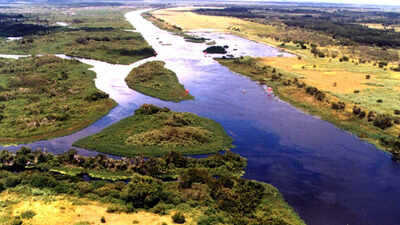
Florida is planning 4,800 acres of wetlands at the mouth of the Kissimmee River to remove phosphorus before it reaches Lake Okeechobee, decades after engineers began undoing the river’s earlier straightening

Kissimmee river credit- Wikimedia commons Nature works in mysterious ways. We knew wetlands as places that support wildlife, provide shelter to birds and fish, and help maintain ecosystems. But did you know wetlands can also act as natural water filters? This function often goes unnoticed, but wetlands can filter water before it reaches larger water…

Read Full News

A Chester Zoo collection of Dracula orchids has been declared nationally important, drawing attention to rare flowers with bizarre, vampire-like appearances that are increasingly threatened in the wild.

Dracula orchids (Images- Canva) When we hear about Dracula, the first thing that probably comes to mind is the famous vampire, with long, sharp teeth, a blood-filled mouth and a desire to kill. A soft flower would probably be the last thing to come to mind, but nature has its own version of Dracula, and…

Read Full News

In 2025, scientists revisited a Pacific seabed mining site tested 44 years earlier and found lasting changes to deep-sea life |

Abyssopathes lyra specimen from the mining test site. Image Credit: Trustees of the Natural History Museum In 2025, scientists reported that a deep-sea mining experiment conducted in the Pacific Ocean more than four decades earlier had left lasting changes to the seabed and the animals living there. The research, published in Nature and reported by…

Read Full News

A new fossil from China may reveal the first amphibian known to have lived entirely at sea; the armoured, 2.4-foot creature lived about 237 million years ago, challenging what scientists know about amphibian evolution

AI representation of a sea Amphibian Whenever we think of amphibians, we usually picture animals that live both on land and in water, such as frogs, salamanders and newts. Their ability to survive in both environments is one of the defining features of the group. But what if an amphibian once lived entirely in the…

Read Full News

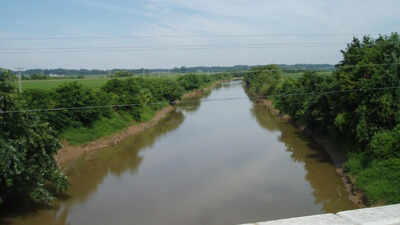
In 1916, engineers straightened a Tennessee river to drain land; 110 years later, authorities have acquired 985 acres to reconnect its floodplain, reduce future flooding in Jackson and create a new public nature area

Changes made to Forked Deer River near Jackson in 1916 have contributed to flash floods. (Representational photo: NOAA) A river in Tennessee, US, that was straightened more than a century ago to drain surrounding land is now being prepared for restoration after years of flooding problems. Authorities have acquired 985 acres along the South Fork…

Read Full News

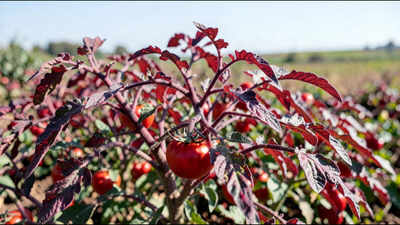
Cornell scientists engineered tomatoes that turn red-purple when nitrogen is low and are testing whether the colour change can help farmers use fertiliser more precisely |

Representative Image of genetically engineered tomato plants displaying red-purple hues in a field in response to nitrogen deficiency (AI-generated image) Cornell University scientists have developed genetically engineered tomato plants that turn red-purple when nitrogen becomes scarce, giving farmers a visible warning that crops may need fertiliser. Called RedAlert, the plants have moved beyond greenhouse experiments…

Read Full News

Puerto Rico’s Caribbean Reef Project aims to restore five acres using 124,000 coral fragments, 9,600 sea urchins and 600 crabs |

Puerto Rico is carrying out a major coral reef restoration effort that combines coral planting with the return of marine animals that help keep reef ecosystems balanced. The Caribbean Reef Project is led by the Institute for Socio-Ecological Research, known as ISER Caribe, alongside organisations from Puerto Rico and elsewhere. Its plan covers five acres…

Read Full News