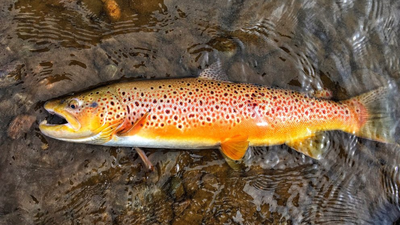
In 1864, Tasmania introduced brown trout from England for sport; 162 years later, conservationists are creating trout-free havens for a native fish with only about 6,000 left

Tasmania introduced brown trout from England for sport More than 160 years after Tasmania introduced British brown trout to create a major recreational fishery, conservation workers are building artificial barriers and clearing entire waterways to save a tiny native fish from extinction. The Swan galaxias (Galaxias fontanus), a small, scaleless freshwater fish found only in…
Read More

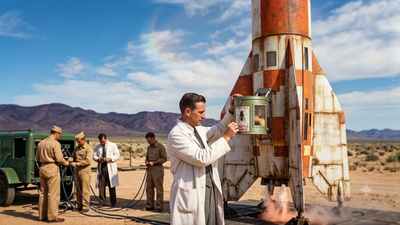
In 1947, fruit flies were sent into space using captured German rocket. Decades later, NASA studied how space affects immunity |

A tiny insect became one of the earliest living passengers sent towards space, long before astronauts were routinely orbiting Earth. In 1947, fruit flies were loaded onto a captured German V-2 rocket in New Mexico as scientists began testing what happened to life above the atmosphere. The experiment was primitive by modern standards, but it…

Read More

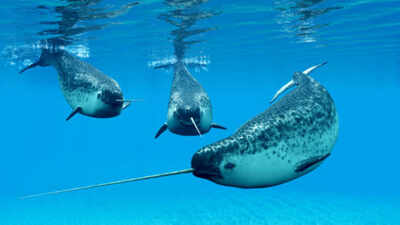
A narwhal can grow a single 10-feet tooth through its upper lip; scientists used 3D X-rays and 3 particle accelerators to discover how nature’s only straight tusk stays straight

An international team of biologists, chemists and physicists has used sophisticated 3D X-ray technology to investigate the tooth at an unprecedented level. A unicorn may be a mythical creature, but nature made something very similar under the Arctic ice. Wondering what? Well, the narwhal has a strange tusk that can reach nearly 10 feet long…

Read More

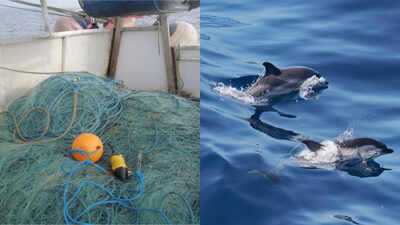
Underwater sensors caught a rare event off Cornwall: one porpoise became trapped in a net while two animals exchanged possible distress calls

Bycatch, the accidental capture of animals in fishing gear is considered the world’s greatest direct human-caused threat to dolphins and porpoises. Off the coast of Cornwall, a set of underwater sensors was listening to the ocean when it detected something researchers rarely get to see. According to an online report by Phys Org, two harbor…

Read More

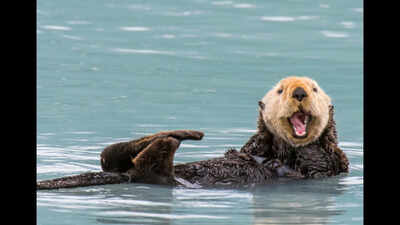
Sea otters returned to a polluted California estuary in 1984; eelgrass expanded 600%, while marsh-edge erosion later slowed by 69% on average

Sea otters returned to California’s Elkhorn Slough in 1984 when pollution had severely affected its ecosystem. When sea otters returned to California’s Elkhorn Slough in 1984, the estuary was already facing severe environmental pressure. The coastal wetland had high nutrient levels linked to its agriculture-dominated watershed, while eelgrass had fallen to an all-time low of…

Read More

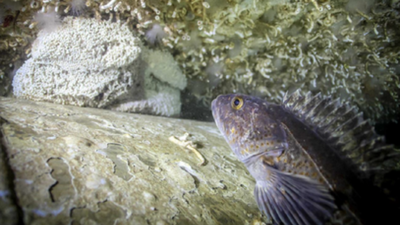
In 2015, Canada sank a 113-metre retired warship off British Columbia; five years later, monitoring had recorded more than 170 marine species on the wreck

A lingcod guards its egg mass on the Annapolis (Image Credit: Michel Joseph via Artificial Reef Society of British Columbia) A retired Canadian warship that was deliberately sunk off British Columbia in 2015 has become an artificial reef supporting a growing community of marine life. The former HMCS Annapolis, measuring 113.1 metres in length, was…

Read More

Human hair, receipts, fishing nets, and eggshells were among 17 waste materials tested to create stronger, lower-carbon cement building products |

Cement is one of the most widely used materials in construction, but its production comes with a high environmental cost. Circular Design Cement, a 2026 James Dyson Award project, is exploring a new approach to construction materials. The project uses everyday waste and industrial byproducts as recycled aggregates in cement-based materials designed for architectural applications….

Read More

Dutch scientists pipe office urine into bacteria-filled cells that generate electricity and recover nitrogen and phosphorus, while a related system can produce hydrogen

Pee breaks are one of the most relaxing times in the office when you finally get to have some sane moments to yourself. Which is why most employees take numerous such breaks within a day. But what if your normal pee break had you secretly contributing to the generation of electricity?Two hundred and sixty men…

Read More

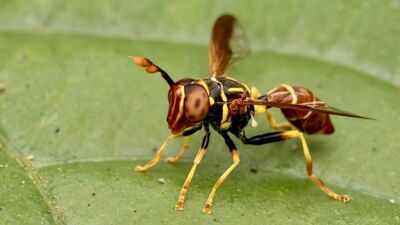
Meet Franklin Howley-Dumit Serulle, the amateur naturalist whose online insect photo helped reveal a new hoverfly species |

PC: Swiss Academy of Sciences A photograph shared online has helped scientists identify a hoverfly species that had remained a mystery for years. The insect, named ‘Monoceromyia ndidiae’, was photographed in the Dominican Republic and posted on iNaturalist. Its unusual appearance caught the attention of an entomologist, who began asking whether the fly represented something…

Read More

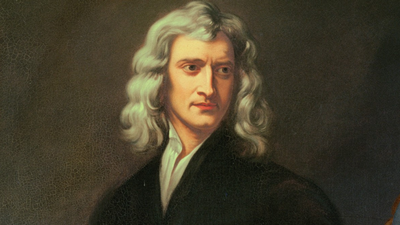
Quote of the day by Isaac Newton: “Truth is ever to be found in simplicity, and not in the multiplicity and confusion of things” |

Isaac Newton, one of history’s most influential scientists, spent much of his life trying to understand the laws governing the natural world. His work transformed physics, mathematics and astronomy, but his approach to discovery was rooted in careful observation, experimentation and the search for underlying principles. One of his enduring observations was that truth is…

Read More