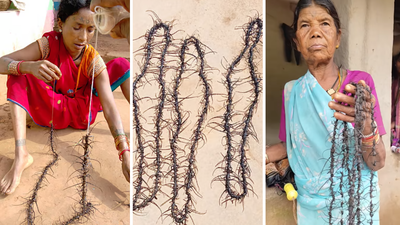
A garland of 100 insect heads earns villagers ₹200: How Madhya Pradesh’s unusual ‘Mundmala’ technique is being used to protect Sal forests

Villagers separate and collect the heads of Sal Borer insects after catching them in the forest. (Photo: Down to Earth and Instagram) In the forests of Madhya Pradesh, a rather unusual “mala” is being used in the fight to save thousands of Sal trees. But this is no ordinary garland. Made from the severed heads…
Read More

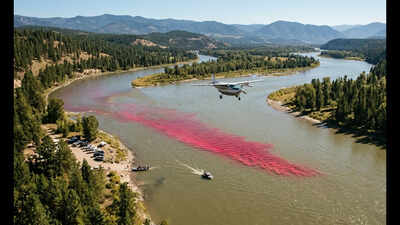
In 2017, USGS released 72.57 kg of red dye into Idaho’s Kootenai River in 90 seconds; aircraft 1,000 metres above mapped the plume in 0.5-metre pixels to study river dispersion

An aircraft followed the plume from above (Representational AI image) In September 2017, the US Geological Survey (USGS) carried out an unusual experiment on Idaho’s Kootenai River. Researchers released 72.57 kg (160 pounds) of Rhodamine WT dye into the river and then followed its movement through the water. The aim was to understand how a…

Read More

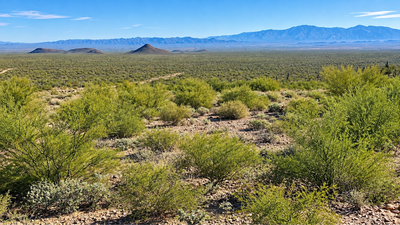
Volunteers spent 16 years restoring a damaged Arizona desert; 133 native plant species now thrive where invasive grass once ruled |

An 18-acre stretch of Arizona desert that was once heavily disturbed and overrun by invasive buffelgrass has been transformed through 16 years of sustained restoration work by volunteers and conservation partners. The Waterman Restoration Project, located on Bureau of Land Management land within Ironwood Forest National Monument near Marana, began in 2010 after earlier attempts…

Read More

Scientists found a surprising use for apple waste. It removed up to 100% of toxic lead from water in lab tests |

Lead contamination in water is being studied through different approaches, including the use of waste materials that can help remove metal ions from water. Apple pomace, the residue left after juice production, was among the waste materials researchers examined for its ability to remove lead ions from water in laboratory experiments.Researchers compared untreated raw apple…

Read More

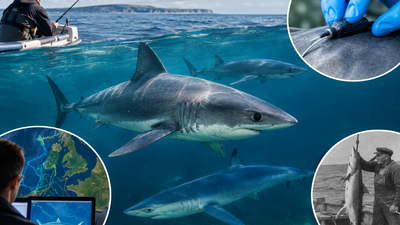
Scientists will deploy 70 electronic tags on 3 vulnerable shark species around Britain, pairing new tracking data with anglers’ catch records dating back to 1953

Representative Image (AI-generated) Britain’s coastal waters are home to more shark species than many people might expect, but scientists still know surprisingly little about how several of these animals move, feed and reproduce. In a report by The Guardian, researchers outlined plans for a new three-year project that will combine modern electronic tracking with decades…

Read More

Ugandan communities planted 4,053 trees beside one of Africa’s great rainforests; now the new forest is rebuilding a damaged wildlife buffer |

Bwindi Impenetrable Forest. Image Credit: Ron Van Oers/Wikipedia Communities living beside Uganda’s Bwindi Impenetrable National Park have planted 4,053 agroforestry trees across 40 hectares of land, beginning the restoration of a damaged buffer zone around one of Africa’s most important rainforest landscapes. The work aims to improve habitat, support local livelihoods and reduce pressure on…

Read More

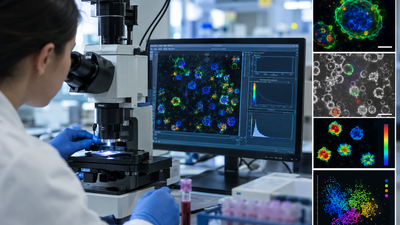
Scientists analysed thousands of immune cells from ordinary blood samples without adding dyes; their imaging method identified activated cells with nearly 94% accuracy within 2 hours

Representative Image (AI-generated) A routine blood sample contains a surprisingly detailed record of what the immune system is doing. Scientists have now demonstrated a way to read some of that information without adding fluorescent dyes or other chemical labels. The approach examines the natural light emitted by molecules inside immune cells, allowing researchers to assess…

Read More

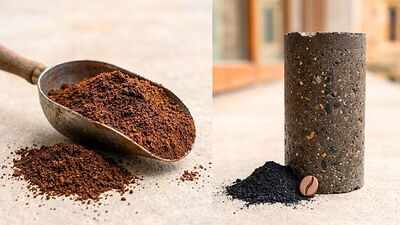
Australian researchers heated used coffee grounds to 350°C and turned them into material that made concrete 29% stronger, replacing part of the sand |

After a cup of coffee is brewed, the grounds left behind are often discarded as waste. But researchers have found a way to turn them into a useful material for concrete. A 2023 study examined whether spent coffee grounds (SCG) could replace part of the sand used in concrete after being converted into biochar through…

Read More

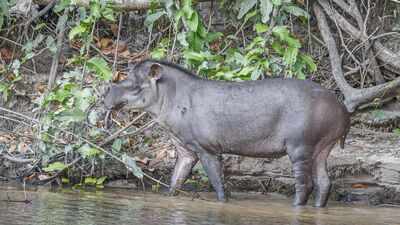
Brazil restored a former cattle landscape with native trees; decades later, lowland tapirs returned after disappearing for 100 years |

South American tapir. Image Credit: Charles J. Sharp/Wikipedia A former cattle landscape in Brazil’s Atlantic Forest has been transformed into a thriving wildlife refuge through years of restoration and the planting of native trees. At the Guapiaçu Ecological Reserve in Rio de Janeiro State, land that was once cleared and used for grazing has gradually…

Read More

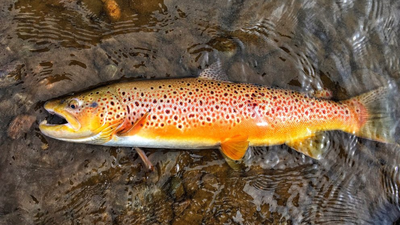
In 1864, Tasmania introduced brown trout from England for sport; 162 years later, conservationists are creating trout-free havens for a native fish with only about 6,000 left

Tasmania introduced brown trout from England for sport More than 160 years after Tasmania introduced British brown trout to create a major recreational fishery, conservation workers are building artificial barriers and clearing entire waterways to save a tiny native fish from extinction. The Swan galaxias (Galaxias fontanus), a small, scaleless freshwater fish found only in…

Read More