
Researchers at the University of Florida are deploying high-tech rabbit decoys across the Everglades, designed to mimic the signals Burmese pythons associate with prey. The fake rabbits can produce movement, scent, vibrations, and heat, all cues that pythons use while hunting for food. The goal is simple, lure the invasive snakes out of hiding so that hunters can find and remove them more easily, since locating pythons is often the hardest part of the job.
Why University of Florida researchers built decoy rabbits for pythons
“Pythons are attracted to mammals. The reasons that we’ve seen rapid declines in the Everglades of many mammalian species. And we’re trying to simulate that by creating the smell, the movement, the visualisations, the vibrations on the ground, the heat signatures,” UF professor Robert McCleery, the lead researcher behind the project, told NBC6. The project is funded by the South Florida Water Management District, with the decoy technology developed in partnership with REWYLD. Meanwhile, Python hunter Bayo Hernandez said that searching for the snakes can take hours, sometimes around five hours a day, making the decoys’ promise of bringing pythons to a known location especially valuable.
How the prey-signal decoys are built to survive the Everglades
Researchers currently have about 90 decoys deployed across the Everglades as they test which signals work best. Each rabbit can be programmed independently, with McCleery explaining that the team can switch on heat, scent, vibration, or movement in different combinations to see what draws pythons in most effectively. The devices are also built to withstand South Florida’s harsh conditions; they sit elevated above ground to avoid flooding and rain, while protective netting stops other animals from disturbing the equipment. De Desrochers of REWYLD, the project’s technology partner, said the decoys are simply designed to hold up against the environment around them.
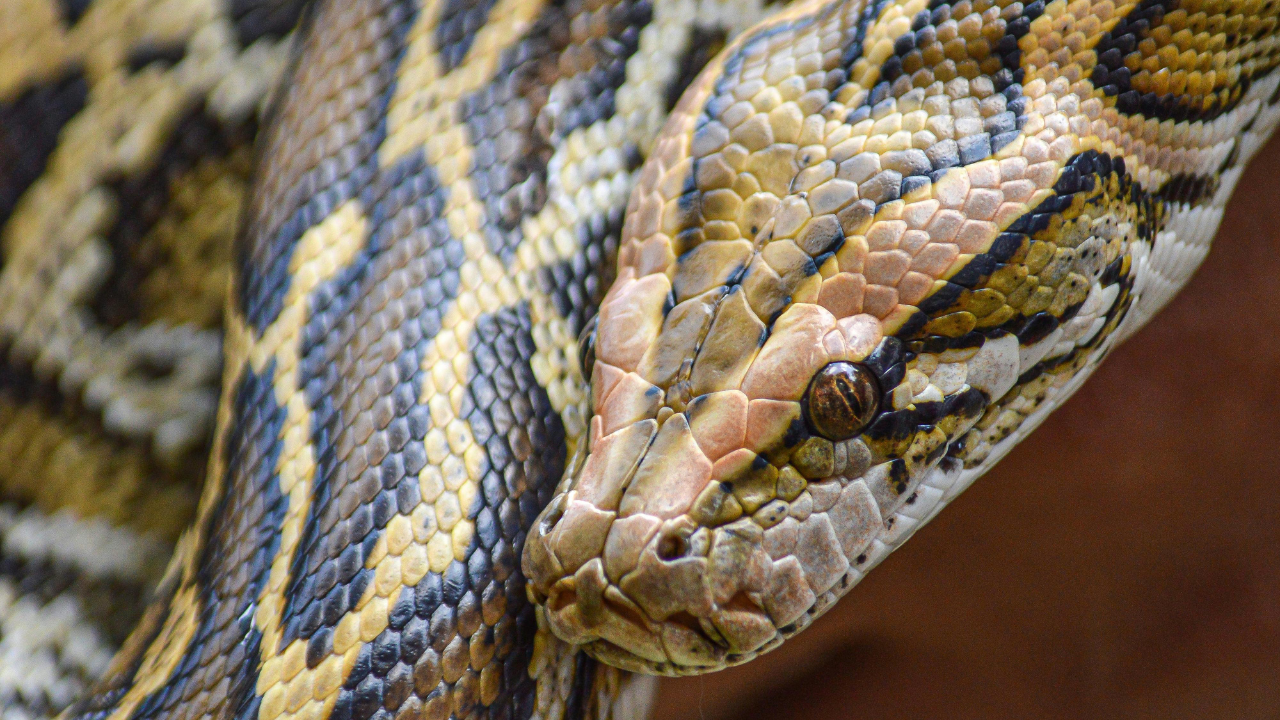
According to USGS, conservatively, tens of thousands of invasive Burmese pythons are estimated to be present in the Greater Everglades region (Image: Canva)
What happens once a Burmese python approaches a decoy
Attracting a python is only part of the plan. Researchers are also developing technology that detects when a python approaches a decoy and alerts nearby trappers, using AI to keep track of the snake and hold its location while a ping goes out to the nearest team. Once notified, trappers can head straight to that spot to safely remove and euthanise the python, speeding up a process that normally involves hours of searching. McCleery revealed that the snakes do not attack the decoys, contrary to some online assumptions, noting that they simply stay put and sit beside the rabbits without biting them. That patience, he added, is exactly what gives hunters the time they need.
Could the decoys help slow Burmese pythons spreading from the Everglades
According to Hernandez, Burmese pythons have already devastated native mammal populations in the Everglades, estimating that “95% of the small mammals have been eaten by them.” He said he worries the snakes could keep spreading north in search of food. De Desrochers noted that an estimated 300,000 pythons already inhabit the Everglades across Broward, Palm Beach, and Miami-Dade counties, a problem other counties don’t yet face, and said the goal is to deploy the decoy technology to help conserve those areas and avoid similar outbreaks. Field testing is currently limited to warmer months, roughly June through September, and the team hopes to raise about $200,000 to build a year-round testing lab at the University of Florida.