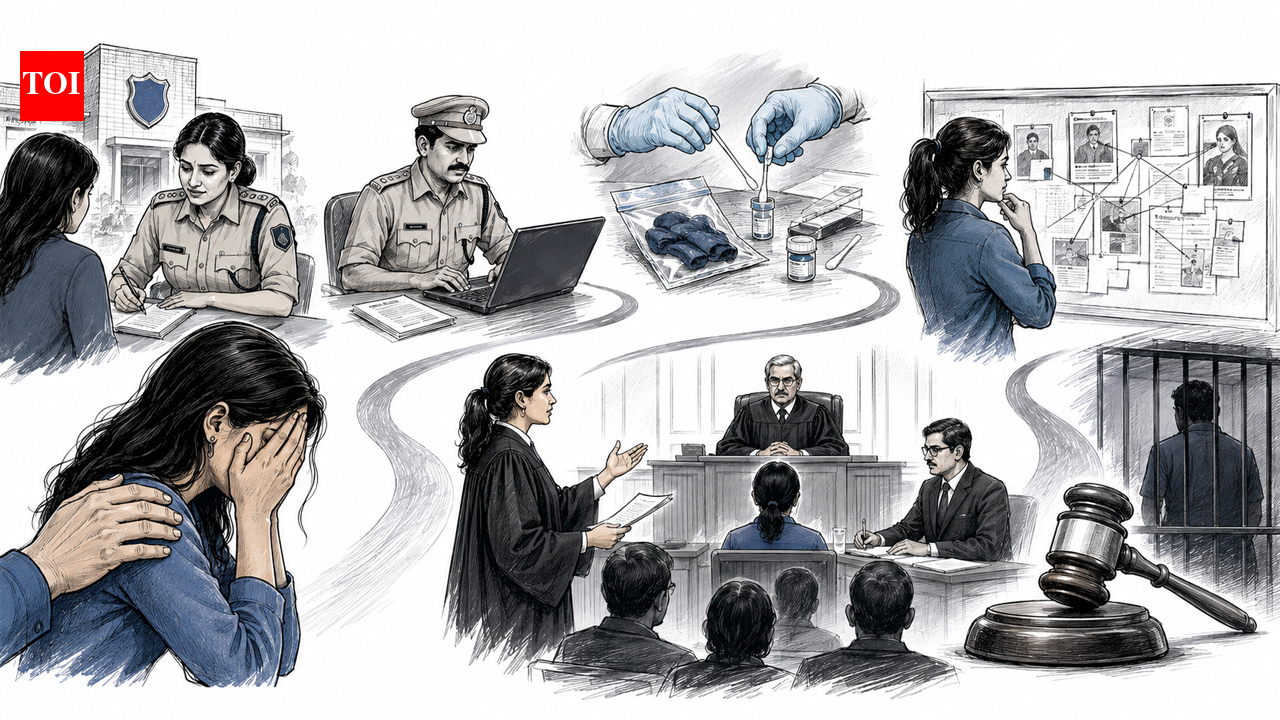
Settled legal principles notwithstanding, delayed FIRs, omissions in initial complaint, delayed medical tests and a survivor’s conduct before or after the assault often become focal points during trial, shifting focus from the alleged crime to the survivor’s credibility.Reporting the crime: Police must file a complaint irrespective of where the incident took place
- A zero FIR is registered if the incident didn’t take place at the reporting police station. The case is then transferred to the jurisdictional police station
- A survivor can call the PCR (112) or approach any other police station to file a complaint under Section 63 of BNS
- Once the survivor is at the police station, the duty officer immediately hands over the matter to the women help desk or a designated woman officer
- Reporting should take place in a nonintimidating, safe setting
- If the victim is no more, police must register the complaint on the basis of the family’s statement and proceed with legal action
Recording of statement
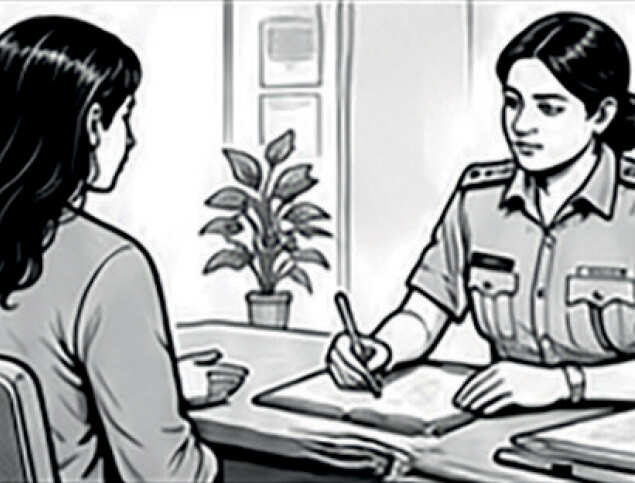
- Under Section 173 of BNSS, the initial statement/complaint must be recorded strictly by a woman police officer
- The survivor’s statement is recorded verbatim at her residence or a private place of her choice
- Police must promptly produce the survivor before a judicial magistrate to record her formal statement under oath, which is crucial for trial
- As per BNSS norms, the process of statement recording can be assisted by audio-video electronic means to preserve authenticity
Involvement of NGO and counselling
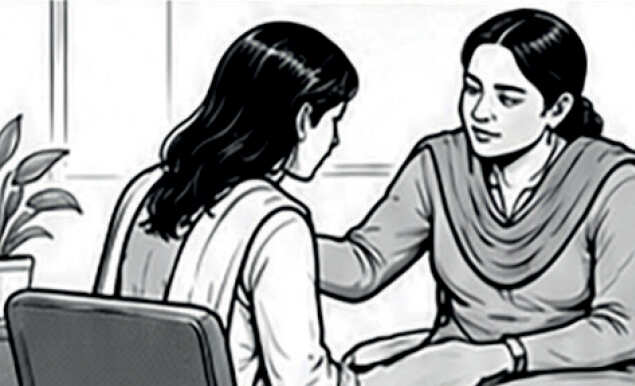
- IO or duty officer must immediately alert the rape crisis cell (RCC) run by Delhi Commission for Women
- Counsellors offer immediate trauma care, guide the survivor through legal procedures, and help coordinate legal representation through District Legal Services Authorities
- Counselling sessions and reports remain confidential
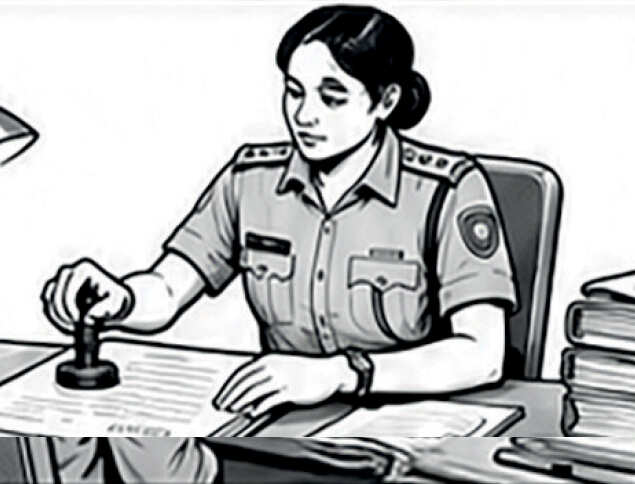
Filing of FIR
- Unlike minor offences, sexual offences carry mandatory FIR registration immediately without initiating a preliminary inquiry
- FIR copy is redacted to protect the identity of the survivor under Section 72 of BNS. Her name, address, and personal details cannot be disclosed to the media or published online
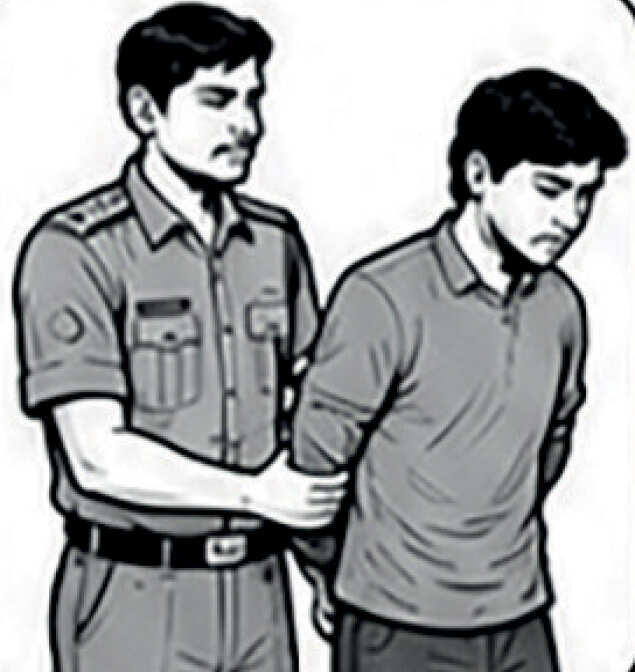
Arrest procedure
- Sexual assault is a cognisable and nonbailable offence; police can arrest the suspect immediately without needing an advance arrest warrant
- If the suspect is a minor, the apprehension is handled strictly by the child welfare officer as per Juvenile Justice Act, without placing the suspect in regular police lockup
- Delhi Police protocol forbids bringing the survivor coming face-toface with the suspect
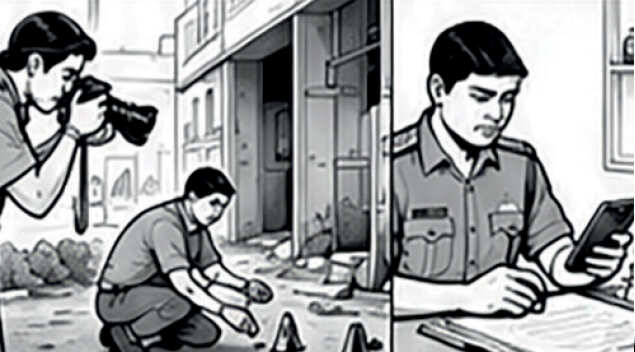
Evidence gathering
- Under Section 176 of BNSS, forensic experts must visit the crime scene for serious offences to collect scientific evidence (biological samples, fibers, digital footprints)
- Police must take the survivor to a govt hospital within 24 hours for a medical examination
- Police must rapidly collect corroborative technical evidence like CCTV footage, mobile location data and digital communications
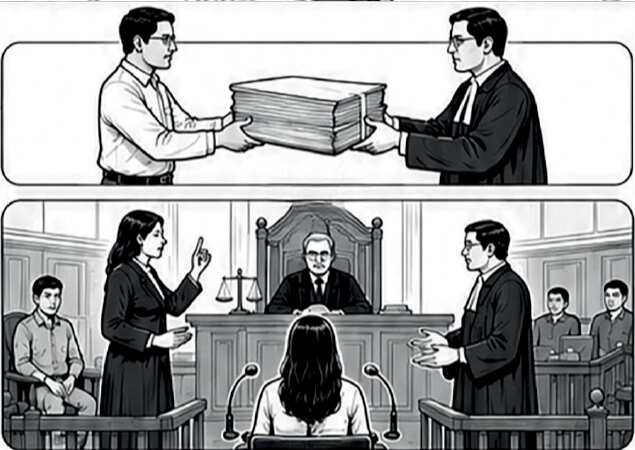
Filing of chargesheet
- Under BNSS statutory mandates, the investigation in sexual offence cases must be completed within 60 days from the date of FIR registration
- The chargesheet is submitted directly to a designated fast-track special court for day-to-day trial proceedings
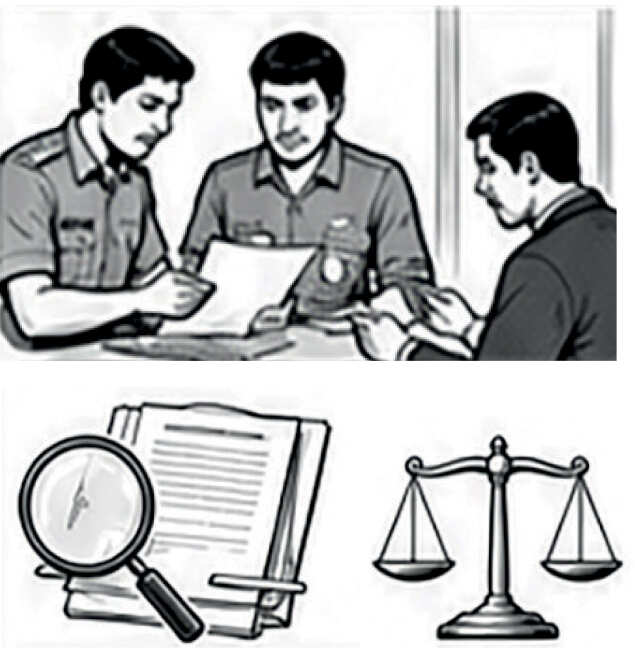
Dos and don’ts through trial, conviction and appeal
- Strictly in-camera trials
- Defence counsel can’t ask questions regarding the survivor’s character or past sexual history
- Police must provide statutory case progress updates to the survivor within 90 days
- If the trial court acquits the accused or convicts them for a lesser offence, the survivor has an independent statutory right to prefer an appeal directly to HC
Inside the courtroom
Perfect victim fallacy | How stereotypes shape rape trials
- Delay in reporting | Many survivors struggle to approach police immediately due to trauma, fear and social stigma. In court, however, this delay is often projected by the defence as an opportunity to fabricate allegations. “The defence may play it as a time gap wherein the survivor had time to think about the pros and cons, and manipulate the case,” said former DCW panelist Kajal Singhal
- Cross-examination turns into character scrutiny | Although Section 146 of Bharatiya Sakshya Adhiniyam bars questions on a survivor’s general immoral character or past sexual experience to prove consent, prosecutors say cross-examination often veers into lifestyle and personal conduct. Questions such as “Kya aap smoke karte hain?” or “Kya aap booze karte hain?” are used to put survivors on the defensive
- ‘Sexually active’ equals consent? | Prosecutor Vineet Dahiya says the defence frequently argues that if a survivor was sexually active, the present act should not be treated differently. Singhal says past relationships, usual conduct and even personal photographs are often relied upon to create that impression, even though consent for one act can never imply consent for another
- Consistency becomes the credibility test | A survivor’s statements at the police station, under Section 183 BNSS (earlier Section 164 CrPC), and during trial are expected to be identical. Trauma, however, can cause memory gaps or delayed recall, making later disclosures appear as contradictions
- ‘FIR is not an encyclopaedia’ | Prosecutors stress that an FIR is only the first account of the incident, not an exhaustive narration. Additional facts can be recorded in a supplementary statement during investigation. “Typically any statement which simply adds on to the existent statement, and doesn’t change the main fact, needs to be considered as an add-on, not contradiction,” Dahiya says. Legal experts often recommend requesting police or approaching a judicial magistrate directly to record a statement under Section 164 CrPC/BNSS, which holds higher evidentiary value in court than a police statement
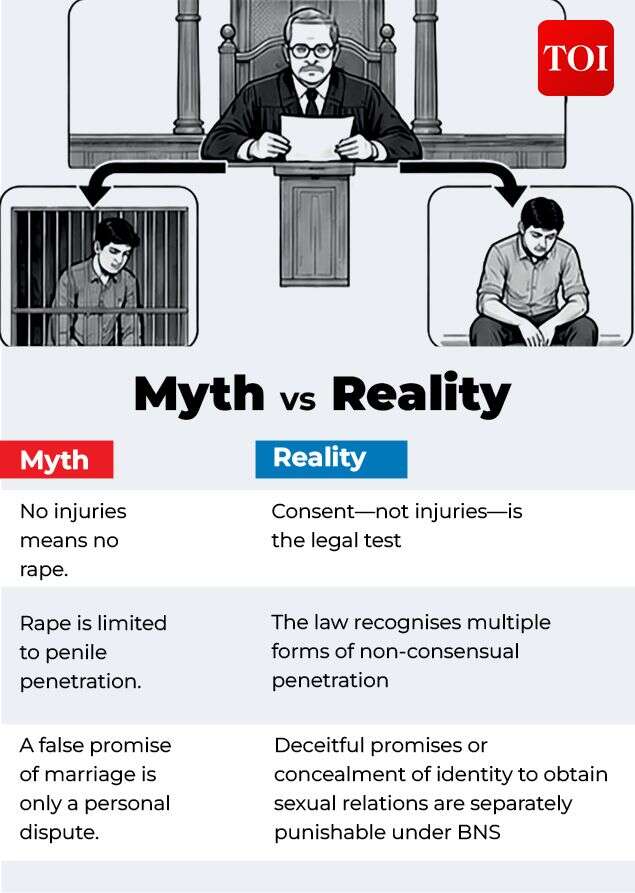
Why do many cases end in acquittal?
- Witnesses or survivors may turn hostile after prolonged trials, intimidation or financial pressure
- Delays in forensic reports or poor evidence preservation weaken prosecution
- Hostility or out-of-court settlements often stems from socio-economic coercion, family pressure, or safety threats before the trial reaches evidence stage
What if a complaint is false?Knowingly giving false information or maliciously instituting criminal proceedings is punishable under BNS. Courts can also initiate perjury proceedings against anyone found to have deliberately given false evidence. However, an acquittal by itself does not automatically mean the complaint was false