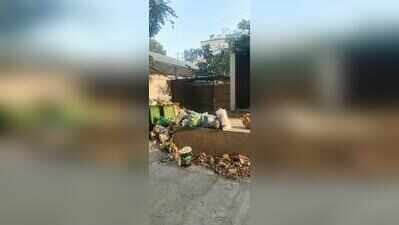
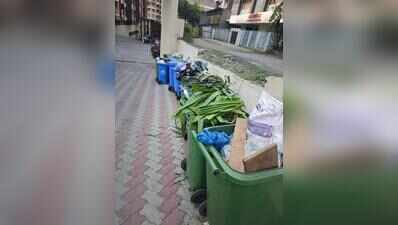
Pune: More than three months after the Moshi depot incident that claimed nine lives, irregular garbage collection continues to trouble residents in Pimpri Chinchwad, with some housing societies reporting gaps of five to six days between door-to-door pickups.Residents said overflowing bins and mounting garbage at society collection points had forced them to store waste in gunny bags or leave it in the open, resulting in foul smells and concerns over public health. They alleged that repeated complaints to the Pimpri Chinchwad Municipal Corporation (PCMC) had failed to resolve the problem.Amol Jadhav, a resident of Arun Viva housing society in Mhaske Vasti, which has 55 flats, said garbage collection had become increasingly erratic. “Our society’s collection point is overflowing because of the long gaps between pickups. We are forced to store garbage in gunny bags or leave it outside once the bins are full. The stench is raising serious health concerns,” he said.“The situation has remained the same since the Moshi depot incident. The civic body should have resolved the issue by now,” Jadhav added.Ganesh Chaudhari, a resident of Evoke society in Ravet, which has 184 flats, said the collection vehicle had arrived only after six days last week, following repeated complaints to the local corporator and civic officials. “Daily collection seems like a distant dream. Usually, there is a gap of three to four days, but sometimes it stretches to five or six days,” he said.Chaudhari also said private agencies had begun approaching housing societies, offering to collect and dispose of their waste for a monthly fee. One agency had offered to charge Rs 50 per flat, but the society declined, as residents were unsure where the waste would be dumped. “Garbage collection is the PCMC’s responsibility, and we did not want to pay a private agency without knowing how it would dispose of the waste,” he said.A senior PCMC official attributed the disruption to the continued shutdown of the waste-to-energy (WtE) plant at Moshi, which earlier processed around 800-1,000 tonnes of the city’s daily waste generation of 1,300-1,500 tonnes. The operator has assured the civic body that the plant will resume operations by the end of Oct. The PCMC has also started imposing a daily penalty of Rs 50,000 on the operator for failing to restart the facility within the stipulated period, the official said.The Moshi depot was shut after a sanitary landfill collapsed onto the WtE plant’s administrative building on July 8, killing nine people and injuring several others. Although the depot reopened after nearly three weeks, the WtE plant has remained shut, adding to the pressure on the city’s waste disposal system.“Earlier, the WtE plant processed around 800-1,000 tonnes of waste daily, while only 200-300 tonnes were dumped at the landfill after processing at other facilities. With the plant shut, more than 1,000 tonnes now need to be dumped, but there is insufficient space within the depot,” another civic official said.The newly identified dumping area within the depot has also created access difficulties for garbage vehicles, slowing down their movement. The civic body had additionally been clearing waste accumulated at open spaces across the city during the depot’s closure, resulting in a surge in the quantity reaching Moshi.“Before the incident, garbage disposal at the depot would generally be completed by 3pm. Now, vehicles continue operating until 7pm or 8pm almost every day, affecting the entire collection and disposal cycle,” the official said.