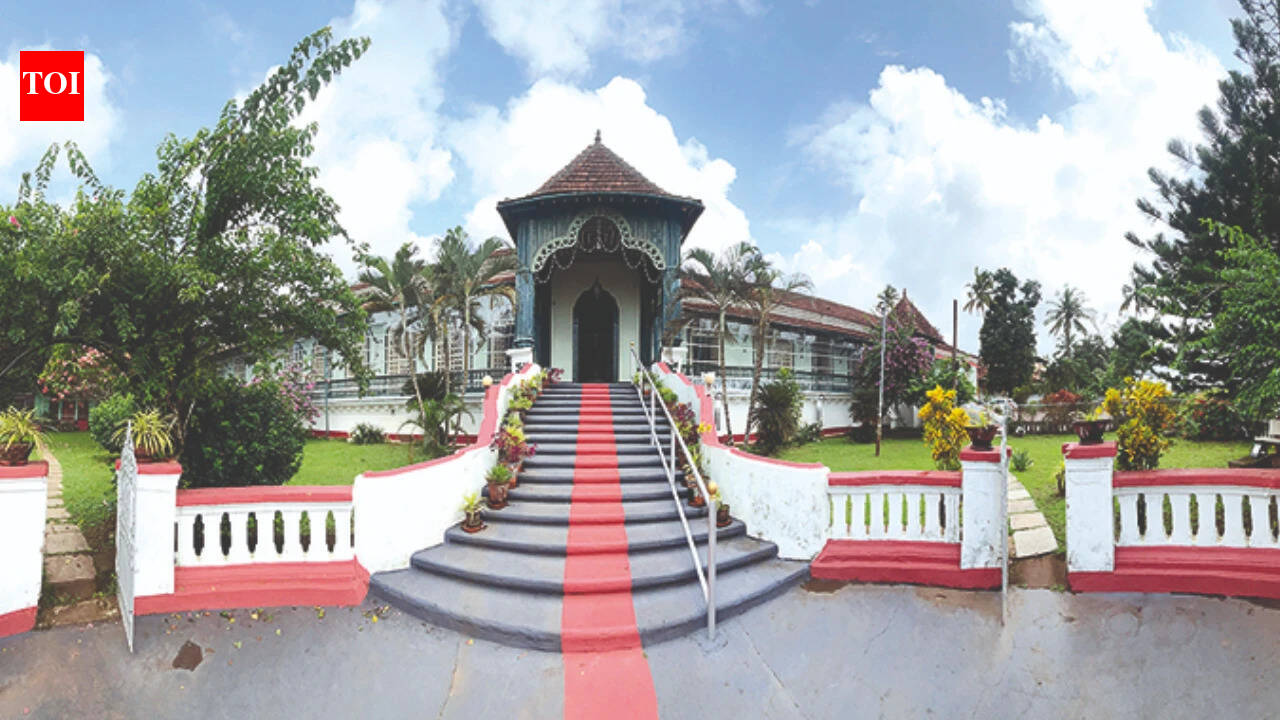
The 400-year-old Figueiredo mansion in Loutolim is more than a family home—it is a living museum where centuries-old artefacts, architecture and heirlooms preserve Goa’s multicultural heritage for future generationsNot many can claim to have a museum within the walls of their own home, but Pedro Figueiredo can. For him, the treasures housed in Loutolim’s Figueiredo mansion, his 400-year-old ancestral home, are not distant relics locked behind glass, but artefacts sourced across continents—hand-carved furniture, manuscripts and heirlooms that carry the imprint of family members across generations. In choosing preservation over abandonment, the Figueiredos have transformed their Baroque-style mansion into a repository of Goa’s history.
Figueiredo Mansion in Loutolim
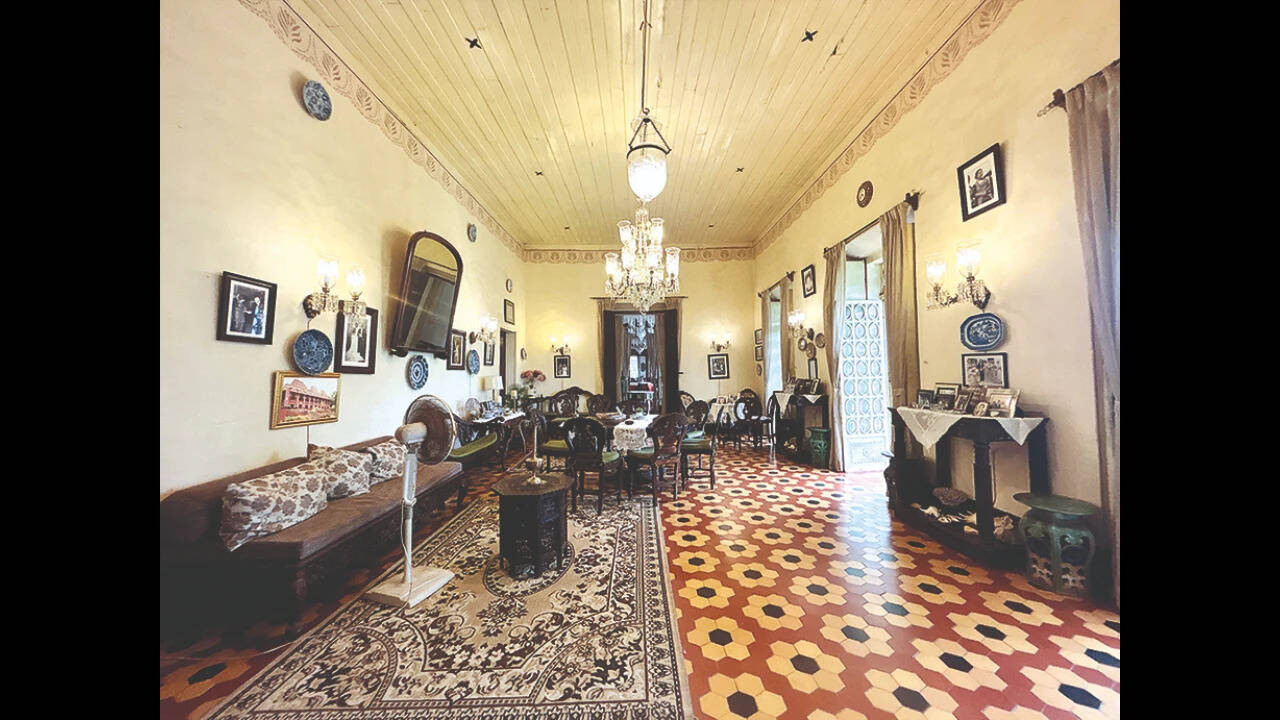
The house traces its origins back to the 1590s, when the Figueiredo family moved from Sancoale to Loutolim following a bubonic plague outbreak. The family, originally Goan Hindus from the podiar community of Sancoale, later converted to Christianity.Pedro’s mother Fatima, who had a successful career in Lisbon, began the restoration journey after visiting her house over a decade ago. She left Portugal for good in 2016, and Pedro joined her in 2017 after completing his university education. Together, they set up a museum called Vicente Joao Figueiredo Museum and homestay, in which rooms are dedicated to family members whose careers span law, medicine, and the arts.The passage of time is visible. As one enters the main door, traditional oyster-shell shutters welcome the visitor. However, once in the hall, the visitor is greeted with art deco-style French windows. As one proceeds, four-poster beds and chamber pots transition to en suite bedrooms.
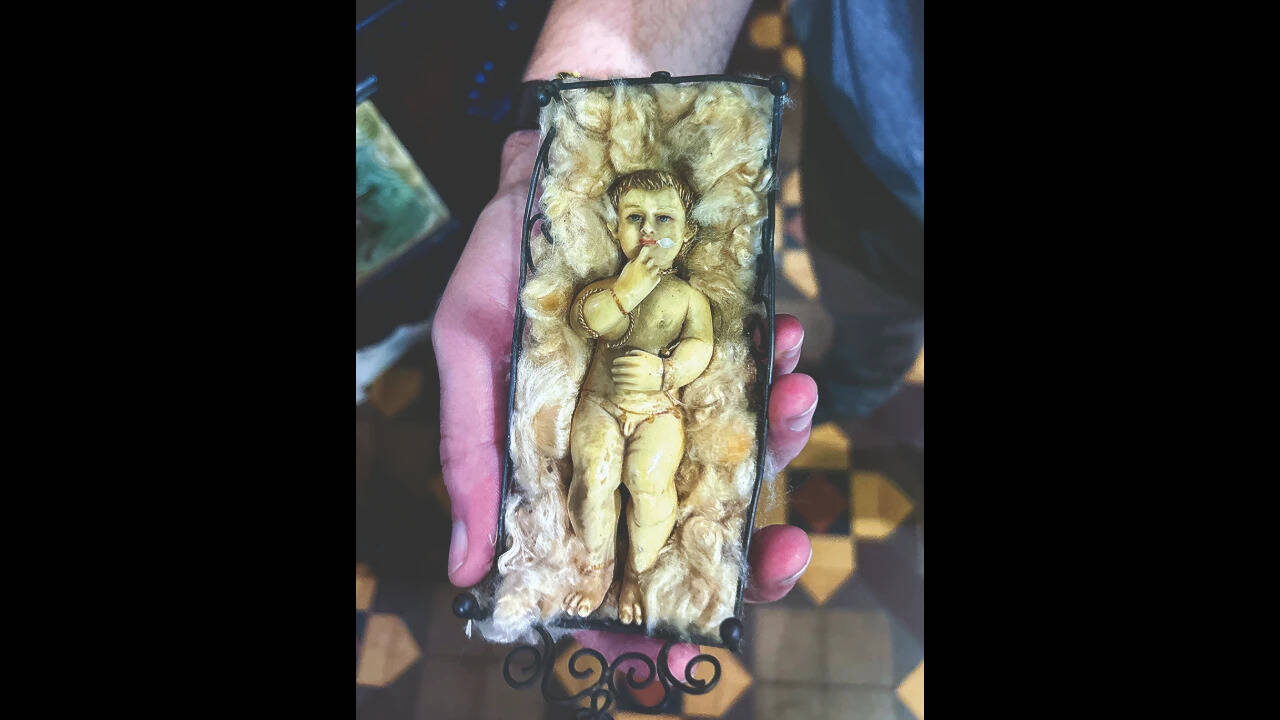
A miniature statue of Jesus with bangles sculpted in the likeness of Lord Krishna
“The house’s oldest section dates back to the 16th century, while an expansion undertaken in the 1790s introduced grander spaces, including a ballroom, music room, and dining hall. The higher ceilings and spacious halls reflect European influences of the period, including elements associated with Gothic architecture,” Pedro told TOI. Yet, the home carries traces of Hindu, Islamic, and Goan Catholic influences.“The house has two major courtyards, or ‘raj aangan’, similar to gardens in Muslim cultures that served as private retreats and exclusive leisure spaces for royal women. In our home, these raj aangans were where couples met during the courtship period during an arranged marriage,” he said.“There is also traditional craftsmanship and intricate tile work inspired by Islamic patterns. The furniture has a fusion of Hindu craftsmanship and Portuguese design with one set of chairs having ‘trimurthi’, palm trees, and dragons. We even have a baby Jesus miniature statue with bangles that has been sculpted in the likeness of Lord Krishna,” he said.
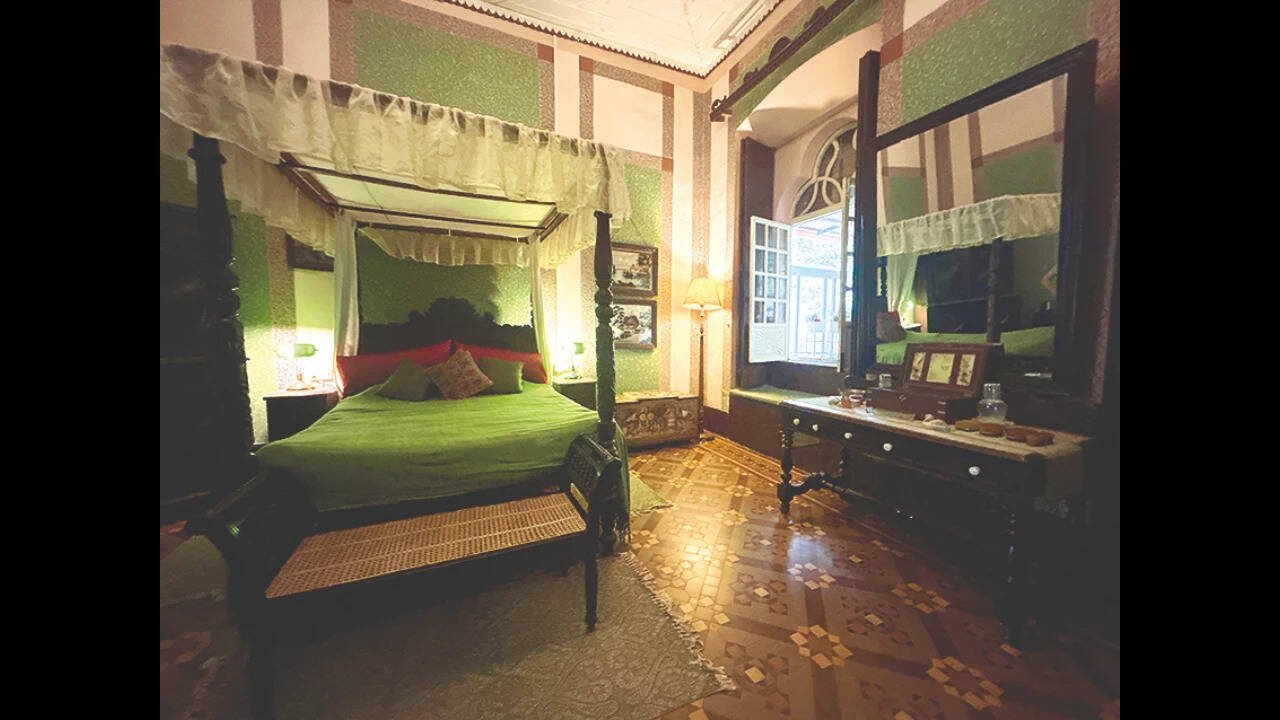
An elegant bedroom featuring traditional four-poster furniture, antique wooden furnishings, and intricate decorative details at the historic Figueiredo mansion in Loutolim
Among Pedro’s prized possessions is a custom-made East India Company crockery set bearing the family’s coat of arms, featuring orange and gold colours alongside a lotus motif showing both the family’s Christian identity and Hindu heritage.The house also preserves links to royalty and political history with a silverware set gifted by King John V of Portugal in the 18th century, he said. The museum also displays the silk sari worn by Pedro’s grandmother, Maria de Lourdes Figueiredo, when she represented Goa in the Portuguese parliament in the 1960s.Besides a 1920s Schiedmayer piano bought from Karachi and a rare 1904 camera bought from Birmingham, the mansion also has a chest of drawers carved with intricate design, one of just three ever made.With such rich history, Pedro says the family was fortunate to have a clear succession plan that prevented disputes among multiple heirs.
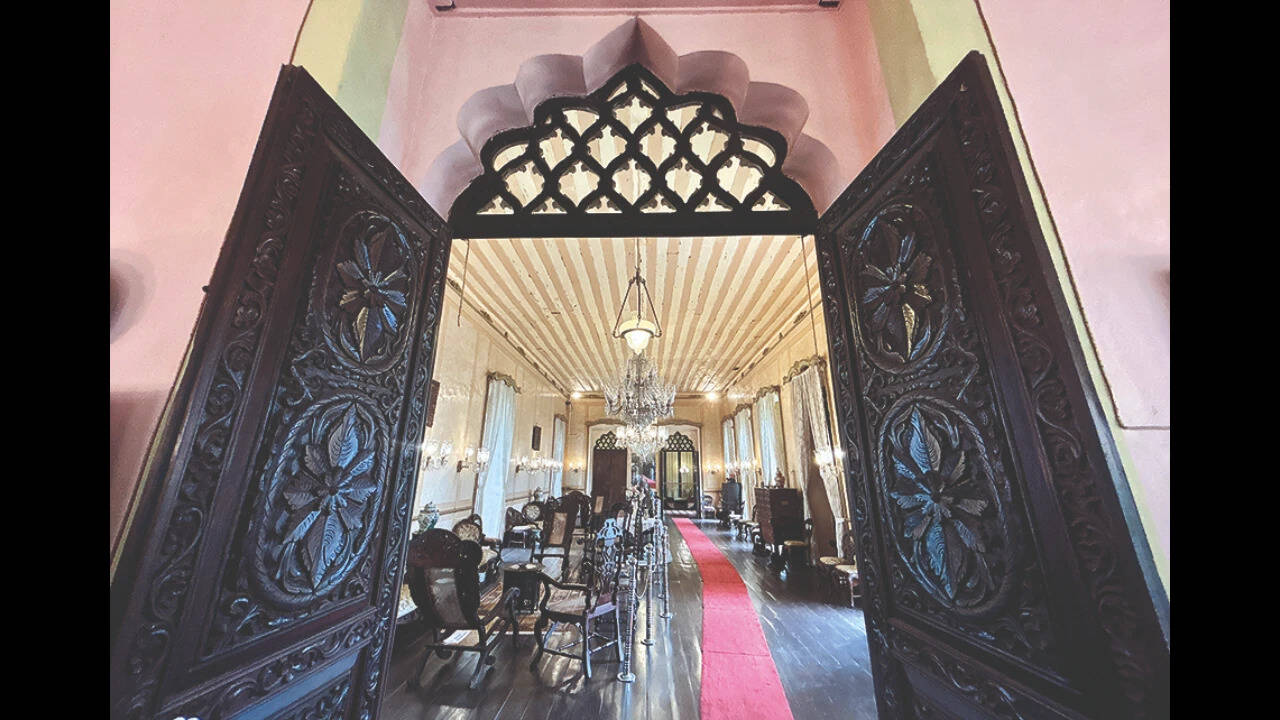
Figueiredo Mansion in Loutolim
“Vicente Joao Figueiredo ensured that the property remained intact by leaving it to his daughter, Georgina, who dedicated her life to maintaining the mansion. She never married, claiming that no man could ever bear the weight of this house,” he said.After Georgina’s death in 2008, the responsibility passed to Pedro’s grandmother, who continued caring for the property until the next generation stepped in.Today, surrounded by bougainvilleas and a swimming pool—a modern addition—the mansion stands as a bridge between Goa’s past and present.“History survives when someone chooses to protect it. Our doors are always open to anyone eager to know more about Goa’s links with other countries, continents, and kingdoms,” said Pedro.