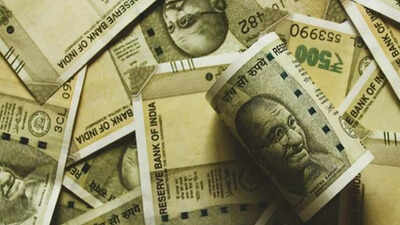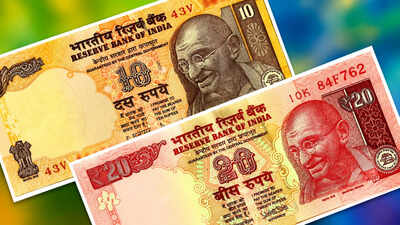
India is set to trade in polymer banknotes soon, with the government approving the Reserve Bank of India’s proposal to release one billion pieces each of Rs 10 and Rs 20 denomination notes for field trials.The proposal, submitted by the RBI’s central board under Section 25 of the Reserve Bank of India Act, 1934, seeks to introduce the polymer notes initially for field trials. Regular issuance of the two denominations has been proposed after the successful completion of the trials.Finance minister Nirmala Sitharaman, in a written reply to the Rajya Sabha on Tuesday, said, “The proposal has been approved by the government. As per the RBI, these polymer banknotes are proposed to be issued along with paper substrate-based banknotes.”The RBI has said that the procurement process is currently at an initial stage. As a result, the exact timeline for introducing the polymer notes and the expenditure involved cannot be determined at present.Days earlier, RBI governor Sanjay Malhotra said that the project was at the pilot stage and that any decision to expand it would depend on the results of the testing. He had also said the RBI was targeting circulation of the notes from the beginning of the next financial year, if the project proceeded as planned.“If everything goes as per plan, we are targeting that they (polymer notes) be in circulation at the beginning of the next financial year,” Sanjay Malhotra said.The government has authorised the RBI to print up to 2 billion polymer banknotes for the field trials, 1 billion each in Rs 10 and Rs 20 denominations.The plan is not to replace paper currency completely, rather polymer and paper-based notes will continue to circulate together as legal tender.
Why India is testing polymer notes
Malhotra had earlier said that the move towards polymer notes was aimed at improving their durability, particularly for lower denominations that have a higher velocity of circulation and therefore a shorter lifespan.“One is that it enhances the durability. This is relevant especially for lower denomination notes where the velocity is higher, and so therefore the lifespan is lower,” he said.He also pointed to the experience of other countries, where polymer notes have been in circulation for more than 30 years.“These notes have been in circulation for more than 30 years in various countries, and one finds that the life is much more – two to four times the life of the paper substrate,” he added.
What FM Sitharaman told parliament
Retail inflation rises but stays below 4% targetAdding in the reply, minister Sitharaman said that average retail inflation had fallen from 5.4 per cent in 2023-24 to 4.6 per cent in 2024-25 and then to 2.1 per cent in 2025-26.The downward trend was followed by a rise in inflation to 3.9 per cent in the first quarter of 2026-27. The increase was attributed to the commodity price shock and elevated global energy prices resulting from the Middle East crisis, a seasonal increase in vegetable prices and expected unfavourable El Niño conditions.Despite the rise, retail inflation remained below the Reserve Bank of India’s 4 per cent target, she said.GST changes and customs duty cutsThe government has also taken several measures aimed at reducing tax rates and containing price pressures.“The 56th meeting of the Goods and Services Tax (GST) Council has brought in a two-rate structure with a standard rate of 18 per cent, a merit rate of 5 per cent and a special de-merit rate of 40 per cent for a select few goods and services (but inclusive of earlier compensation cess rate, and hence with no increase in overall tax burden),” Sitharaman said.Following the GST changes, rates on several goods and services were rationalised. These included reductions from 28 per cent to 18 per cent, from 18 per cent to 12 or 5 per cent, and from 12 per cent to 5 per cent or nil.Tax exemption raises disposable incomeAlongside indirect tax measures, the government has raised the disposable income of individuals by exempting annual incomes of up to Rs 12 lakh from income tax. For salaried individuals, the limit is Rs 12.75 lakh after the standard deduction.According to Sitharaman, the measures have supported household consumption. The share of private final consumption expenditure in GDP remained broadly stable at 56.5-56.7 per cent, with 2022-23 as the base year.Latest GDP estimates from the Ministry of Statistics and Programme Implementation showed that per capita Private Final Consumption Expenditure (PFCE) grew 6.8 per cent in 2025-26, compared with 4.8 per cent in 2023-24.FM Sitharaman said that the government continued to monitor the country’s price situation and would undertake fiscal, administrative and supply-side measures as warranted by changing economic conditions to protect household purchasing power, particularly that of low- and middle-income households.