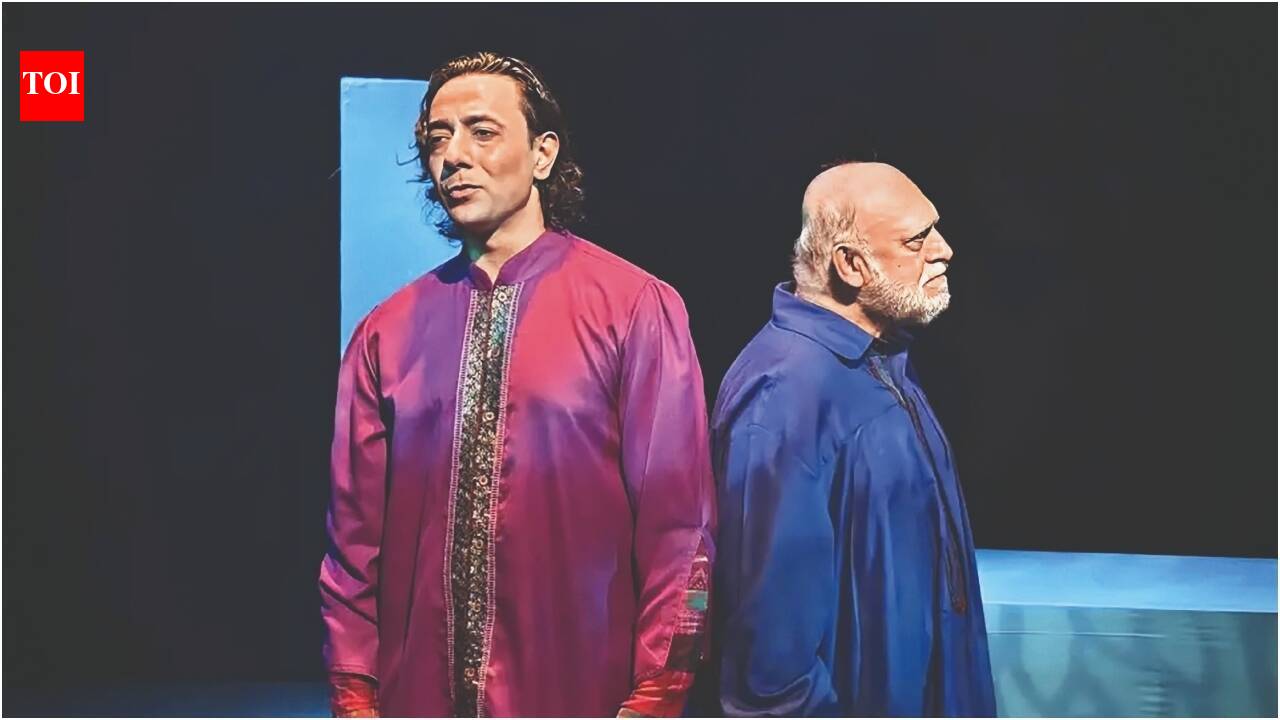
Amid the dim lighting, actor Mantra Mugdh, playing Busker, enters the stage wearing a mask of Shakespeare. He sits down on a wooden box and begins to play an instrument shaped like a regular household utensil. The image is colourful yet ominous, like witnessing the start of something dangerous but human. A tragicomedy, if you will.And right on cue, a character named Chorus appears, whose chirpy voice and tap dancing shift the atmosphere, making it considerably lighter. Together, they narrate the tale of Ham, an old man whose love for both Shakespeare and theatre has brought them together.The narrative technique of theatre within a theatre is a clever hat tip to Shakespeare’s Hamlet, but the device here also allows the play to blur the line between the story being performed and the tragedy unfolding within Ham’s life.The Tragedy of Ham MacLear is the account of an ailing man who attempts to rediscover his love for the timeless plays of the Bard with the help of his friends. Tightly placed at 65 minutes, the drama demands your unwavering attention as it moves seamlessly from the present to the onset of Ham’s dementia on stage, when he begins performing a scene from Hamlet in the middle of The Merchant of Venice.This is where director and lead actor Akash Khurana sparkles. His confident demeanour of a man who knows his play inside-out transforms in mere seconds into a confused performer who cannot comprehend why his loving audience is suddenly booing at him and his crew.Busker and Chorus inform us that Ham’s condition worsened after the death of his wife Desdemona, who, it is revealed later, had cheated on him with Busker.The climax mirrors the third act of a typical Shakespearean play, where a key conflict plays out in all its glory. The segment serves both as a revelation and a redemption arc, where Ham begins to navigate his own loss through Shakespeare’s words.There are several things that the production does right besides the acting, where actor Garima Yajnik dazzles as she sings and dances her way into the audience’s heart. The music, sometimes performed onstage by Mantra Mugdh as he drummed a vessel or used a singing bowl instrument, worked well with the play’s mood.The lighting was especially impeccable, helping create the eerie atmosphere during the concluding part of the drama. However, the standout part was when Ham stopped performing Shakespeare, but rather seemed to process his grief through the playwright’s work-Anvita Singh

Want us to review your play? Mail us at tims.delhitimes@timesofindia.com