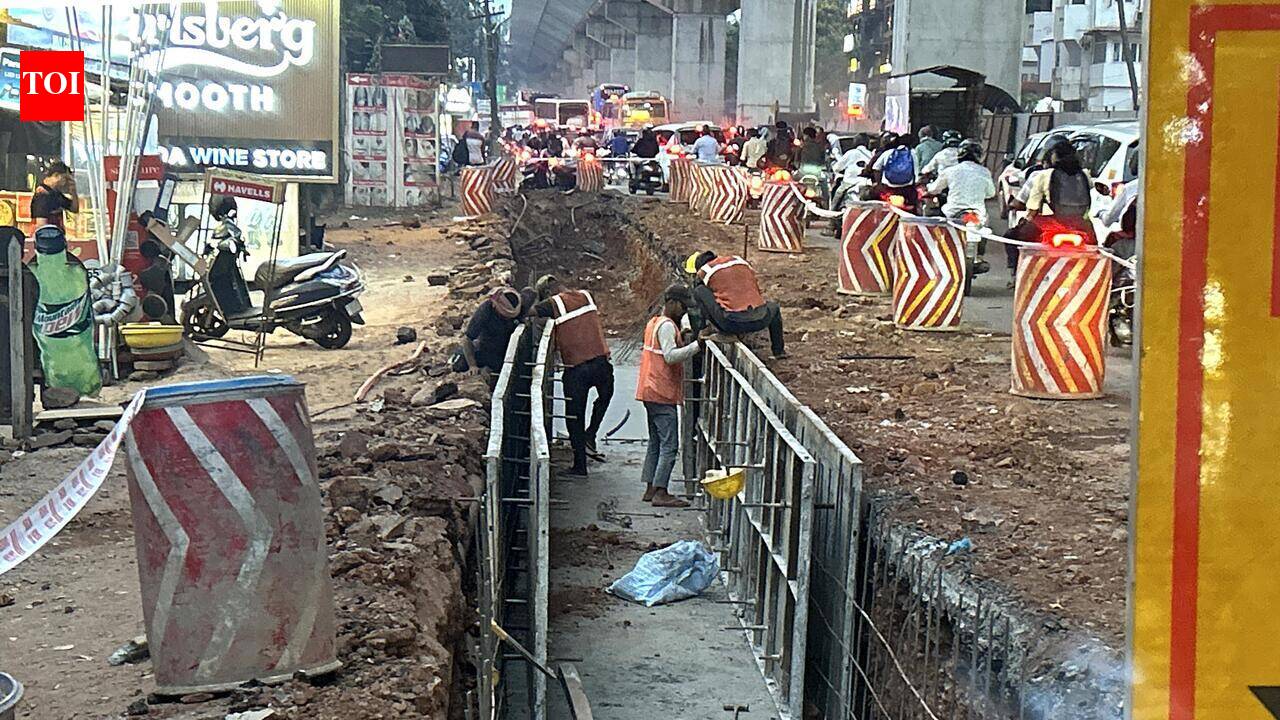
Panaji: Construction of the Porvorim six-lane elevated corridor has yielded 30 deep-earth core samples that researchers say could provide clues to climate and environmental conditions dating back 2.5 to 2.8 billion years.The public works department (PWD), through contractor RRSM Infra, has handed over the samples for scientific research. Extracted from depths ranging from 3m to 28.5m along a roughly 1km stretch of NH 66 at Porvorim, the cores are from the Sanvordem geological formation.Professor Nandakumar M Kamat, a member of Goa State Biodiversity Strategy and Action Plan committee who will lead the research, said the samples could contain mineral, chemical and biological evidence of the environment in which the rocks were formed.“Porvorim lies geologically on the Sanvordem formation. These are 2.5 to 2.8 billion years old, from the late Archean greywacke. These sediments, once deposited in ancient seas from weathered continents, can retain mineral, chemical, and biological clues to the environment and climate 2.5 to 2.8 billion years ago,” Kamat said.Studies of Archean greywacke and related sediments elsewhere have shown that they can preserve geochemical and mineralogical signals of ancient weathering, oceans, atmosphere and climate, he said.“Such studies can reveal intensity of continental weathering, source terrain and provenance, marine versus terrestrial environments, redox conditions of oceans and atmosphere, changes in nutrient supply and sediment type, and possible microfossil-like structures,” Kamat said.The research will be carried out in phases and will include microscopic, geochemical and geomicrobiological studies, including a search for chemolithotrophic microbial colonies. The findings will subsequently be submitted to PWD and Goa State Biodiversity Board.Kamat said the samples offered an unusual scientific window into Goa’s deep geological past and could help determine whether environmental signals comparable to those found in rocks of a similar age elsewhere have been preserved in the Porvorim metagreywackes.The Porvorim metagreywackes form part of the Sanvordem formation and were originally marine sediments that were later buried, folded and metamorphosed over 2.5 to 2.8 billion years, he said.Goa has preserved core samples from several major infrastructure projects, including the Konkan Railway, Zuari and Mandovi bridges and various dams, at the geological museum at Goa University because of their geological significance.Goa has several other formations of geological importance. According to ‘Natural Resources of Goa: A Geological Perspective’, edited by Antonio Mascarenhas and Glenn Kalavampara, laterite and the younger deposits of sand, soil and alluvium are among the formations associated with the period closer to human habitation. In a chapter by geologist O A Fernandes, the book notes that the laterite, sand and soil seen today formed during the last few million years.