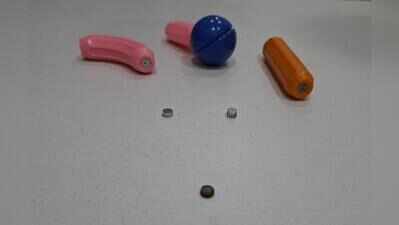
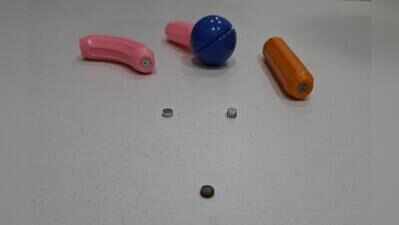
Mumbai: What appeared to be a stomach infection in a two-year-old boy turned out to be a medical emergency after two tiny toy magnets, which had been swallowed separately, locked onto each other inside his intestines, tearing holes in his bowel and forcing emergency surgery.Swallowing foreign objects is among the commonest reasons young children are taken to emergency departments of hospitals. Coins remain the object most frequently swallowed, while button batteries are considered the most dangerous because of the chemical burns they can cause.However, as the child’s parents didn’t suspect he had swallowed magnets, they took him to Surya Hospital in Santa Cruz for an OPD consultation for fever, intermittent abdominal pain, vomiting and loose stools. His symptoms initially pointed to gastroenteritis, but because of the severity of his pain, doctors conducted an ultrasound that suggested acute appendicitis. He was then rushed to the operating theatre.What surgeons found instead came as a complete surprise. “The abdomen was full of pus. As we were suctioning it out, two tiny magnets suddenly got stuck to the metal suction catheter,” recalled paediatric surgeon Dr Satej Mhasker, who led the surgery.Once the two magnets were found, doctors realised they had probably been swallowed at different times. The magnets had attracted each other across two loops of the intestine, trapping the bowel wall between them. The constant magnetic pull eventually led to perforations.The minimally invasive procedure was then converted into an open operation to repair the two holes—one in the small intestine and another in the caecum, part of the large intestine. Both perforations were repaired, the contaminated abdominal cavity was cleaned and the child recovered well. The operation took place on July 8 and he was discharged a week later.The mystery was solved only after the surgery. While looking through toys at home, the parents said they discovered one containing similar magnets. They brought it to Dr Mhasker during a follow-up visit last week, confirming the source of the swallowed magnets.The magnets involved were made of neodymium, a rare-earth metal used to manufacture some of the world’s strongest permanent magnets found in electric vehicle motors, smartphones, headphones, MRI scanners and computer hard drives. They are also used in magnetic building sets, puzzle balls and other toys.“These magnets are tiny, but their magnetic strength is five to 30 times greater than ordinary magnets,” Dr Mhasker said. “They are often concealed inside plastic toys and can come loose if the toy breaks.”Several European countries have tightened safety standards and made warning labels mandatory for high-powered magnetic toys. In 2021, the UK’s NHS had called for restrictions after reporting that 65 children required emergency surgery over a three-year period after swallowing neodymium magnets.“In India, some of these toys are imported or sold cheap, and safety standards may not be followed,” Dr Mhasker said.