
Rumali roti is known for its thin texture and soft, delicate bite. At restaurants, it is often prepared on a large inverted tawa and stretched until it is almost paper-thin. That can make it seem difficult to recreate at home. But you do not need special equipment to make a good rumali roti. A regular tawa can be used with the right dough and a little patience. The most important part is to make the dough soft enough to roll without tearing. Resting the dough also helps it become easier to handle. Once rolled thin, the roti needs only a short time on a hot tawa. The aim is to cook it quickly while keeping it soft and flexible. A few simple steps can make the process much easier. With the right technique, homemade rumali roti can be light, thin, and soft enough to fold like a handkerchief.
How to make rumali roti on a regular tawa
Make a soft dough
Take 2 cups of maida in a bowl and add ½ teaspoon salt or as required. Mix well and slowly add about ¾ cup lukewarm water while kneading the flour. Add the water gradually rather than all at once so you can control the consistency. Knead for 8 to 10 minutes until the dough becomes smooth and soft.Add 1 teaspoon of oil and knead again. The dough should feel soft and flexible rather than firm. Cover it with a damp cloth and let it rest for at least 30 minutes. You can also rest it for up to 45 minutes. This gives the dough time to relax and makes it easier to roll.

PC: AI Generated
Divide the dough into small portions
After resting, divide the dough into equal portions and shape each portion into a smooth ball. Keeping the portions similar in size helps you get rotis that cook evenly and have a consistent thickness.Keep the dough balls covered while you work so they do not dry out. For very thin rumali roti, you can use two small dough balls together. Apply a thin layer of oil to one side and place the two pieces together. This can help you achieve a delicate, thin texture.
Roll the dough very thin
Lightly sprinkle the surface with flour to prevent the dough from sticking as you roll it. Place the dough on it and roll gently with a rolling pin. Keep turning the dough as you roll so that it does not stick to the surface.Try to make it as thin as possible without tearing it. If the dough keeps shrinking while you roll it, let it rest for another 5 to 10 minutes. Then continue rolling and avoid using too much flour during this period. A light dusting is enough to make the dough easier to handle without affecting its soft texture.
Cook it quickly on a hot, inverted tawa
Heat a tawa over medium-high heat and turn it upside down once it is hot. Traditionally, rumali roti is cooked on the outer surface of an inverted tawa, which gives it the thin and delicate texture it is known for. Carefully place the rolled dough on the hot surface and cook for around 20 to 30 seconds. Small bubbles should start to appear.Flip the roti and cook the other side briefly. A few light brown spots are enough. Do not let it become crisp or deeply browned. Since the roti is very thin, it cooks within seconds. Remove it as soon as it is lightly cooked to keep it soft and pliable.
Keep the cooked rotis covered
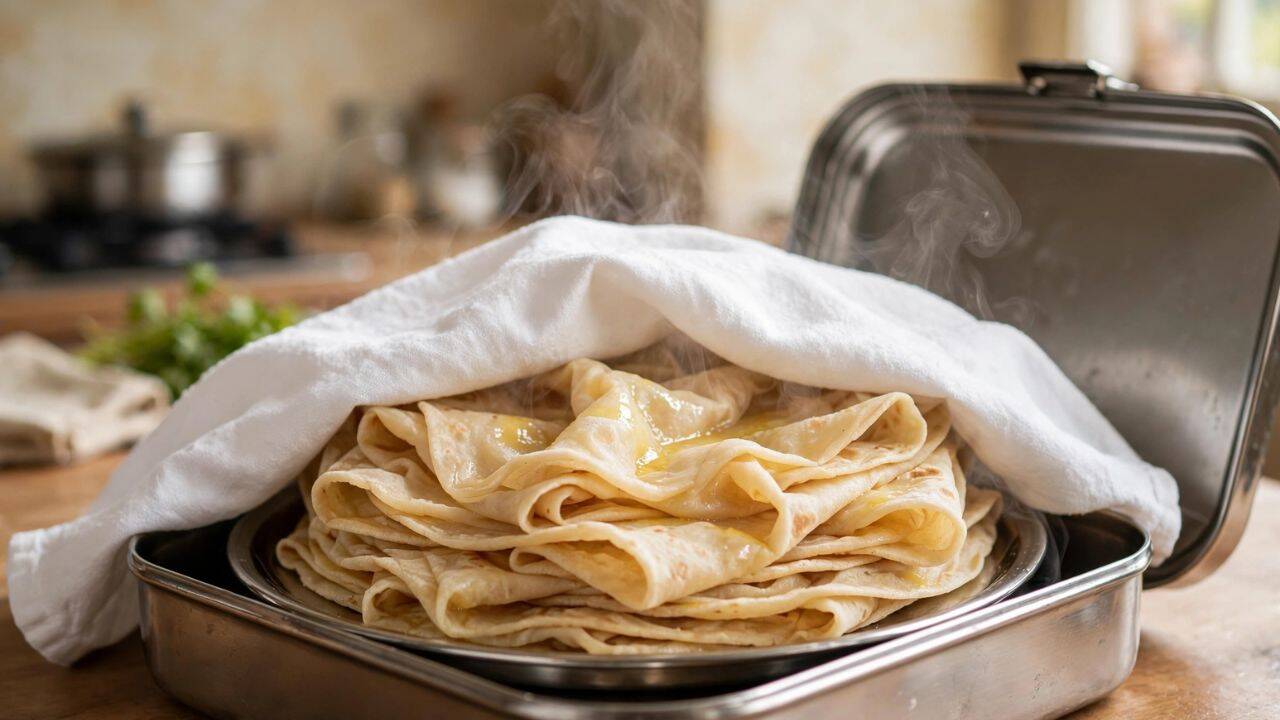
Place the cooked roti on a plate and fold it loosely. Cover it with a clean kitchen towel or keep it in a covered container. This helps retain moisture and keeps the roti soft. If you are making several rotis, stack them and keep them covered as you work.This is especially useful because thin rotis can dry out quickly when left exposed to air. You can brush them lightly with ghee or butter if you prefer, although this is optional. Serve them warm for the best texture and keep the remaining rotis covered until you are ready to eat.
PC: AI Generated
4 Simple tips for softer rumali roti
Knead the dough properly
The dough makes the biggest difference to the final texture. Kneading it properly helps develop the elasticity needed for thin rolling. Spend enough time kneading the dough until it feels smooth rather than rough. If the surface still feels uneven, continue kneading for a few more minutes. A little oil can also help make the dough smoother and easier to handle. Avoid making it too stiff because firm dough is harder to roll into the delicate sheet needed for rumali roti.
Give the dough enough time to rest
Resting is just as important as kneading. Covering the dough prevents its surface from drying while it rests. A rest of at least 30 minutes gives the dough time to become more relaxed and easier to shape.If you find that the dough still resists the rolling pin, leave it for a few minutes before trying again. This small adjustment can make rolling much easier without requiring any change to the recipe.
Use the right amount of heat
A properly heated surface allows the thin dough to cook quickly and helps prevent it from becoming dry. However, the heat should not be so high that the surface browns the roti immediately. Medium-high heat is a useful starting point. Watch the first roti closely and adjust the heat if needed.
Do not add too much flour
Excess flour can make the roti dry and affect its delicate texture. Use only a small amount while rolling to prevent the dough from sticking to the work surface.Remove any excess flour before placing the roti on the tawa. Too much flour can also burn on the hot surface and leave dark patches or an unpleasant taste. The dough should remain soft throughout the process, so use flour carefully and add more only when it is genuinely needed.