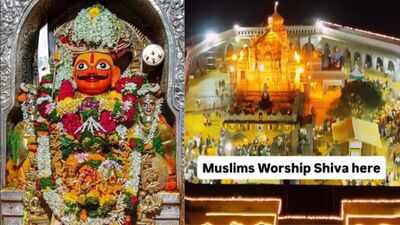
India is a land of temples; new, old and ancient, each with its own story, history, and timeless spiritual legacy. But ever heard of a temple where Muslims, too, come to offer their prayers and seek blessings? You read that right. Set atop a hill around 50 km from Pune in Maharashtra, there’s a historic Jejuri Temple which is unlike any other shrine in India. The temple is dedicated to Lord Khandoba who is regarded as a fierce warrior incarnation of Lord Shiva. It is among those few temples in India which are revered by both Hindu and Muslim communities with equal devotion.Let’s find out more about this interesting temple: Jejuri, the Golden Temple of MaharashtraJejuri is also known as the Golden Temple of Maharashtra. It is because of the clouds of turmeric (bhandara) that cover the shrine during festivals. Jejuri is not your ordinary pilgrimage site. It stands as a symbol of India’s shared religious heritage.Who is Lord Khandoba Lord Khandoba is also known as Malhari Martand by the community here. He is worshipped as an incarnation of Lord Shiva across Maharashtra and parts of Karnataka. Muslims revere Khandoba, referring to him as Ajmat Khan or Mallu Khan. A number of Muslim families participate in temple fairs and offer prayers here seeking blessings from Khandoba for good health and prosperity. During the annual festival, devotees from different communities gather here to pray to the lord, reflecting the deity’s status as a guardian of the land.It is a unique tradition which has often been cited as one of Maharashtra’s finest examples of communal harmony.A temple with history
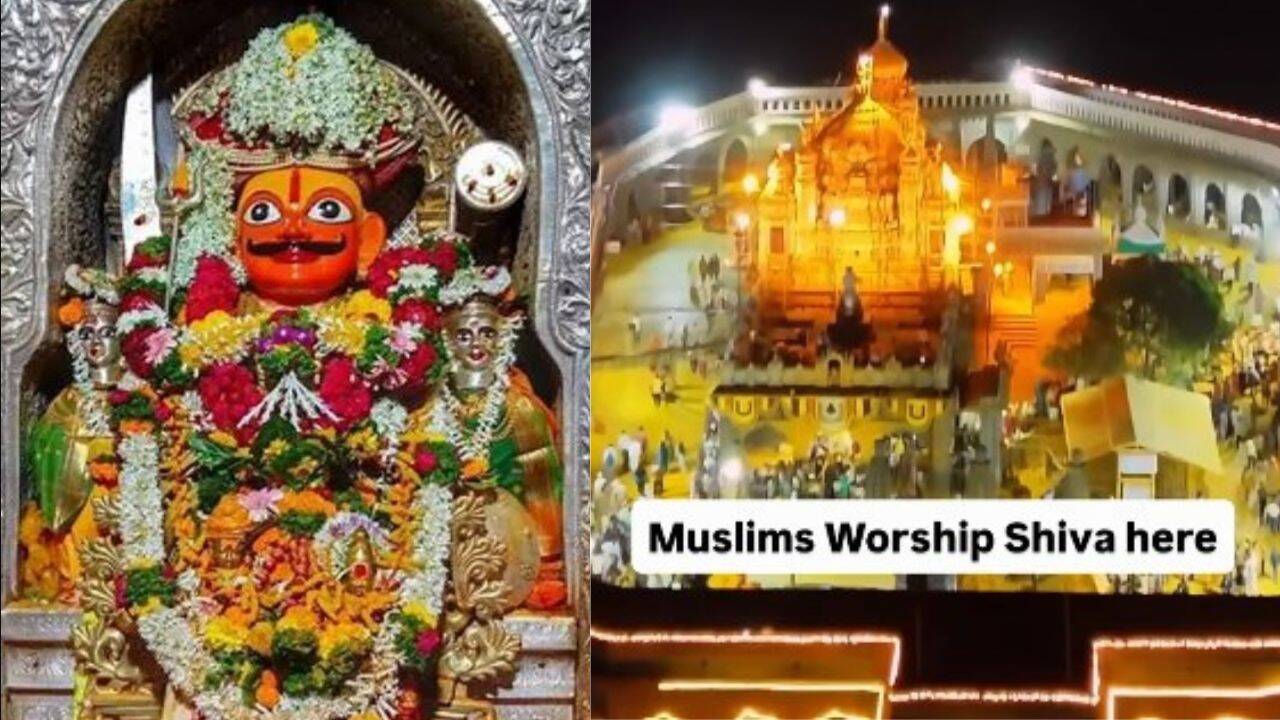
The origins of Jejuri Temple are believed to date back to the 12th or 13th century, although the present structure was extensively renovated during the Maratha period in the 17th century. Lord Khandoba became the patron deity of warriors, farmers, shepherds and several Maharashtrian families, with the temple flourishing under the Peshwas.Mughal connectAs per folklore, Mughal Emperor Aurangzeb tried to destroy the Khandoba Temple. But when his soldiers tried using explosives at the fort walls, a massive swarm of honey bees came after them and attacked the army. Aurangzeb and his army had to fall back. He instead donated a huge amount of money for the temple.Another most fascinating feature of the temple is the set of large Portuguese church bells which were brought to Jejuri by Chimaji Appa, brother of Peshwa Bajirao I. He got these bells after Marathas defeated the Portuguese in the Battle of Vasai in 1739. Today, these bells are an integral part of the temple complex.The mythology behind Lord Khandoba
As per Hindu mythology, Khandoba manifested to defeat the demons Mani and Malla, who had terrorized people living here. Riding a white horse and wielding a sword, the deity appeared and defeated the demons. One Champa Shashthi, the glory of the deity is celebrated which remains one of Jejuri’s biggest festivals.Why is Jejuri called the Golden Temple?Jejuri is renowned for turmeric as lakhs of devotees come here and shower turmeric powder which is locally called bhandara. Because the bright yellow powder fills the air and the entire hills appear bathed in gold that’s why Jejuri got the name Golden Temple.Temple architectureThe temple is built in the traditional Hemadpanthi style. To reach here, visitors climb nearly 200 stone steps to reach the main shrine. The entrance is decorated with carved arches and hundreds of Deepmalas (stone lamp towers). Best time to visitFor those who wish to witness the glory of Jejuri, the best time to visit would be during Champa Shashthi, celebrated in November or December. This is the famous turmeric festival which turs the place all golden.How to reach JejuriBy Air: The nearest airport is Pune International Airport, which is only 50 km away. By Train: Jejuri has its own railway station but Pune Junction offers better connectivity with major Indian cities.By Road: Regular Maharashtra State Transport (MSRTC) buses and private taxis connect Jejuri with Pune, Mumbai and Satara. In a country known for its diversity, Jejuri Temple remains one of the most beautiful living examples of religious coexistence, making it a must visit.