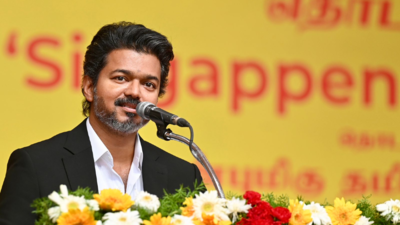
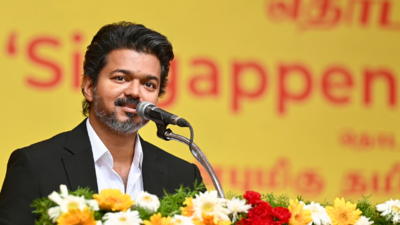
CHENNAI: Asserting that the party is not opposed to delimitation but seeks the exercise to be conducted fairly, DMK has decided to stay away from chief minister C Joseph Vijay’s meeting with Tamil Nadu MPs here on Saturday to discuss the Union govt’s proposed delimitation exercise and its impact on the state, according to sources.The state govt has sent personal invitations to all 39 Lok Sabha and 18 Rajya Sabha MPs representing Tamil Nadu. DMK has 22 members in the Lok Sabha and eight in the Rajya Sabha.Confirming that the BJP leadership had approached DMK over the proposed delimitation legislation, a top DMK leader told TOI that the exercise should uphold federalism and ensure equitable representation for all states. “The party’s concerns were not addressed in the earlier delimitation proposals. BJP approached us, and we placed our demands before its leadership,” the leader said.DMK has put forward two key demands. Firstly, Tamil Nadu’s existing share of parliamentary representation and that of every other state, must not be reduced. Secondly, Lok Sabha seats should be increased uniformly by 50% across all states without altering their current proportional shares. The party wants this arrangement to remain unchanged for 30 years, irrespective of future Census figures.DMK maintains that its position had already been articulated in a resolution passed by the Tamil Nadu legislative assembly in Feb 2024, at an all-party meeting convened by DMK chief M K Stalin and at the March 2025 meeting of the Joint Action Committee comprising southern states, Punjab and West Bengal. “DMK is not opposed to delimitation or the implementation of women’s reservation. We are asking for a fair delimitation exercise,” the leader said.DMK Rajya Sabha member P Wilson warned that under Article 81, population-based delimitation would automatically take effect from Jan 1, 2027, unless Parliament enacted legislation to extend the freeze on constituencies. “States such as Uttar Pradesh and Madhya Pradesh could gain seats because they had not effectively implemented family planning measures, while states such as Tamil Nadu, which had successfully controlled population growth, could see their representation reduced,” he said.