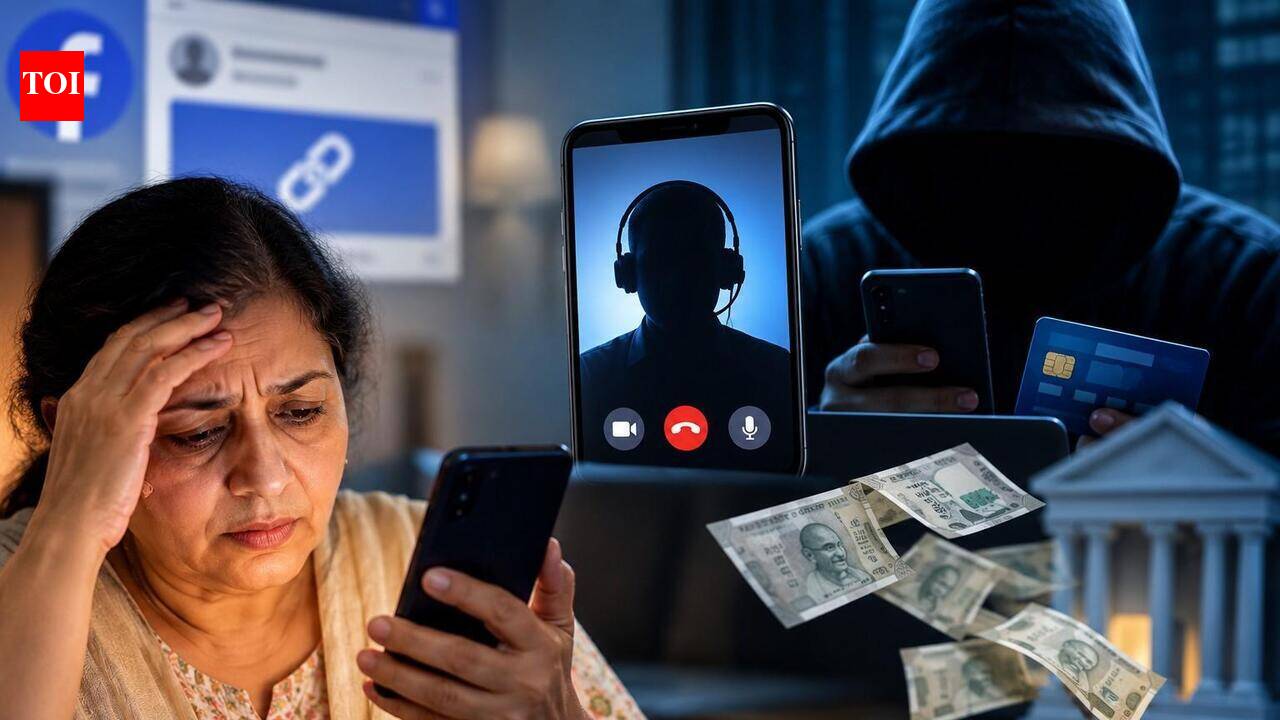

Margao: Despite heightened awareness about cyber security, cases of people being duped through online transactions continue to rise in South Goa. Police say they receive at least one such complaint every day and have urged people to report any loss of money through fraudulent transactions without delay.Four recent cases registered at Canacona, Cuncolim and Colva police stations show the range of methods being used, from impersonation of govt officials to malicious links and fake investment schemes.In the biggest loss among the recent cases, a Canacona resident lost over Rs 4 lakh after opening an e-challan link. According to the complaint at Canacona police station, Relson Miranda received a message with an e-challan link on his mobile phone which he opened. He then received an OTP from Gokwik, which he did not share. Soon after, he got a text message from his bank saying Rs 4 lakh had been sent to Mobikwik Systems. On checking his banking app, he found that an unauthorised UPI transaction for that amount had been made from his account without his knowledge or consent. In another case at Canacona, Sarvanand Konkonkar of Kindlem lost Rs 3.6 lakh to a fraudster impersonating a Goa tourism department representative. Between Oct 8 and 12, the unidentified accused contacted him through two WhatsApp accounts and told him that his tourism licence was due for renewal. Believing the caller to be genuine, Konkonkar followed his instructions and transferred the money through multiple UPI transactions. At Cuncolim, Birbal Nayak, a native of Jharkhand residing in Cuncolim, lost Rs 1.7 lakh after clicking on an APK file sent on WhatsApp. The unidentified accused induced him to apply for the PM Awas Yojana scheme through the file. After he clicked on the link, the amount was withdrawn from his bank account in multiple transactions without his knowledge. In Colva, Sanjana Meher of Benaulim was cheated of Rs 1.7 lakh in a task-based scam. Between July 31 and Sept 22, an unidentified person contacted her on WhatsApp and induced her to join a Telegram group to complete product-related tasks in exchange for monetary rewards. She initially received payments for the tasks, which won her trust. The accused then induced her to make multiple payments into different bank accounts on the pretext of completing further tasks and recovering amounts already invested, while promising higher returns. Police officers said that the fraudsters keep changing their methods, but the common thread is that victims are persuaded to click on a link, install a file or transfer money on the strength of a message from an unknown number. Residents have been advised not to open links or install APK files received from unverified sources and to verify any communication claiming to be from a govt department directly with the office concerned.Police have appealed to victims to report the loss to the police at the earliest, as prompt reporting improves the chances of tracing and freezing the money.