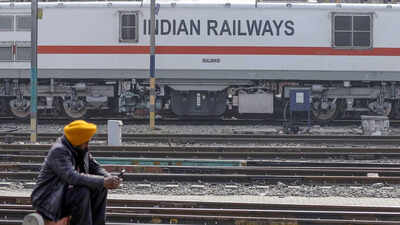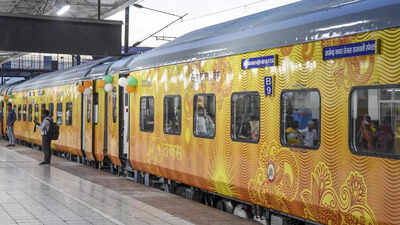
MUMBAI: Even as the Supreme Court on Friday asks government to reconsider curbs on metro and train services in Delhi and to resume the services in a regulated manner that doesn’t cause discomfort to commuters, jurists say the blockages itself could be flouting crucial fundamental rights of the very citizens, it may seek to protect.The government had decided to curb or cancel trains coming in to Delhi on October 10. The decision impacted at least two trains from Mumbai to Delhi, leaving planned travellers stranded.Former Supreme Court judge, justice Abhay Oka who was also previously Judge of the Bombay high court told TOI, “ The restrictions and cancellation of long distance trains to Delhi and even Metro trains within Delhi will be a violation of fundamental rights under Article 19 (1) (d) which is a right of citizens to move freely through out the territory of India, unless the government can justify how such curbs fall within the ambit of reasonable restrictions under clause 5 (limitations on free movement) and as of now they have not justified their action by showing a reliance on any law covered by clause 5.’’Article 19 (5) of the Indian Constitution governs what the reasonable restrictions could be for free movement within India.The State can place reasonable limitations on free movement through laws made for two specific purposes.The first is “In the interests of the general public: This includes controlling epidemics, maintaining public health, preventing crime, or regulating traffic and dangerous areas’’ and the second is to protect the interests of any scheduled Tribe.Justice Oka said the government must show how shutting train rides is governed by any law that satisfies Art 19 (5). “If it cannot show how, the action falls foul of the Constitutional freedoms.’’Justice VM Kanade a retired Bombay high court Judge and also the recent former Lokayukta of Maharashtra said the SC by asking government to reconsider its curbs has done the right thing.“What is important here is to see how and whether the government has reconciled two Constitutional rights. One is the right to assemble and to peacefully protest, the other is reasonable restrictions to ensure no violation of public order.’’Public order is a concept of peace, tranquility and equilibrium within State or society which stands at a higher threshold than mere ‘law and order’.The SC has stated that for any action to impact ‘public order’ it must disturb the very functioning of the community at large or create wide-spread panic, while law and order is a disruption that occurs even locally by a localised crime of theft and affects individuals specifically.Public order gets affects by communal rioting or major mob violence or armed uprising, legal eagles state.Justice Kanade said the government would need to justify how and why the train stoppage is needed to prevent any disruption of public order and if such disorder is anticipated when law and order and public or traffic management during protests, even law and order is a task that can be maintained by directives or preventive action suche as banning assembly of more than 5 persons except at the designated protests site, he added.