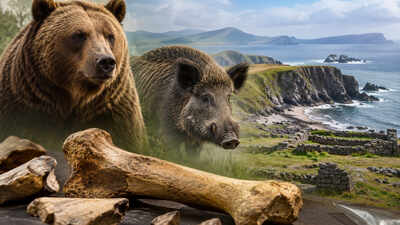
For 30 years, the “Kerry cow” bones were seen as proof of early farming in Ireland; scientists now say they belonged to a bear and wild boar

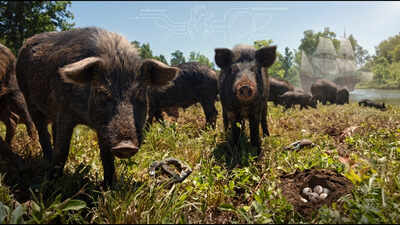
Representative Image (AI-generated) For more than three decades, a collection of animal bones from Ireland’s Ferriter’s Cove was considered some of the earliest evidence that farming had reached the island. But new research has now overturned that interpretation. According to University College Dublin (UCD), bones once identified as cattle have instead been identified as belonging…
Read More

Meet Jeremiah Bents, the Minnesota student who recreated Mars soil in a lab to test whether future astronauts could clean contaminated water |

Mars may be millions of kilometres from Minnesota, but for Cloquet student Jeremiah Bents, one small part of a future Mars mission could be tested much closer to home. Instead of looking at how to reach the Red Planet, Bents turned his attention to what astronauts might do once they get there, particularly when dealing…

Read More

Meet Leon Wang, the 17-year-old Connecticut student who found 2 FDA-approved drugs that reduced Alzheimer’s-linked damage in lab-grown brain cells

Leon Wang, the 17-year-old Connecticut student (Image Credit: Society For Science) Alzheimer’s disease remains one of the most difficult neurological disorders to treat, partly because the processes behind it can begin damaging brain cells long before symptoms become apparent. Now, a project by 17-year-old Connecticut student Leon Wang has drawn attention for exploring whether medicines…

Read More

In the 1500s, Spanish explorers left pigs on a Georgia island as future food; centuries of feast and famine produced hogs that rapidly store fat and are now used to study obesity and metabolic disease

Ossabaw Island Hogs (Representational Image Generated using AI tool) Centuries ago, Spanish explorers sailing along the coast of what is now the United States brought pigs with them as a practical food supply. Some escaped, while others were deliberately released so future expeditions would find animals waiting when they returned. On Ossabaw Island, a barrier…

Read More

In 2019, a 165-tonne underwater art structure was submerged beneath the Great Barrier Reef; today, coral and marine creatures are slowly transforming the structure |

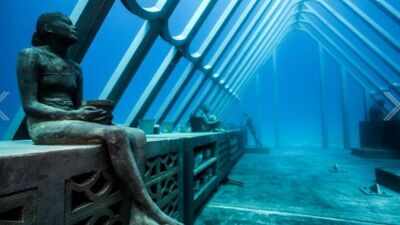
Beneath the surface of the Great Barrier Reef, a 165-tonne building is being slowly reshaped by the environment around it. The Coral Greenhouse, an underwater installation at John Brewer Reef, was designed to work with the sea rather than simply sit on the seabed. Coral can grow across its surfaces, fish can move through its…

Read More

Nasa maps Moon’s south pole regions where Earth bacteria and fungi could survive for more than a day |

The Moon’s south pole may contain small pockets where some Earth microbes could remain alive after being carried there by astronauts or spacecraft. A new Nasa study has mapped parts of the region where five types of bacteria and fungi may withstand lunar conditions for at least a day, with the hardiest organism potentially lasting…

Read More

Nasa’s 2028 Mars mission will send a spacecraft with a nuclear reactor toward Mars and release three small helicopters to explore the planet |

In late 2028, Nasa plans to send something unusual towards Mars, a spacecraft carrying a working nuclear reactor designed to generate electricity for propulsion in deep space. Space Reactor-1 Freedom is intended to test nuclear electric propulsion beyond Earth orbit, where conventional solar power becomes increasingly difficult to use. The spacecraft will not land on…

Read More

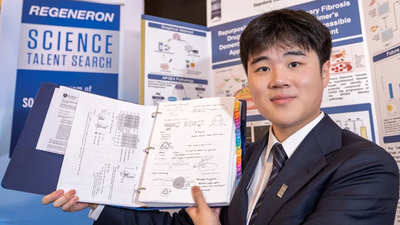
Meet Edward Kang, the 17-year-old New Jersey student who used retinal images to train AI for autism and ADHD screening; his project won a $175,000 science prize

For his project, Kang trained AI models to detect patterns associated with neurodevelopmental disorders from a large public dataset of retinal images. Instead of one approach, he used several techniques to improve the performance of the models. What if a simple picture of the eye could help doctors diagnose neurodevelopmental conditions earlier? For 17-year-old Edward…

Read More

Cashew shells once treated as waste are entering the shipping industry, with their residue-based energy tested aboard a commercial vessel |

A pile of discarded cashew shells would normally have little to do with international shipping. In Maharashtra agricultural leftovers are being fed into reactors that can turn them into usable fuel, gases and biochar. The technology comes from an unusual India-Denmark partnership built around the Viking biomass gasifier developed at the Technical University of Denmark….

Read More