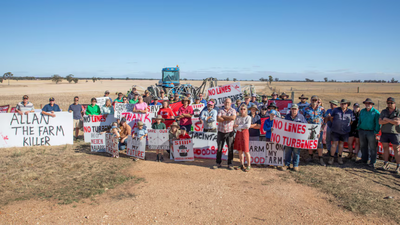
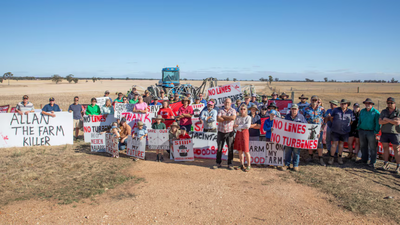
Twelve farming families in western Victoria, Australia, have been fined A$814 each for refusing to allow authorised officers onto their properties to conduct surveys for a proposed 480-kilometre electricity transmission line. The families say the project, known as Victoria to New South Wales Interconnector West (VNI West), threatens agricultural land, farm operations and the future of properties that some have worked for generations. Another six landowners received formal warnings after denying access. The fines, issued in August 2026, have intensified opposition to the multibillion-dollar infrastructure project, with affected farmers challenging the government’s approach to private property access. The dispute has since moved towards a legal challenge, while the project’s environmental assessment remains underway.
Why were 12 Australian farming families fined?
The Victorian government issued the infringement notices on August 4, 2026, after the landholders refused access to authorised officers seeking to undertake preliminary investigations for VNI West. The notices alleged that the farmers had hindered, obstructed or delayed authorised activities without a reasonable excuse. The fines were issued under Victoria’s Electricity Industry Act 2000, which provides powers for authorised officers to access land for specified electricity infrastructure planning activities. Six other property owners received formal warnings for refusing access.The farmers argue that their refusal was linked to concerns about the timing of inspections, agricultural activities and the potential consequences of the proposed transmission line. They maintain that they should have greater control over access to their properties, particularly when visits could interfere with livestock management or other time-sensitive farming work.
What is the proposed 480-kilometre power line?
VNI West is a proposed high-voltage transmission project designed to strengthen electricity connections between Victoria and New South Wales. It would connect renewable energy zones and electricity networks across the two states, helping transport power between generation sources and major demand centres. The Victorian section involves a proposed 500-kilovolt, double-circuit overhead transmission line running from the Bulgana area in western Victoria towards a terminal station at Tragowel, before continuing north towards the Murray River near Kerang. From there, the project would connect with infrastructure in New South Wales.The project is intended to improve electricity reliability, support the integration of renewable energy and provide access to generation and storage resources across state borders. Its estimated cost has been reported in the range of A7.6billiontoA11.4 billion for the wider project. However, the proposed route crosses agricultural regions where farming is a major economic activity. Landholders along the alignment have raised concerns about the placement of transmission towers, access tracks and easements, as well as the potential effects on land use and property values.
Farmers fear damage to their land and livelihoods
For the affected families, the dispute is not simply about surveyors entering their properties. They are concerned about what the eventual infrastructure could mean for their farms, businesses and the land they hope to pass on to future generations. Trent Carter, a fifth-generation sheep farmer from Wallaloo East in western Victoria, objected to surveyors entering a paddock during lambing season. He said the visit could put his stud Merino sheep at risk and argued that the authorities had not adequately considered animal welfare and the timing of agricultural operations.Carter said his family had attempted to negotiate a more suitable inspection time but felt their concerns were not properly addressed. He subsequently said he intended to contest the fine rather than pay it. Other landholders have raised concerns about the effect of transmission infrastructure on farm layouts, bushfire preparedness and the marketability of their properties. They fear that the presence of large towers and associated infrastructure could complicate agricultural operations and reduce the appeal of their land to prospective buyers.
A 103-year-old farm and concerns about protected wildlife
Colin and Mary Fenton, an elderly farming couple from the Kerang area, were among the landholders reported to have received fines. Their family has farmed the property for more than a century. Colin Fenton said the couple had raised concerns about a protected wedge-tailed eagle nest on their property. He questioned whether their objections had been adequately considered before the access notices were enforced.The couple also expressed concerns about the effect of the proposed project on their farm’s value. Fenton said he had approached a real estate agent about selling the property but feared that the planned transmission infrastructure could make it harder to find a buyer. Their concerns highlight the broader questions surrounding the project’s environmental assessment, including how wildlife habitats, agricultural land and existing land uses will be considered when the final route and associated infrastructure are determined.
Farmers refuse to pay and prepare a legal challenge
The fines have prompted affected landholders to coordinate their response. Regional reporting in August indicated that the farmers intended to obtain legal representation and challenge the notices. By October 6, the Herald Sun reported that all 12 families had refused to pay and had secured an extension until October 23 after seeking an appeal through joint legal representation.The dispute centres partly on whether the farmers had a reasonable excuse for denying access and whether the enforcement measures were appropriate in the circumstances. The authorities maintain that authorised officers have legal powers to conduct specified planning activities and that landholders were notified of proposed visits. The legal challenge could bring greater scrutiny to how these powers are exercised when survey work affects active farms, including the consideration given to seasonal work, livestock welfare and biosecurity.The fines do not themselves determine whether the transmission project will ultimately be approved. They concern access for planning and survey activities, while the project’s environmental and planning approvals follow a separate process.
Government says survey access is necessary for planning
VicGrid, the Victorian government body responsible for planning the state’s transmission network, has argued that surveys are needed to understand the land and environmental conditions along the proposed route. Such investigations can examine biodiversity, waterways, cultural heritage, agriculture and other factors that may influence the project’s design and potential impacts. The information is intended to inform the environmental assessment and identify measures to avoid or reduce harm.Authorities have said they sought voluntary access agreements with landholders before using statutory powers. The government has also pointed to notice periods and other engagement measures as part of its approach. The farmers, however, argue that notification alone does not adequately address their concerns when proposed visits conflict with critical farming activities. The disagreement has therefore become a test of how infrastructure planners balance statutory access rights with the practical realities of running agricultural businesses.
Environmental assessment remains underway
The Victorian component of VNI West is undergoing an environmental effects statement (EES), a detailed assessment of the project’s potential environmental, social and economic consequences. The Victorian planning department says the EES was required in April 2024. It is intended to examine issues including biodiversity, native vegetation, cultural heritage, waterways, agriculture, land use and effects on communities.The EES went on public exhibition on October 5, 2026, with submissions open until November 16. An Inquiry and Advisory Committee directions hearing is scheduled for December 7, followed by a main hearing expected to begin in the week of February 8, 2027. The process will allow the project’s evidence and public submissions to be considered before the planning minister makes the relevant assessment. The route and project design remain subject to the applicable assessment and approval requirements.For the farmers opposing the scheme, the assessment is a critical opportunity to have concerns about their land and livelihoods examined. For the project proponents, the process is intended to establish the likely effects of the infrastructure and determine how those effects can be managed.
VNI West becomes a political issue in Victoria
Opposition to the transmission line has also become a point of political contention ahead of Victoria’s November 2026 state election. In August, the Liberal and National parties pledged to scrap VNI West if the Coalition won the election, arguing that the project was not viable and that alternatives should be explored. The Victorian government defended the project, saying new transmission infrastructure would be important for electricity reliability as ageing coal-fired power stations retire. The debate reflects competing views about the future of Victoria’s energy system. Supporters of VNI West say stronger interconnections are needed to transport renewable electricity and maintain reliable supply. Opponents question the project’s cost, its effects on rural communities and whether alternative energy investments could achieve similar objectives.