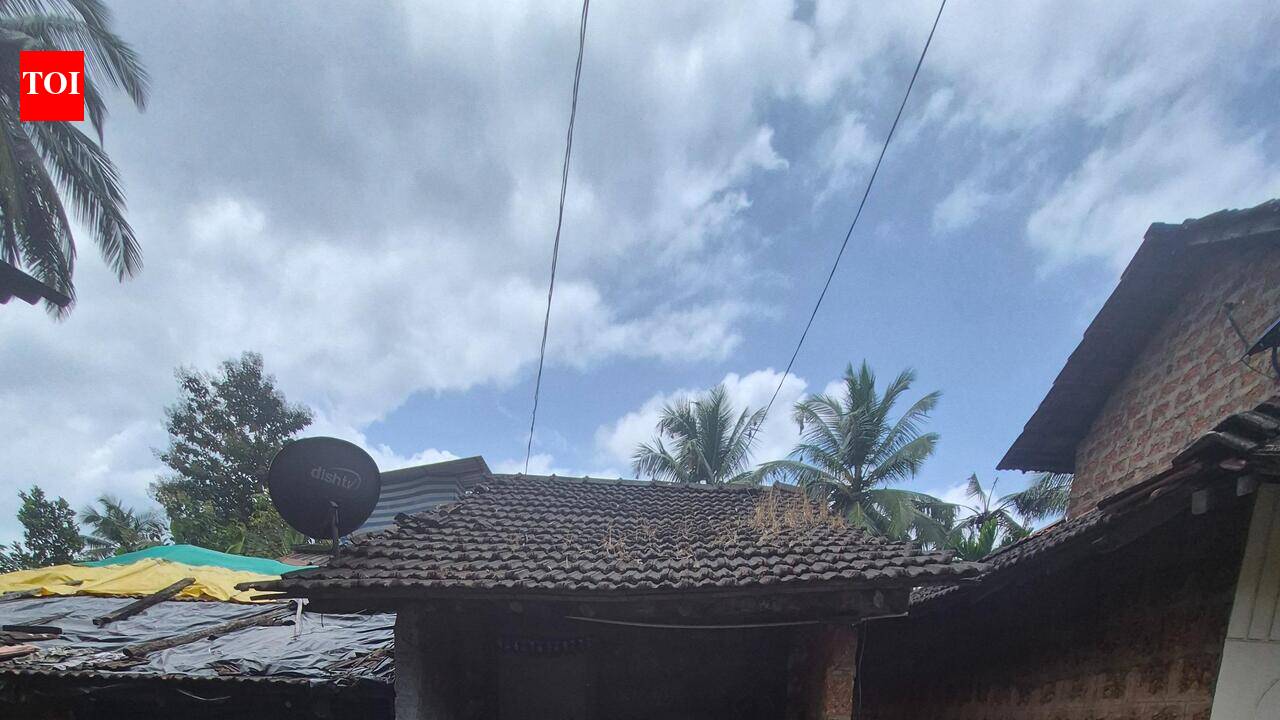
Pernem: In India’s tiniest state, Goa, with the country’s second-highest per capita income, where beach villas sell for crores, and the GDP charts shine, a man’s body lay abandoned for a night because his family could not afford firewood.His name was Ashok Vishnu Palyekar. His house in Goa’s northernmost corner in Deulwada ward of Kasarvarne in Pernem is not really a house.It is a 20-square-metre afterthought squeezed between bigger homes. Two rooms, exposed laterite. Now locked.Ashok lived between that house and the homes of his two sisters, both widows in other villages of Pernem. Both live on govt’s Rs 2,000-a-month dole for the poor. They took turns caring for him ever since his leg was amputated two years ago and he lost his menial job at a hotel.On Sept 13, the eve of Ganesh Chaturthi, 65-year-old Ashok fell ill in that little house. The free 108 ambulance took him to the nearby Kasarvarne health centre.Ashok was declared brought dead. His death wasn’t even entered in the register, says the guard who saw it happen.His sisters believed something they had heard — that at the Pernem municipal crematorium, the poor are cremated free. So, they pooled whatever little they had, hired a vehicle, and took their brother’s body there.It was late evening. There was no attendant. The day before the state’s biggest festival, the crematorium was empty.They had no money to buy firewood. No money to take him back. No money to take him anywhere else.So, they left him there. Not out of cruelty, police later understood, but out of a broken hope that the state would do what family could not: give him a dignified last rite.The next morning, when police found a decomposing body, they thought it was a homeless man — another nameless unclaimed body.It was Pernem police sub-inspector Aditya Gad who traced the story back to that 20 sqm house at Kasarvarne.“Ashok worked in a hotel doing menial jobs until amputation,” a neighbour told TOI. “The family always lived in a hut. Ten years ago, his brother, who drove a truck in the mines, built this laterite structure. But he died soon after. The family fell back into poverty.”After the amputation, Ashok moved on crutches between his house and his sisters’ houses. That was his world.Once police found the sisters, they handed the body back without a postmortem.“The family is extremely poor and could not afford to even buy the firewood,” said Gad. Finally, extended family pooled money again, and took him to St Inez crematorium in Panaji for his last rites.In a state that boasts of being India’s richest on paper, Ashok Palyekar’s final journey needed charity for firewood.“This should not have happened. It doesn’t happen in Goa. Final rites with dignity are a right,” said Pernem police inspector Nitin Halarnkar.But on Sept 13, in the tiniest, richest state, dignity had a price the poorest could not pay.