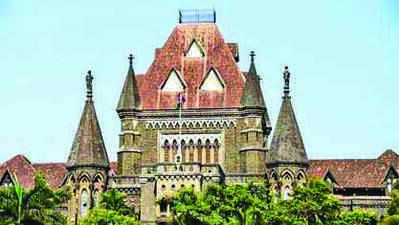
Mumbai: Bombay high court on Tuesday said the state govt and other authorities must measure the decibel levels of noise pollution at Ganpati pandals and processions, and take stringent action as per the law, including confiscation of the sound system. It also indicated that it will ban the burning of “highly toxic” and polluting firecrackers during festivals, including Ganeshotsav, on public roads as well as the use of “noise-making metal cylinders” during processions.“Celebrations are not meant for someone to die,” said Justice Girish Kulkarni, who, along with Justice Neela Gokhale, was hearing a suo motu PIL on noise pollution caused by loud music systems and firecrackers on streets during festivals and expressed its primary concern was over the health hazard to citizens exposed continuously to high decibel levels.The authorities must maintain recording and visual meter reading of the on-site noise levels using decibel meters, while mandals must display loudspeaker permissions, else “consequences may follow”, said the bench.The HC said its order, which will be made available late at night, would suggest taking a “good amount’’ as deposit from mandals which will be forfeited for any noise rule violations.Firecrackers are not banned, but no permission is given for them, said state advocate general Milind Sathe, who also informed the HC that while processions are permitted under an exception, mandals also need police nod for sound system. Such permission was subject to compliance of noise pollution rules that do not permit use of loudspeakers after 10pm in public.Sathe said the notification, in fact, covers any instrument that makes noise, which would be subject to the decibel rules.Senior counsel Aspi Chinoy, as amicus curiae appointed by the HC to assist in the matter, along with senior counsel Anil Sakhare and Sanjeev Gorwadkar, for the petitioners from Pune and Thane, respectively, argued how ineffective implementation of rules led to noise pollution during festivals and impinged on the rights of many.“It is possible that with a little bit of will, excesses can be controlled,” submitted Chinoy.Gorwadkar, appearing for a doctor from Thane, said the HC order should apply across festivals and the bench accepted his suggestion. The HC said its main emphasis was to ensure that citizens display a sense of duty and even compassion towards fellow citizens. The bench observed orally, “As a citizen, it is our duty to fellow citizens and it is the duty of the govt to sensitize citizens about this.”Sathe said BMC and police give over 25,000 permissions during Ganeshotsav. To erect a pandal, BMC nod is needed, while procession and loudspeakers are permitted with police nod.Chinoy said, “Police officers must be tasked to prevent noise levels on the spot, not prosecute.” In residential areas, the upper sound limit is 55dB during the day. “No firecracker would be within such a limit,” he said.Justice Kulkarni said perhaps the manufacturers should be asked to disclose on the packaging the decibel levels of each cracker.The HC said the state and authorities must take action. The AG said, “Yes, of course we will.’’The bench said, “Ban firecrackers. Take all measures to stop pollution caused by use of firecrackers. Measure decibel levels and implement laws, including confiscation of sound systems.”The judges orally said, “We would suggest taking a good amount of deposit for loudspeakers. If there are violations, forfeit the systems. There is no dearth of money with these mandals. So much money they spend on these systems.’’The HC praised Nagpur police commissioner for his recent order to ban modified sound systems with DJs and laser beams during festivals from Sept 4 to Nov 1. “Why can’t such a ban be implemented in Mumbai and the rest of Maharashtra as well?” the bench asked.The AG said the Nagpur order is “not a ban’’ and similar order exists for Mumbai issued on Sept 4 which prohibits any assembly of more than 5 persons, any procession and any use of loudspeakers, amplifiers, musical band, bursting of firecrackers in any procession by an assembly from Sept 9 to 23 with an exception to permit assembly and processions to be permitted by zonal DCPs, BMC and their supervisory officers.Sakhare and Gorwadkar were also heard and their concern was that noise levels in residential zones be abided while firecrackers be banned after 10 pm on public streets as law mandates, while advocate Vinay Deshmane from Nashik logged in from there to say his 2009 PIL had led to the state investing almost Rs 99 lakh to ostensibly but decibel reading meters for police stations but most police stations have none.Lawyer said the noise penetrates their homes making it difficult to even stay at home when the processions are on.“ That was our concern. It’s regarding people’s health. What happens to the common man?” Justice Kulkarni said.JUDGESPEAK:* We don’t want to be adversarial…we are not preventing the procession…We are concerned about the harmful effect on the health of citizens such noise levels could have…* We want the machinery to be functional. As pointed out by advocates at the bar the machinery is not functional. Merely paying a fine is not good. Action has to be preventive. … can’t first cause damage and affect and thousands of citizens and then pay only a fine* There has to be regulation and apart from that those who use loudspeakers should themselves have some responsibilities towards fellow citizens…we have nothing against processions. But follow the norms…especially when passing a hospital or housing complex…Go slow* You can’t be saying state machinery is helpless. It has come to such a situation and the severity is such that citizens are affected and want action… If we don’t regulate, where do we go? There is already traffic and so many other issues including air pollution. How do you survive in the city? When a procession is on there are people in adjoining buildings, many stranded in cars…what happens to them?* Rule of law has to be maintained