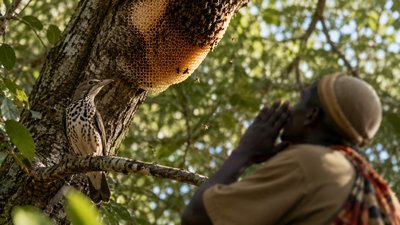
Meet Zainab Nathani, the Illinois student who designed a material that can pull water from humid air using sunlight |

Zainab Nathani, a high school junior from Niles, Illinois, has designed a material that can pull drinkable water straight out of humid air, powered entirely by sunlight. Studying at Niles Township West High School, she built her project around emulsion-templated composite biogels, porous, bio-based structures engineered to trap moisture from the atmosphere and release it…
Read More

Meet Ankan Das, the 15-year-old Florida student who built a shape-shifting robot that crawls on Moon soil and squeezes through tight spaces |

Representative Image of a tensegrity robot navigating obstacles during a search-and-rescue mission (AI-generated image) Ankan Das is a 15-year-old sophomore at Oviedo High School in Florida, but his latest science-fair project looks more like something from a robotics laboratory than a school classroom. For his Regeneron International Science and Engineering Fair project, Das built a…

Read More

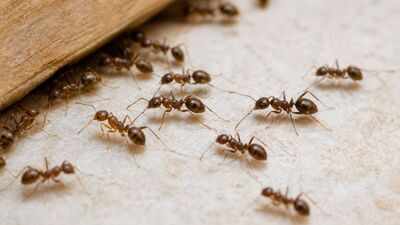
California scientists poisoned invasive Argentine ant colonies with two common baits; one sent workers roaming before death, the other made them stop searching for food and cluster near water

Argentine ants are invasive ants commonly found in homes and gardens in Southern California Seeing more Argentine ants after putting out pesticide bait may not mean the treatment has failed. A new University of California, Riverside, study found that the chemicals can change the ants’ behaviour, with the response varying depending on the type of…

Read More

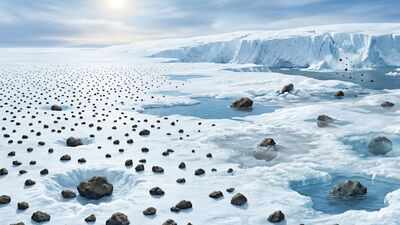
Antarctica holds more than 60% of the world’s meteorites, but warming could make thousands disappear into the ice |

Antarctica holds more than 60% of the world’s meteorites, but warming could make thousands disappear into the ice (PC: AI Generated) More than 60% of all meteorites ever found on Earth have been recovered from Antarctica, where dark rocks can remain exposed on bright blue-ice fields for thousands of years. Now, climate warming is putting…

Read More

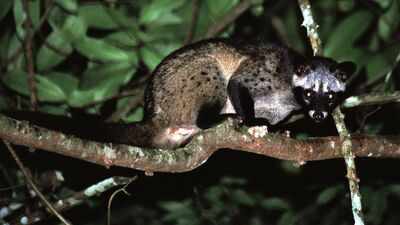
Coffee beans found in Civet poop used to make one of the world’s most expensive Kopi Luwak coffee which costs thousands of dollars per kilogram |

Asian palm civet. Image Credit: Bernard DUPONT/Wikipedia Kopi luwak is one of the world’s most unusual coffees because its production begins inside the digestive system of an animal. The coffee is made from beans eaten and later excreted by the ‘Asian palm civet,’ a small mammal found across parts of South and Southeast Asia. The…

Read More

Meet Arya Gurumukhi, the Texas student developing a ‘Bionic Leaf’ that uses sunlight, water and bacteria to make fuel |

A power cut in Texas left Arya Gurumukhi and her family without heat for days during the severe winter storm of 2021. She was young, but the experience stayed with her. The problem was no longer an abstract question about climate or energy systems. It was something she had experienced inside her own home. Gurumukhi…

Read More

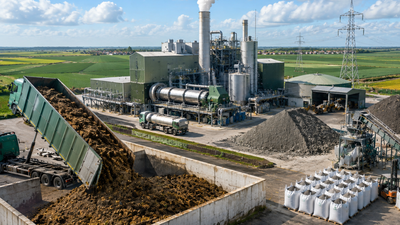
Dutch plant turns 420,000 tonnes of poultry manure into renewable electricity for 45,000 households while recycling the leftover ash into fertiliser |

A Dutch plant is turning a huge agricultural waste stream into renewable electricity and fertiliser. BMC Moerdijk in the Netherlands processes around 420,000 tonnes of poultry manure each year, using thermal conversion to generate electricity for the farms supplying the manure and enough additional power for around 45,000 households. The process does not end after…

Read More

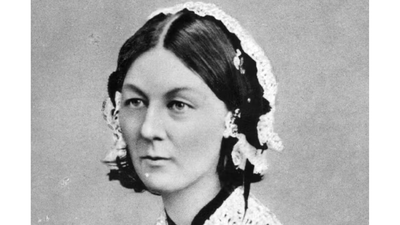
Quote of the day by Florence Nightingale: “So never lose an opportunity of urging a practical beginning, however small” |

Florence Nightingale, widely remembered as the “Lady with the Lamp”, became one of the most influential figures in the history of nursing and healthcare. Born in 1820, she challenged the expectations placed on women of her time and devoted her life to improving the treatment of sick and injured people. Her work during the Crimean…

Read More

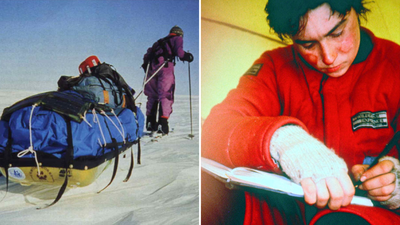
In 1986, a 29-year-old teacher spent 55 days crossing the Arctic and became the first woman to reach the North Pole |

PC: Guinness World Records In 1986, Ann Bancroft set out across the Arctic as a 29-year-old elementary school teacher with a love of the outdoors and a place on an eight-member expedition. Fifty-five days later, she stood at the North Pole, becoming the first woman to reach it. The journey involved dog sleds, tonnes of…

Read More