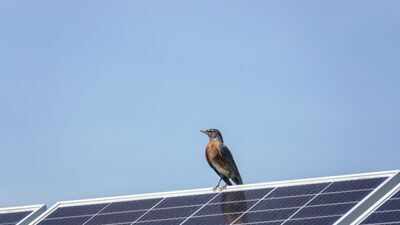
AI cameras watched birds around solar panels for 17,000 hours and recorded no collisions; scientists are now testing the system in 7 US states |

PC: US Department of Energy Solar farms are expanding across landscapes, but scientists still have questions about what happens to birds that live and move around these large arrays. Now, scientists and researchers at Argonne National Laboratory have developed an artificial intelligence-powered camera system that can continuously watch birds around solar panels and identify what…
Read More

Massachusetts removed a dam that had blocked the Town River for more than 100 years; the project reopened 10 miles of river and 354 acres of spawning habitat for migratory fish

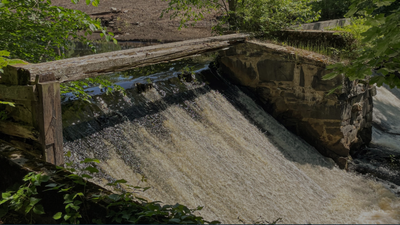
High Street Dam Removal in the Taunton River Watershed Demolition crews in Bridgewater, Massachusetts, have completed the removal of the High Street Dam, taking down a 12.5-foot-high and 80-foot-wide concrete barrier that had blocked the Town River for more than a century. The removal has reopened 10 miles (16 kilometres) of continuous river channel and…

Read More

In 2026, scientists gave bumblebees a puzzle they had never seen before; some invented their own way to reach a hidden reward |

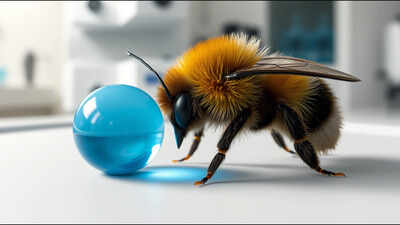
Representative Image of a bumblebee solving a task with a ball in an experimental arena (AI-generated image) More than a century ago, psychologist Wolfgang Köhler conducted experiments that changed how scientists thought about animal intelligence. In one of his best-known demonstrations, chimpanzees were faced with food placed out of reach and objects they could potentially…

Read More

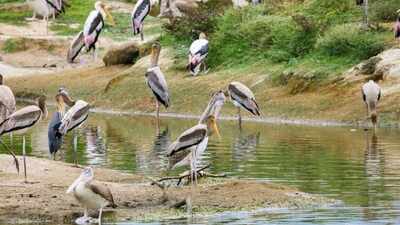
Galveston Bay Waterbirds: In the 1930s, Texas built 3 bird-nesting islands from dredged mud; all vanished, but one rebuilt 4.5-acre island now hosts more than 2,500 nesting pairs

Dickinson Bay lost its charm over the decades. The small estuarine pocket on Galveston Bay’s western shore once hosted thriving colonies of waterbirds on three dredged islands. But then the islands completely vanished. During the 1980s and 1990s, subsidence, erosion, and a string of tropical storms swept the islands beneath the water. And with them…

Read More

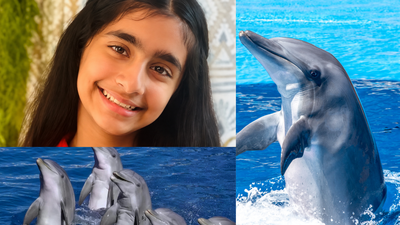
Meet Ishanvi Sakharpe, the Virginia student who built Dolphin Guard to help protect dolphins from dangerous human activity |

Image(s): Young Science Lab/Canva Ishanvi Sakharpe is a Virginia student using science and technology to address a problem affecting one of the ocean’s most recognisable animals. Her project, Dolphin Guard, was created with the aim of helping protect dolphins from dangerous human activity in marine environments. The young innovator’s work has now earned recognition through…

Read More

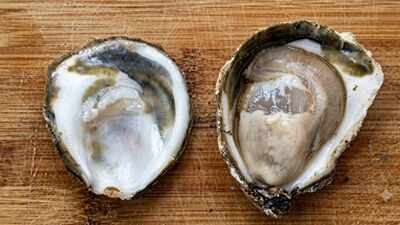
Oysters can carry a bacterium that can be deadly to humans without getting sick; scientists found how it survives inside them |

PC: By Taishonambu/Wikipedia Oysters can carry a type of bacteria that can cause serious and sometimes deadly infections in people, yet the shellfish can carry the microbe without showing the same kind of illness. The organism is Vibrio vulnificus, an estuarine bacterium that can become closely associated with American oyster tissues. Researchers have found that…

Read More

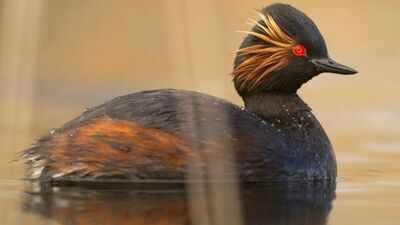
An English dumping ground for canal dredgings was restored as wetland; black-necked grebes rose from 4 breeding pairs to 35 in two years, and it now holds 64% of the UK population

Woolston Eyes in Cheshire recorded 35 breeding pairs of black-necked grebes in 2025 (Photos: RSPB) A former dumping ground for dredged material from the Manchester Ship Canal has been transformed into a wetland. The wetlland has now become the most important breeding site in the UK for the rare black-necked grebe.According to the Royal Society…

Read More

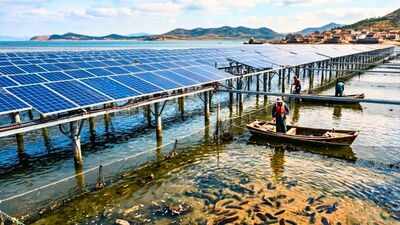
China covered 40% of sea cucumber ponds with solar panels; younger animals spent 12 fewer days in summer inactivity |

Solar panels are usually associated with electricity, but a study in China has found that they can also change the summer conditions inside sea cucumber ponds. Researchers examined ponds fitted with photovoltaic panels and found that the shade reduced the amount of light reaching the water and lowered its temperature. The cooler conditions were linked…

Read More

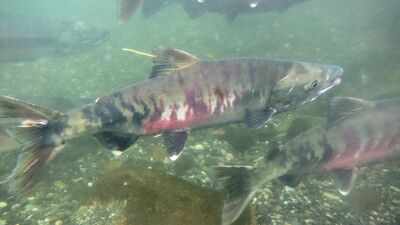
In the early 1990s, fewer than 1,000 threatened chum salmon returned to this Washington watershed; recent returns average 32,600 a year as a $9.7 million river restoration nears completion

chum salmon Representative image In the early 1990s, fewer than 1,000 threatened summer-run chum salmon made it back to the Big Quilcene River on Washington’s Olympic Peninsula each year. Decades of logging, road building and habitat degradation had left the river choked with sediment, its gravel spawning beds buried and its side channels disconnected. Today,…

Read More

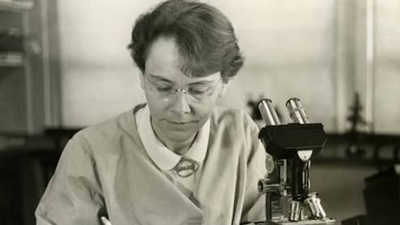
Quote of the day by Barbara McClintock: “If you know you are on the right track, if you have this inner knowledge, then…” |

There are moments when pursuing an idea can feel lonely, particularly when other people cannot see what you see. Barbara McClintock understood that feeling well. The American geneticist spent years investigating patterns in corn genetics that initially challenged the scientific thinking of her time. Her words are not simply about refusing to listen to criticism….

Read More