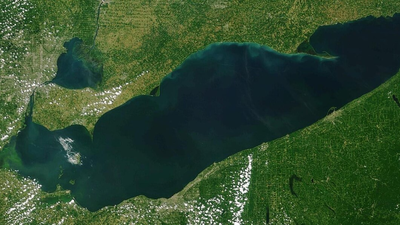
After a 25-acre Lake Erie wetland was reconnected, sonar recorded 3.44 million fish detections over 2,022 monitoring hours across four years, showing the restored habitat was used continuously

After a 25-acre Lake Erie wetland was reconnected A restored 25-acre coastal wetland on the southern shore of western Lake Erie was used continuously by millions of aquatic animals after it was reconnected to nearby waterways, according to a four-year acoustic monitoring study led by researchers at the United States Geological Survey (USGS). The scientific…
Read More

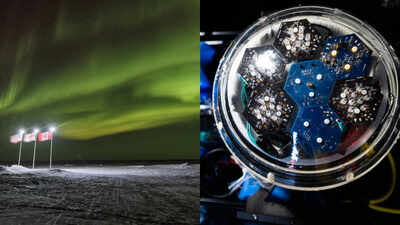
MIT researchers drilled a 2-by-3-foot hole through 3.6 feet of Arctic sea ice and sent a robot below; the prototype transmitted data through the ice at 1.2 kilobytes per second

Arctic ice with flags of countries participating in Operation Ice Camp 2026 and Havguard’s communications device, enclosed in a polycarbonate pressure vessel The Arctic sea is becoming noisier and harder to reach. Beneath its frozen surface, cracking ice, marine mammals and passing ships create a constantly changing underwater soundscape. For scientists trying to understand this…

Read More

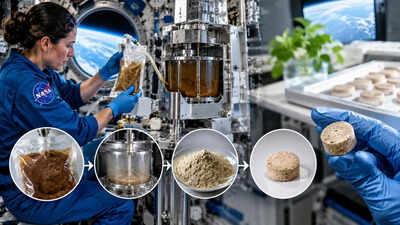
Nasa is testing a way to turn astronaut poop into a sterile, odour-free material that could be recycled |

Image: AI representation of a way to turn astronaut poop into a sterile, odour-free material that could be recycled For astronauts travelling far beyond Earth, even the most ordinary human waste becomes a serious engineering problem. On a long-duration mission, there is no convenient rubbish collection, unlimited storage space or easy way to send unwanted…

Read More

Scientists turned dog poop into fuel and found it could produce both hydrogen and methane |

Dog waste is usually treated as an unpleasant urban problem, something to be collected, bagged and thrown away. But researchers are investigating whether it could instead become a source of renewable energy. A new study has examined dog faeces as a feedstock for producing biohydrogen and methane through anaerobic biological processes. The research, published in…

Read More

In 1879, Edwin Hall discovered an electrical effect thought to need a perpendicular magnetic field; 147 years later, scientists have shown it can work with the field in-plane

An atomic force microscopy scan of a nanometer-sized device developed by Carnegie Mellon scientists that demonstrates a new form of the Hall effect. For more than a century, the Hall effect has been taught with a simple picture that electricity flows through a material, a magnetic field pushes the moving charges sideways, and a voltage…

Read More

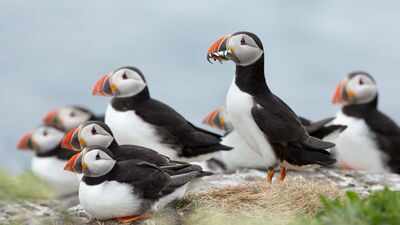
In 2002, Lundy began its rat-eradication project; puffins later rose from 13 in 2000 to 1,335, and more than 40,000 seabirds now nest on the island

Off the coast of southwest England, the small island of Lundy was once a textbook case of how invasive rats can devastate seabird colonies. By the late 1990s, puffin numbers had crashed to just 13 breeding pairs, and many other seabirds had abandoned the island altogether. In 2002, conservationists launched an ambitious rat-eradication project to…

Read More

Meet François Génier: The Canadian Museum of Nature scientist who used animal dung to uncover three new beetle species on a remote African island |

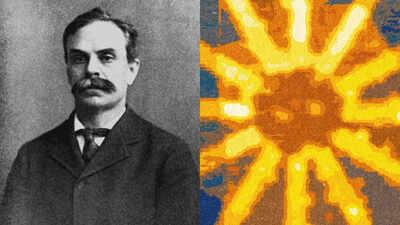
Image: ResearchGate/François Génier Deep in the rainforests of Bioko Island, Equatorial Guinea, a deceptively simple field technique helped reveal beetles that science had never formally recognised. Canadian entomologist François Génier, from the Beaty Centre for Species Discovery at the Canadian Museum of Nature, surveyed the island’s dung beetles using traps baited with animal dung. The…

Read More

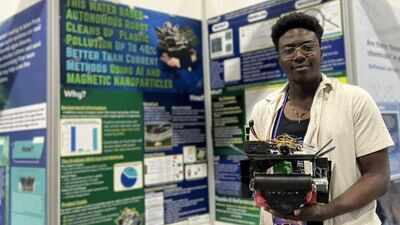
A 17-year-old Canadian student built an AI-powered water robot that uses magnetic liquid to find plastic without harming aquatic life |

Moroti Adegboyega. Image Credit: Jonas Borg / Stockholm Water Foundation A 17-year-old Canadian student has developed an AI-powered robot designed to tackle one of the most persistent forms of water pollution i.e plastic. The project, called ‘Ecoferroquatics,’ uses artificial intelligence, robotics and a magnetic liquid known as ‘ferrofluid’ to identify and remove plastic from water…

Read More

In 2013, Czech researchers studied 70 dogs from 37 breeds and found they aligned north-south while defecating when Earth’s magnetic field was stable |

Dogs may be doing more than simply choosing a spot when they stop for a break. A 2013 study by Czech researchers found that dogs tended to align their bodies along Earth’s North-South magnetic axis while defecating, but only when the planet’s magnetic field was relatively stable. The research involved 70 dogs from 37 breeds,…

Read More