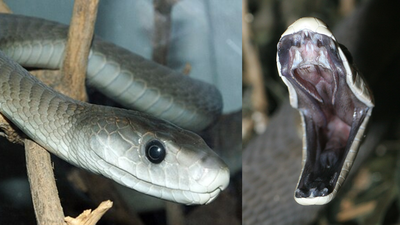
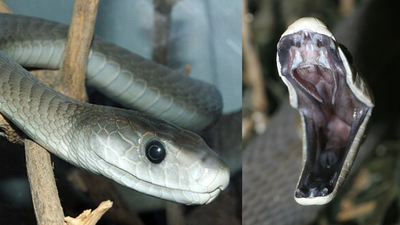
Black mamba scales can reveal heavy metal pollution in urban South Africa, according to new research from Durban. Scientists found that lead, arsenic, cadmium and mercury accumulate in the scales of Dendroaspis polylepis, Africa’s most feared snake. Mambas living in industrial and commercial districts carried significantly higher heavy metal loads than those in green spaces, which makes the snakes living indicators of contaminated neighbourhoods. Because the scale clippings are taken without harming the animal, the approach offers researchers and conservationists a gentler way to detect urban pollution hotspots and track where toxic heavy metals concentrate across the wider eThekwini area.
How scientists measured heavy metals in black mamba scales
The research team from the University of the Witwatersrand in Johannesburg worked in the eThekwini Municipality in KwaZulu-Natal, an area of about 2,550 square kilometres with a population of 4.2 million. Professor Marc Humphries, an environmental chemist who led the work, published the results titled ‘Black mambas (Dendroaspis polylepis) as novel bioindicators of urban heavy metal pollution’ with Nick Evans, Price and Alexander in the journal Environmental Pollution.To test how well scales reflect what is happening inside a snake, the researchers also analysed muscle and liver from mambas that had died in road accidents or been killed by people. For certain heavy metals, the amounts in the scales correlated directly with those in the two organs.
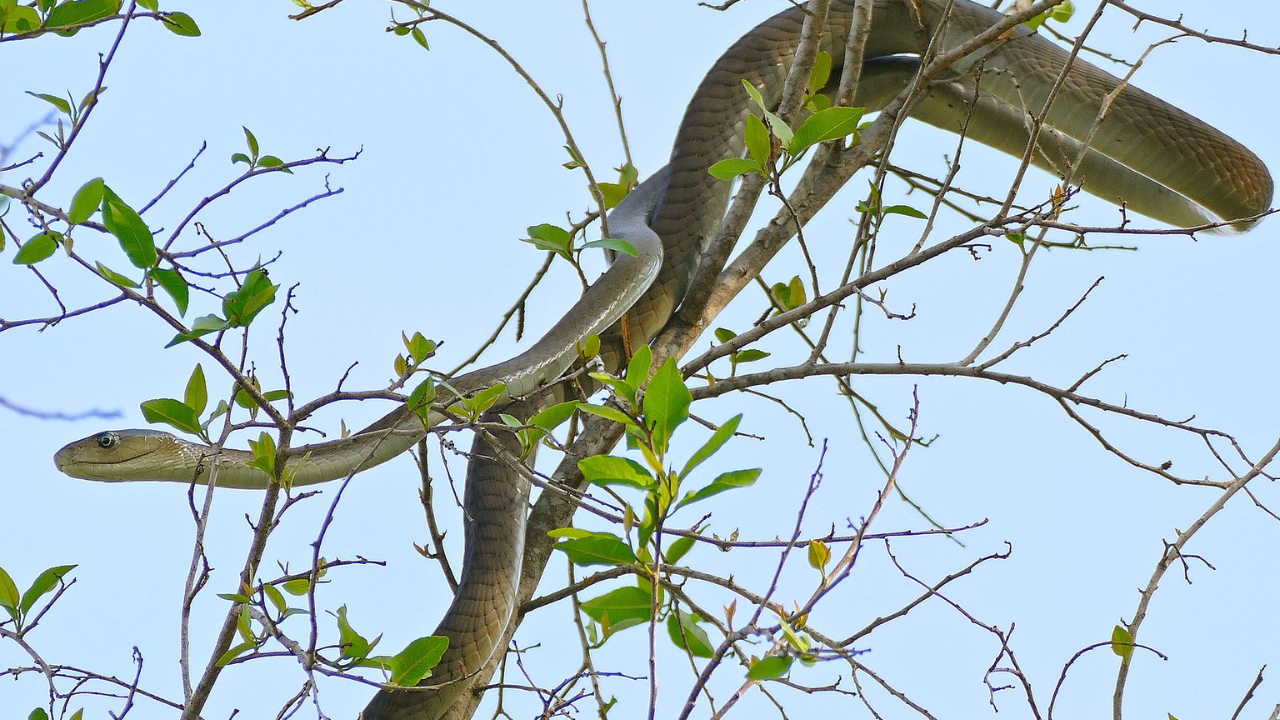
Juvenile in a tree, Kruger National Park, South Africa (Image: Wikipedia)
Industrial emissions , factory discharges and wastewater feed heavy metal pollution in Durban
Heavy metals reach the environment through industrial emissions, factory discharges and wastewater effluent, according to Nature Africa’s report on the study. Around Durban, specific sources include metal fabrication, vehicle manufacturing, paint production and oil refineries. In the study published in Environmental Pollution, the researchers describe the snakes as sentinels of heavy metal pollution that make fine-scale local patterns detectable.
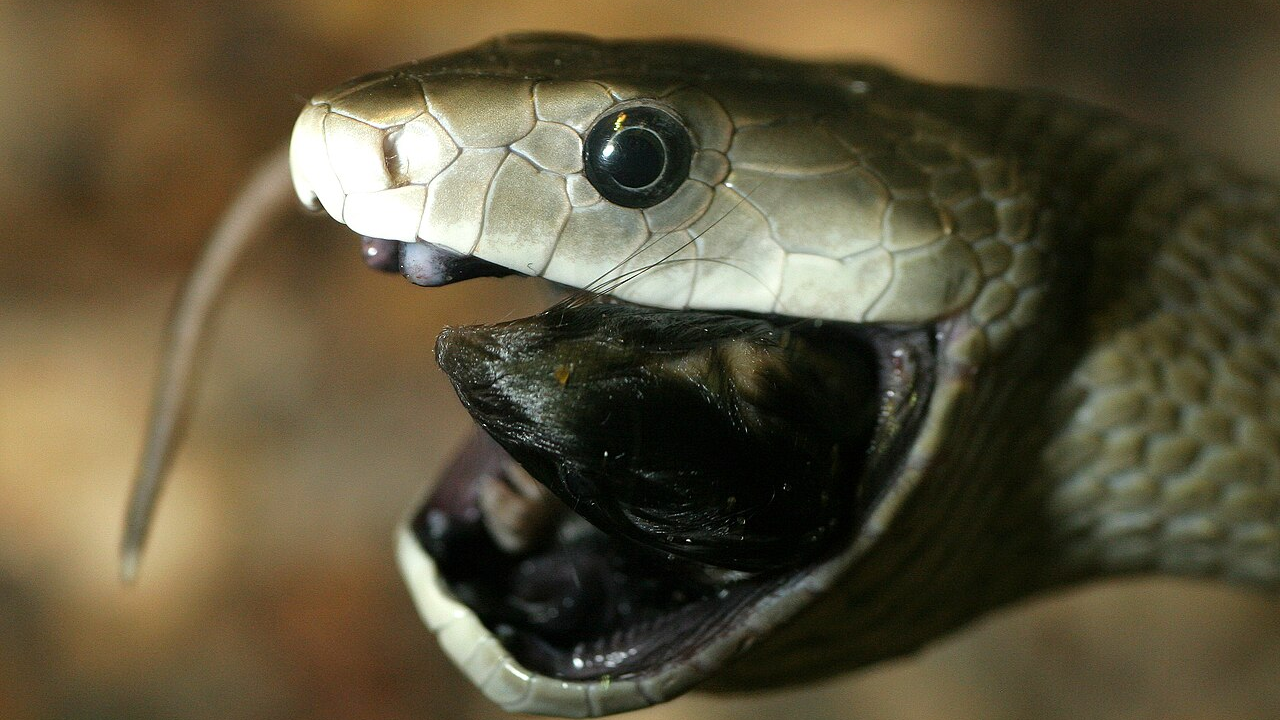
A black mamba swallowing prey (Image: Wikipedia)
Why a top predator like the black mamba exposes contamination in the wider food web
Black mambas sit at the top of their food chain, so contaminants that build up in the animals they eat end up concentrated in the snake. Humphries told Nature Africa that this makes apex predators valuable indicators of contamination across an entire food web. He added that the findings point to contaminated prey, namely the small mammals and birds living in urban environments around Durban.
Black mambas appear to be increasing around Durban, and household clutter can invite them in
Black mamba numbers appear to have been rising in the Durban area in recent years. Evans, who works with KwaZulu-Natal Amphibian and Reptile Conservation, receives between 100 and 120 calls a year about sightings across the eThekwini Municipality. He says he removes steady numbers of snakes from suburban, industrial, informal settlement and rural areas alike.He told the same publication that people often make their properties appealing to mambas by dumping rubbish in gardens, keeping messy sheds or garages and creating breeding grounds for rats.