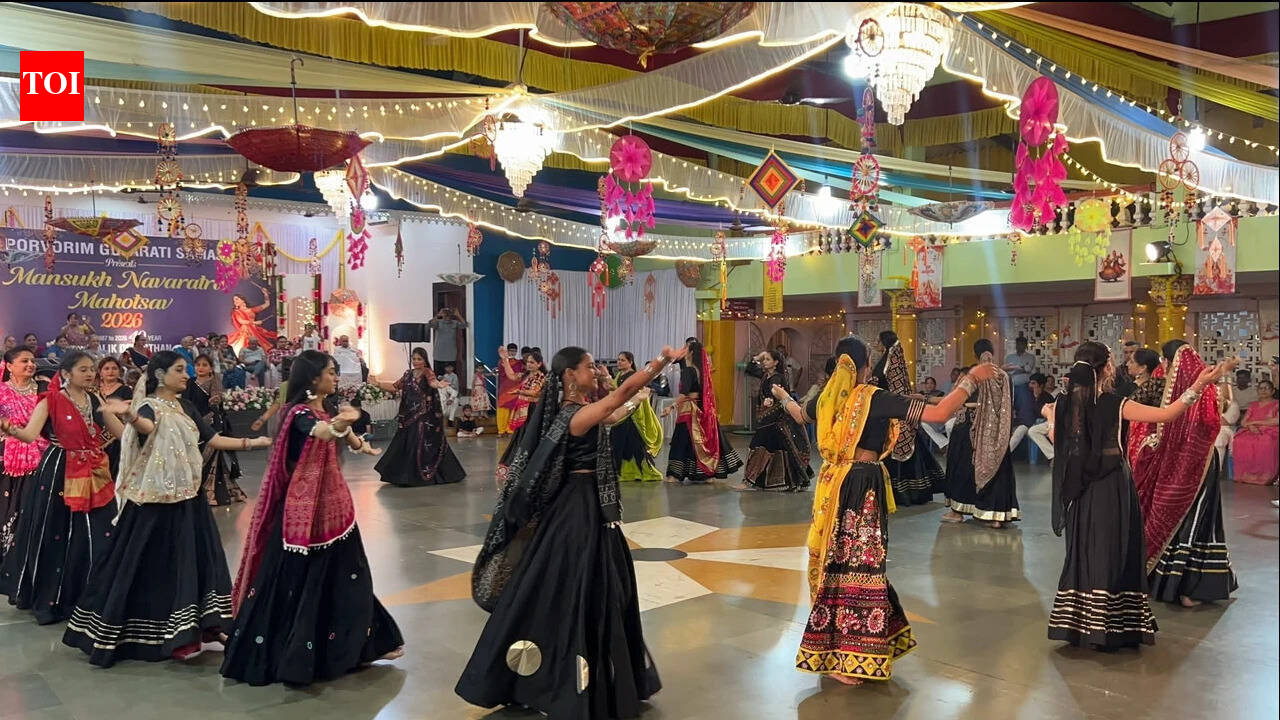
Panaji: On Saturday night, Navratri in Goa heard something it never has before.As dhol beats faded at Porvorim Gujarati Samaj and Panjim Gujarati Samaj, Ludwig van Beethoven’s 9th Symphony — Ode To Joy, the anthem of Europe — rose from the speakers.Two traditions separated by 202 years and 6,000km met on the same floor.The unlikely confluence was sparked by Dharaben Dave, a restaurateur from Porvorim. European tourists in her cafe played Beethoven’s 1824 composition on their phone. With Navratri under way, the melody stayed with her.She took the idea to Panjim samaj president Archana Shah on Day 1. “Why can’t joy meet joy?”Both samajs picked up the thread, in their own way. Porvorim turned it into an exhibition — 20 women choreographed by Meenaben Adroja and her daughter Aastha. Panjim chose to make it inclusive, opening the dandiya floor to all after a brief rehearsal.
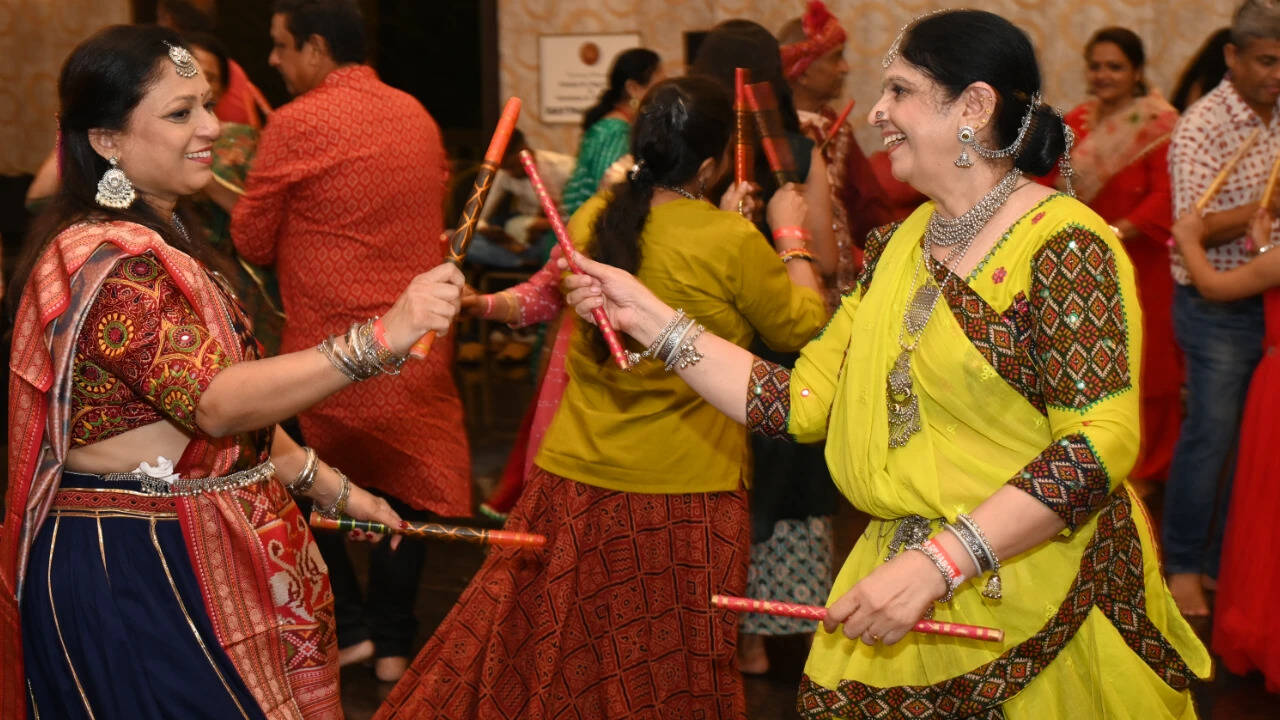
Panjim Gujarati Samaj president Archana Shah throws open the floor
The cultural rhyme was not lost on the dancers.“Garba comes from the Sanskrit, garbha, the womb. The circle is the cycle of life, moving around the Devi at the centre. The dance itself is worship,” Shah told the gathering before the performance. “Ode To Joy is Schiller’s poem that all men become brothers. Beethoven set it to music as an anthem of universal human joy. That’s why it is the anthem of the European Union today. Folk circle dances are universal — from Vienna’s waltz to Goa’s garba.”At Shree Pundalik Devasthan, Porvorim, there was a moment of pin-drop silence as the first bars of the symphony played. Then came applause.At Panjim, it took a few beats for the crowd to find the rhythm of the Western classical metre over the usual garba taal. Within seconds, elderly women and young children joined the circle.“It was a piece of cake to set. The song brought a sense of joy, something different from our usual garba tracks,” said Aastha, who led the choreography.For Meenaben Gangani, 65, the seniormost performer of the night, it was a novelty worth keeping. “It was certainly different. An experiment worth enjoying.”Shah put it in a larger Gujarati context: “Garba has already reached the shores of Europe and America. Gujaratis traded indirectly with Romans in the first century and directly with the Portuguese 500 years ago. We have known Europe for long. If Europeans can dance to our tunes, we can dance to theirs. Who knows, after tonight, Europe might do garba to Ode To Joy.”Executive member Paresh Mandani summed it up: “It was a cultural exchange. Recently, Europeans danced to garba in videos that went viral. This was our turn. No one really needed to be taught joy. They were just locked in.”