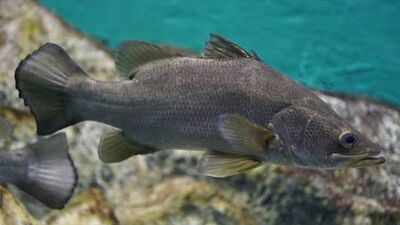
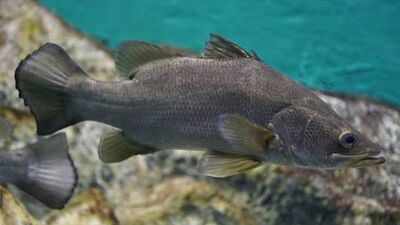
In the late 1950s and early 1960s, Nile perch were introduced into Lake Victoria with the hope that the large predatory fish would strengthen local fisheries. The decision was intended to create new commercial opportunities and increase the supply of valuable fish. Instead, the species spread through one of the world’s largest freshwater ecosystems and became linked to a dramatic decline in native fish. TheNational Invasive Species Information Center says Nile perch were introduced to Lake Victoria in 1954 and later destroyed about 200 native fish species through predation and competition for food. The story has become a powerful example of how a well-intentioned fisheries decision can produce consequences that extend far beyond its original goal.
Why Nile perch were introduced
Lake Victoria, shared by Kenya, Tanzania and Uganda, has long supported communities that depend on fishing for food, income and trade. Before the arrival of Nile perch, the lake contained a remarkable variety of native fish, especially cichlids.Cichlids are a diverse group of freshwater fish known for their unusual variety of body shapes, feeding habits and behaviours. Lake Victoria was home to hundreds of native cichlid species, many of which had evolved within the lake and occupied highly specialised ecological roles.The Nile perch, scientifically known as Lates niloticus, is native to parts of Africa. It is a large freshwater predator that can grow much bigger than many of the fish already living in Lake Victoria. Fisheries managers believed that introducing it could create a commercially valuable fishery and provide a new source of income for lakeside communities.The introduction was not immediately understood as an ecological experiment of enormous scale. At the time, the focus was largely on increasing catches and improving the economic potential of the lake. The long-term effects of adding a powerful predator to a complex ecosystem were much harder to predict.
A predator enters a complex food web
Nile perch did not simply become another fish in the lake. As predators, they competed with native species for food and consumed smaller fish. Their presence added new pressure to an ecosystem in which many species had developed alongside one another over thousands or millions of years.Native cichlids were particularly vulnerable because they occupied many of the lake’s feeding and habitat niches. Some ate algae, while others fed on insects, molluscs or smaller fish. The arrival of Nile perch introduced a predator capable of feeding on numerous species across different parts of the food web.The National Invasive Species Information Center reports that the species ultimately destroyed about 200 native fish species through predation and competition for food. The number illustrates the scale of the change, although scientists have also examined other factors that contributed to the decline of native fish, including overfishing, pollution, habitat changes and shifts in water quality.As the Nile perch population expanded, the balance of the fishery changed. A lake once known for its extraordinary variety of native fish increasingly became associated with a smaller number of commercially important species.
The collapse of native cichlids
The decline of Lake Victoria’s cichlids is one of the most widely discussed examples of biodiversity loss in a freshwater ecosystem. Many species disappeared from parts of the lake, while others became extremely rare or survived only in limited habitats.The loss was significant because the cichlids were not interchangeable. Each species had its own role in the ecosystem. Some were used to control algae, some to process nutrients, and some were prey for larger animals. When many species vanished, the lake lost not only individual fish but also the ecological functions they performed.The loss of native fish also affected the scientific knowledge. The cichlids of Lake Victoria, for example, diversified rapidly, evolving into related species with different traits and lifestyles. Their decline reduced the living diversity available for researchers studying evolution and adaptation.The change presented challenges and opportunities for local communities. Processing plants and exports were a large component of the Nile perch industry. At the same time, dependence on a smaller number of fish species made the fishery more vulnerable to changes in population, markets and environmental conditions.
An economic success with environmental costs
The Nile perch fishery generated substantial economic activity around Lake Victoria. Large fish could be processed, transported and sold in domestic and international markets. In some areas, the new fishery provided jobs and income that the earlier, more diverse fishery had not produced at the same commercial scale.However, economic gains did not erase the environmental costs. Commercial Nile perch fishing was usually different in terms of equipment and techniques from traditional fishing. Some communities faced changes in access to fish, rising pressure on stocks and concerns about how profits were distributed.The fish also changed what people ate locally. Larger Nile perch were frequently directed towards commercial markets, while smaller or less valuable fish had previously formed an important part of local diets. In some lakeside communities, this raised concerns about food security and the affordability of fish.The experience showed that a species can be commercially valuable and ecologically disruptive at the same time. To simply label the introduction a success or failure would overlook the differential effects on various groups.
Invasive species lessons
The Lake Victoria case is frequently cited as an example of the perils of introducing non-native species. Even when an introduced animal appears likely to improve food production or create jobs, its effects can be difficult to contain once it becomes established.The National Invasive Species Information Center notes that preventing the introduction of harmful species is the most effective way to avoid their impacts. Once a predator has spread through a large and interconnected ecosystem, removing it can be extremely difficult, expensive and damaging in its own way.The Nile perch story also demonstrates why environmental decisions require more than short-term economic calculations. Assessments should include native biodiversity, food-webs, local livelihoods and the potential for an introduced species to alter the whole structure of an ecosystem.Lake Victoria has not been changed by Nile perch alone. Pollution, excessive fishing, invasive plants, shoreline development and climate-related pressures have also affected the lake. Yet the introduction remains one of the clearest examples of how a single management decision can reshape a vast natural system.
A warning from one of the world’s great lakes
The Nile perch was introduced with the expectation that it would improve fisheries. Instead, it became a dominant predator linked to the loss of many native cichlids and the transformation of Lake Victoria’s fishery.The episode continues to influence discussions about conservation, fisheries management and invasive species control. It reminds policymakers that ecosystems are not empty spaces waiting for a more profitable species. They are networks of relationships and change one thing, change everything connected to it.For Lake Victoria, the legacy of the Nile perch is complicated. The fish created an important commercial industry, but it also helped drive one of the most dramatic freshwater biodiversity losses ever recorded. The lasting lesson is that improving a fishery cannot be measured only by the size of the catch. It must also account for what disappears when a new species takes over.