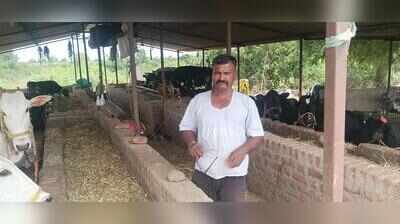
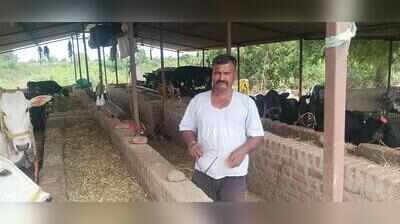
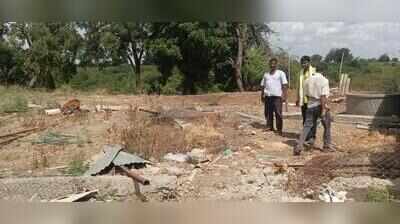
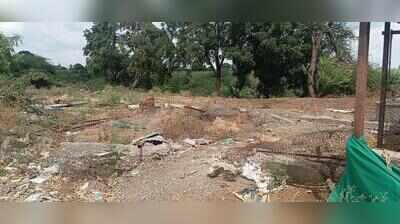
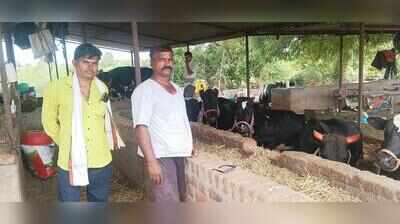
Pimpalgaon (Bhum, Dharashiv): The walls of Vishwanath Daatkhile’s (56) house in Pimpalgaon village in Bhum tehsil of Dharashiv district bear the marks of the devastating flood Banganga river caused on Sept 22 last year.The damaged cattle shed outside his home is an even more painful reminder. Bent steel pipes, broken tin sheets and bricks are scattered where 41 cattle, 27 lactating cows and 14 calves, were once sheltered.The river rose quickly and swept away the animals that Daatkhile had reared over two decades. A year later, he said he received Rs 2.25 lakh for six cows, three registered in his name and three in his brother, Gowardhan’s . But the family has not received full compensation for the rest.A fresh govt resolution providing for full compensation to farmers in Dharashiv and Solapur who lost cattle has been issued. Despite follow-ups with the district administration, additional assistance has not come.“My son Praveen pursued it for a few months but gave up. We cannot wait forever. Otherwise, we will never come out of these losses,” Vishwanath said.Dharashiv collector Keerthi Pujar said, “We will prepare a fresh proposal as per the new GR released by govt for the flood-affected districts. The family will get the help soon.” He added that he would look into why the family did not receive the assistance despite the revised provisions.Before the flood, the Daatkhile family produced around 200 litres of milk every day. They have rebuilt part of the herd, but milk production is 40-50 litres a day.“My parents and uncle do not show their pain and financial stress to us. They are determined and confident that they will earn it back. But it is tough,” Praveen said. He works at a medical store run by a relative in Pune.He said his father had started with a single cow and gradually built the herd to 41 animals. “It was two decades of hard work. Now, it is difficult to buy big cows. A good-quality lactating cow costs more than Rs 1 lakh. We do not have that money,” Praveen said.The family recovered when people responded after reports of their losses appeared in the media. “More than govt, people helped us. They donated clothes, grain and cans of water. A group of schoolchildren from a neighbouring village who brought us a special kit at night, despite the rain,” Vishwanath recalled.With some Rs 5 lakh from public donations, Vishwanath has bought seven cows over the past year. “Rearing cows is my passion. I cannot live without them. We are coming back to normalcy,” he added. His brother, who lost 20 goats in the flood, has purchased 10 goats.But the cattle shed has not been built. Vishwanath has not been able to bring himself to reconstruct it. “I did not feel like raising it again. The panicked mooing of the cows as they were swept away before me that night haunts me. I don’t feel like putting up a new shed in the same place,” he said.The flood also destroyed a part of the family’s grape plantation. The family expected to rebuild its agricultural income after the flood, but the current year has brought another challenge, a prolonged gap in rainfall.Praveen said the family’s two-acre urad crop is lost because of inadequate rainfall. “We cultivated green chillies using borewell water. But rising temperatures and lack of rainfall have resulted in disease infestation. The production will not even be 50%,” he said.For Praveen, the flood also destroyed a personal dream. After completing his D Pharm in 2022, he planned to set up a medical store in Bhum town, the tehsil headquarters. He identified a location and purchased furniture too. The floodwaters damaged and swept away some of it. He is now trying to save enough money to restart his plan.For Vishwanath, the seven cows now represent the beginning of another long rebuilding process. His brother’s 10 goats serve a similar purpose. His two dogs, which survived the flood from the gushing waters, remain with him.As Vishwanath talks about the night of the disaster, he pulls the dogs close and gently strokes their backs. “They are now happily living with us.”